Shopify and ChatGPT: How to Sell Your Products in ChatGPT
How Shopify products appear and sell in ChatGPT: Shopify Catalog, requirements, checkout on your own store, fees, settings and what is still announced.
 Nicolas ProvostOct 7, 2026 · 13 min read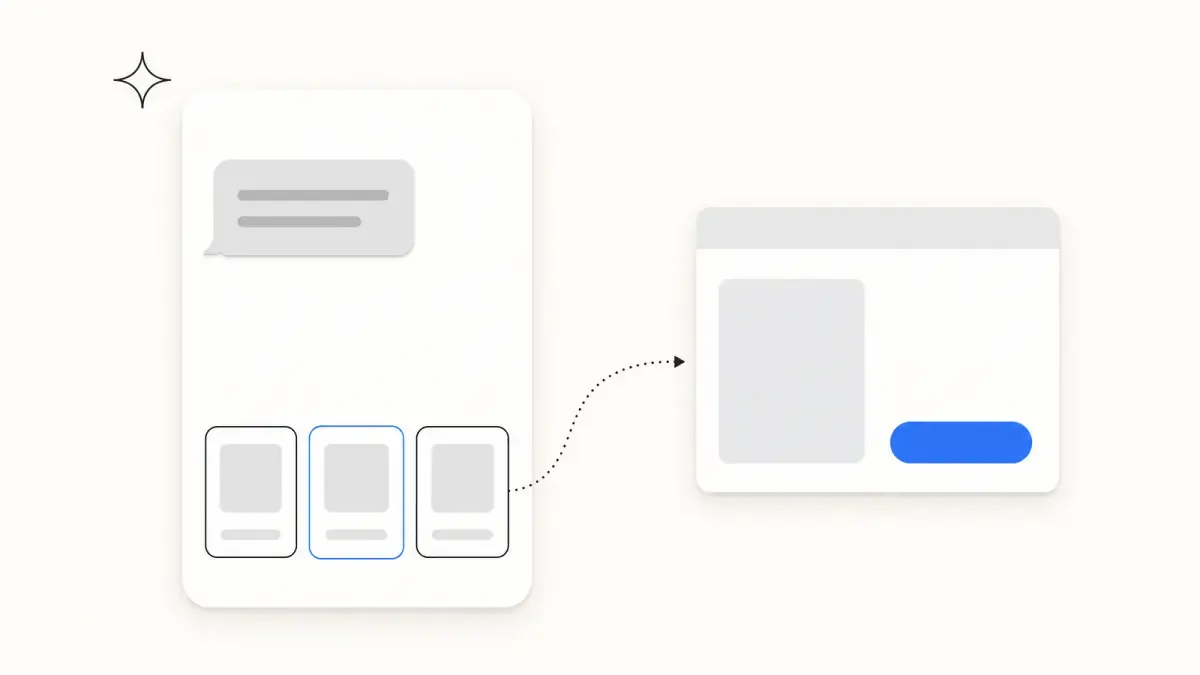
Summarize this article with an AI
 ChatGPT
 Claude
Table of contents (18)
Key takeaways
- There is nothing to install, because Shopify Catalog sends eligible products to ChatGPT and the channel is active by default for eligible stores.
- Your store must sell to customers in the United States, meet the Catalog requirements and have its three store policies completed.
- Shoppers pay on your own store checkout, and Shopify states there are no fees beyond your standard payment processing fees.
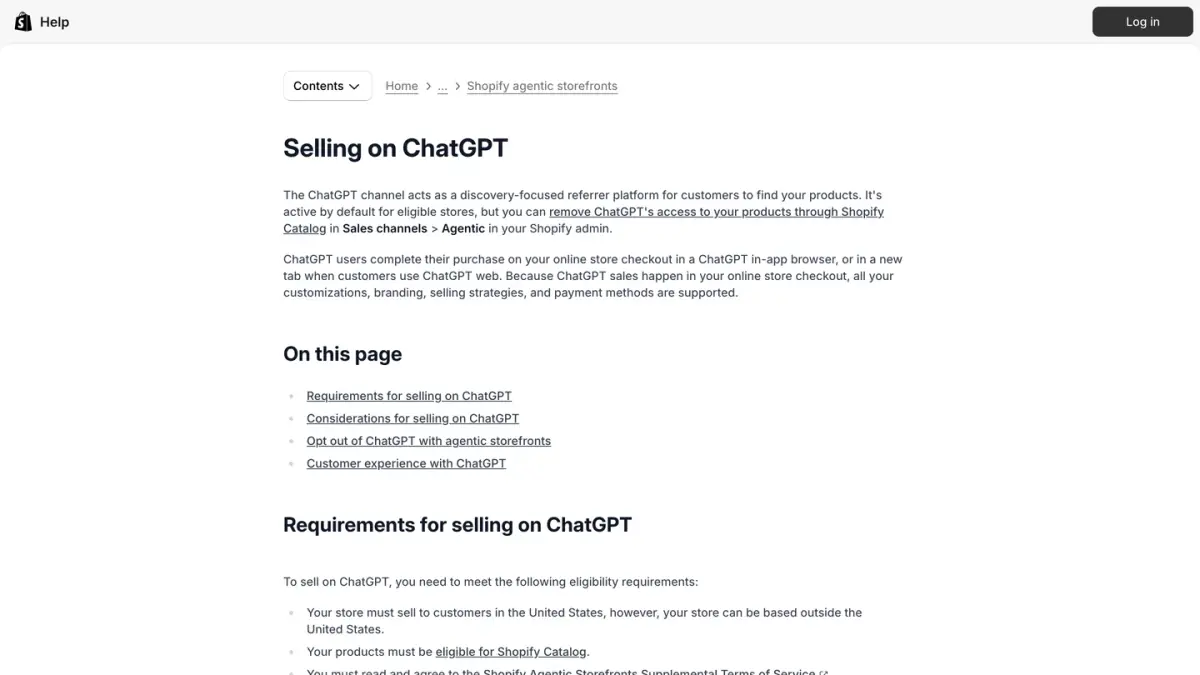
If your store runs on Shopify, your products can already appear in ChatGPT: Shopify sends eligible product data to ChatGPT through Shopify Catalog, and the channel is active by default for eligible stores. Shoppers discover products in ChatGPT and complete the purchase on your own online store checkout, and Shopify states that there are no fees associated with selling in ChatGPT beyond your standard payment processing fees (Shopify Help Center, as of October 7, 2026).
This guide explains how the connection works, what your store needs, what a shopper sees, what it costs and which settings you control. It relies on Shopify's and OpenAI's own pages, read on October 7, 2026. The subject moves fast: where the two companies' pages don't say the same thing, we say so.
How do Shopify products get into ChatGPT?
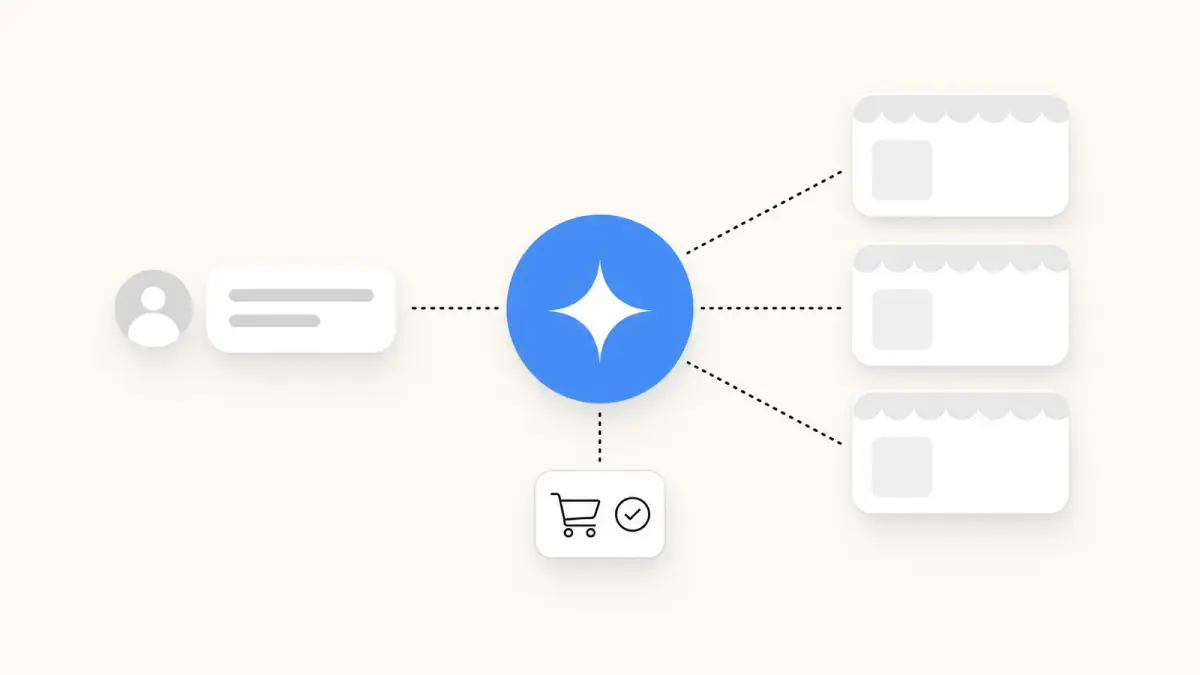
Through Shopify Catalog. Shopify defines it as "a structured source of product information gathered from eligible products that are sold by stores on Shopify", which AI platforms can use to search and understand titles, descriptions, images, pricing, options and availability (Help Center).
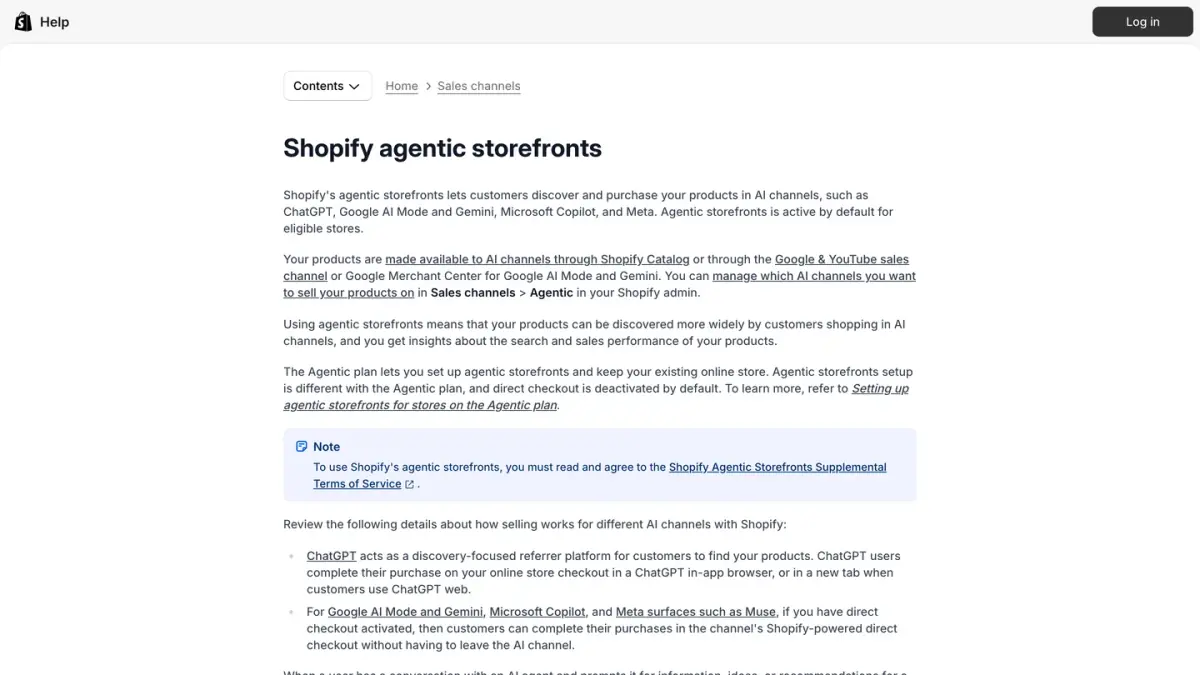
The feature that connects Catalog to AI assistants is called agentic storefronts. In Shopify's words, it "lets customers discover and purchase your products in AI channels, such as ChatGPT, Google AI Mode and Gemini, Microsoft Copilot, and Meta", and it is active by default for eligible stores (Help Center).
OpenAI confirms the arrangement from its side. Its Help Center states that for merchants on Shopify, product data "is already integrated into ChatGPT through Shopify Catalog" and that "no additional work is required from individual merchants" (OpenAI Help Center). Its merchant page says the same for Shopify and Etsy sellers: the catalog is already integrated, with no setup or application required.
So the practical answer to "how do I connect Shopify to ChatGPT" is that there is nothing to install. The work is in eligibility and in the quality of your product data.
Can customers buy inside ChatGPT?
Not for Shopify stores, as of October 7, 2026. OpenAI's position on this point has changed, so here is what each company's page says today.
| Source | What it states |
|---|---|
| Shopify Help Center | ChatGPT "acts as a discovery-focused referrer platform". Users complete their purchase on your online store checkout in a ChatGPT in-app browser, or in a new tab on ChatGPT web. There is no ChatGPT direct checkout setting in the admin |
| OpenAI merchant page | "We're moving away from a standalone Instant Checkout experience in ChatGPT and prioritizing better shopping discovery and merchant-owned checkout experiences." Purchases are completed on merchant-owned websites or apps |
| OpenAI Help Center, Shopify article | Shopify stores may appear to users when relevant, and "users check out on the merchants' online store" |
| OpenAI Help Center, shopping article | For some eligible products and merchants, ChatGPT "may also show an Instant Checkout option" |
The last line does not match the first three. OpenAI's shopping article still mentions an Instant Checkout option for some merchants, while its merchant page says it is moving away from that experience, and its separate help article on Instant Checkout was no longer online when we looked for it on October 7, 2026. For a Shopify store, Shopify's page is unambiguous: the sale happens in your checkout.
Shopify presents this as an advantage: "Because ChatGPT sales happen in your online store checkout, all your customizations, branding, selling strategies, and payment methods are supported."
What does your store need to be eligible?
For the ChatGPT channel
Shopify lists four requirements:
- Your store must sell to customers in the United States. It can be based outside the United States.
- Your products must be eligible for Shopify Catalog.
- You must read and agree to the Shopify Agentic Storefronts Supplemental Terms of Service.
- You must have your Terms of service, Privacy policy and Return and refund policy completed in Settings > Policies.
If the third policy is missing, our guide to creating a Shopify return policy walks through it.
For Shopify Catalog
The Catalog requirements apply to the store and to each product:
- The store complies with Shopify's Terms of Service and Acceptable Use Policy.
- The store is on the Starter plan or higher and isn't in private mode (with an exception for the Agentic plan, below).
- Each product has a title and at least 1 product image.
- Each product has a price greater than zero.
- Products are published to your online store, Hydrogen or Headless channels, with an identifiable product URL.
- Products aren't Unlisted or hidden from search engines, and don't contain sensitive content.
Shopify adds requirements on account standing: a verified email address, two-step authentication, a track record of genuine sales, prompt fulfillment, a low chargeback rate and invoices paid on time. Eligibility is reviewed over time and can be lost.
What is excluded
- B2B-only products aren't supported for agentic storefronts.
- Products prohibited by OpenAI don't display in ChatGPT results. OpenAI's developer documentation lists, among others, adult content, age-restricted products such as alcohol, nicotine and gambling, weapons and prescription-only medications.
- Legal disclosures: Shopify asks you to include any relevant legal disclosures in the first 6,000 characters of your product descriptions.
One limit applies to everything: eligibility is not visibility. Shopify writes that being included in Catalog "doesn't guarantee that a product will appear in a specific AI answer, be ranked in a specific position, or be displayed by every channel".
What does the shopper see in ChatGPT?
OpenAI's Help Center describes the experience. When a question suggests shopping intent, ChatGPT can show product options with imagery, product details and links to sites where the shopper can learn more or purchase. Three points matter for a merchant.
Results are not ads. OpenAI states that product results "are selected independently by ChatGPT and are not ads, nor influenced by any OpenAI partnerships".
How products are selected. A product appears when ChatGPT perceives it as relevant to the user's intent. It considers structured metadata from first-party and third-party providers, such as price and product description, the model's own responses, and OpenAI's safety standards. If the shopper gives a budget, price weighs more.
How merchants are ranked. When a user clicks a product, ChatGPT may show a list of merchants offering it, ranked "based on factors like availability, price, quality, and whether they are the maker or primary seller of that item".
OpenAI also notes that ChatGPT may generate simplified product titles and descriptions, add labels such as "Budget-friendly", and summarize reviews from public websites. Your product may therefore be presented in words that are not yours, and price or shipping updates can take some time to be reflected.
From there, a shopper who chooses your store lands on your checkout, in ChatGPT's in-app browser or in a new tab on ChatGPT web, and pays with any of your accepted payment methods.
How much does it cost?
| Item | What the official pages state |
|---|---|
| Fee for selling in ChatGPT (Shopify) | "There are no fees associated with selling in ChatGPT. You pay only your standard payment processing fees." |
| Fee on purchases (OpenAI) | "There are no fees on purchases that start in ChatGPT." |
| Shopify subscription | Your current plan. Catalog requires the Starter plan or higher |
| Agentic plan | No monthly subscription fee, for merchants that don't use Shopify as their ecommerce platform |
Sources: Shopify Help Center, OpenAI merchant page and Agentic plan, as of October 7, 2026.
Payment processing fees depend on your plan and your payment provider. Our Shopify pricing guide lists the rates.
If your store is not on Shopify: the Agentic plan
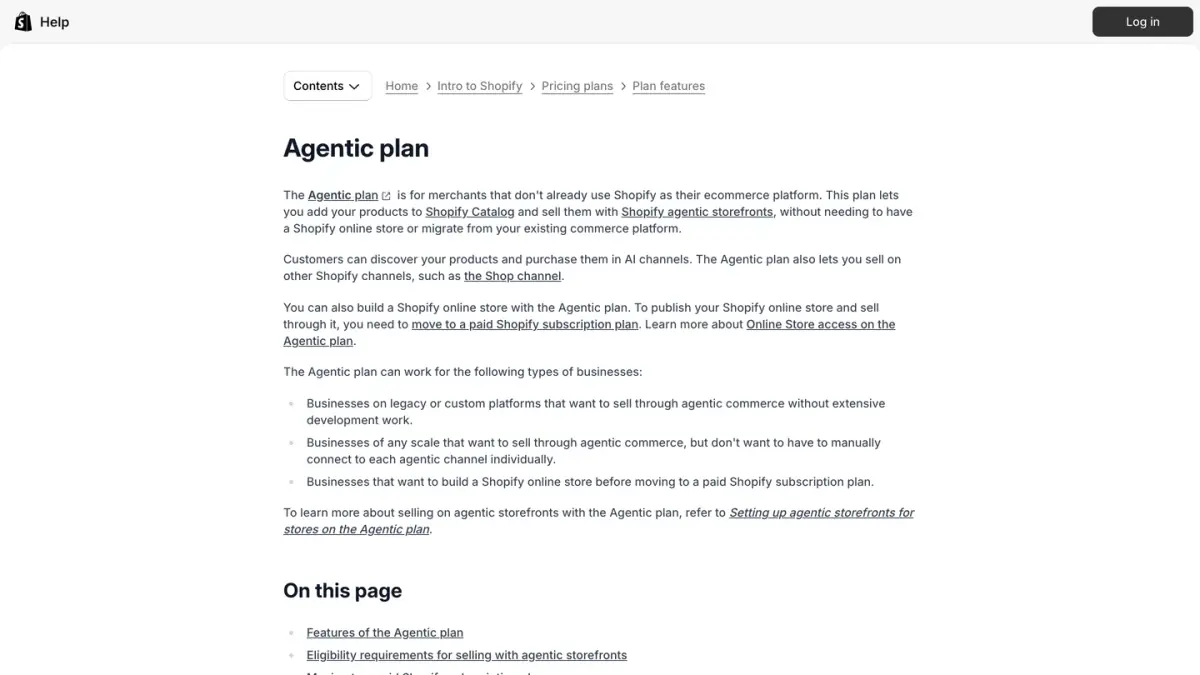
Shopify's Agentic plan is for merchants that don't already use Shopify as their ecommerce platform. You add your products to Shopify Catalog, with an external product URL that points to your existing store, and sell through agentic storefronts without migrating. The Help Center states that the plan has no monthly subscription fee, and that payment or transaction fees apply when a customer completes a purchase in an AI channel's Shopify-powered direct checkout. On this plan, direct checkout is deactivated by default, and an online store built on it stays password protected until you move to a paid plan.
Which settings do you control?
Everything is under Sales channels > Agentic in your Shopify admin. To access it, you must be the store owner or have the Products > View and App and sales channel > Agentic staff permissions (Help Center).
The default: Allow Shopify to manage for me
With this setting on, all agentic channels can access your products through Shopify Catalog, direct checkout is activated on the channels that offer it, and you are automatically enrolled in new channels as they join. For ChatGPT, that means discovery through Catalog, since ChatGPT has no direct checkout setting.
Opt out of ChatGPT
- From your Shopify admin, go to Sales channels > Agentic.
- Deactivate Allow Shopify to manage for me.
- Click ChatGPT.
- Deactivate Shopify Catalog access.
- Click Save.
Shopify attaches three caveats. It can take up to 7 days before your product data stops being shared. Your products "might still be displayed or referenced" through web crawling and indexing. And removing ChatGPT's access doesn't affect other uses of Catalog, such as Shop.
To hide a product from AI channels completely, Shopify's method is to set the product status to Unlisted. The cost is stated in the same paragraph: the product is also hidden from sitemaps, search engines such as Google and your online store search.
What you can measure
In the Agentic section, Shopify reports four figures per AI channel: sales, orders, online store sessions and online store conversion. Orders from AI channels appear in your admin with channel or referrer attribution. Shopify notes that these analytics aren't yet available for headless stores. A search preview tool in the same section lets you run queries to see how your products might rank.
What ChatGPT receives
According to Shopify's data sharing page, AI channels access product data such as titles, descriptions, images, pricing and availability. Channels with direct checkout also receive order details for the orders placed there, which does not concern ChatGPT today. Shopify states that AI channels don't have access to your full order history, orders from other sales channels or your general customer database.
How do you improve how your products appear?
Neither Shopify nor OpenAI promises a ranking. Both describe what the systems read, which tells you where to work.
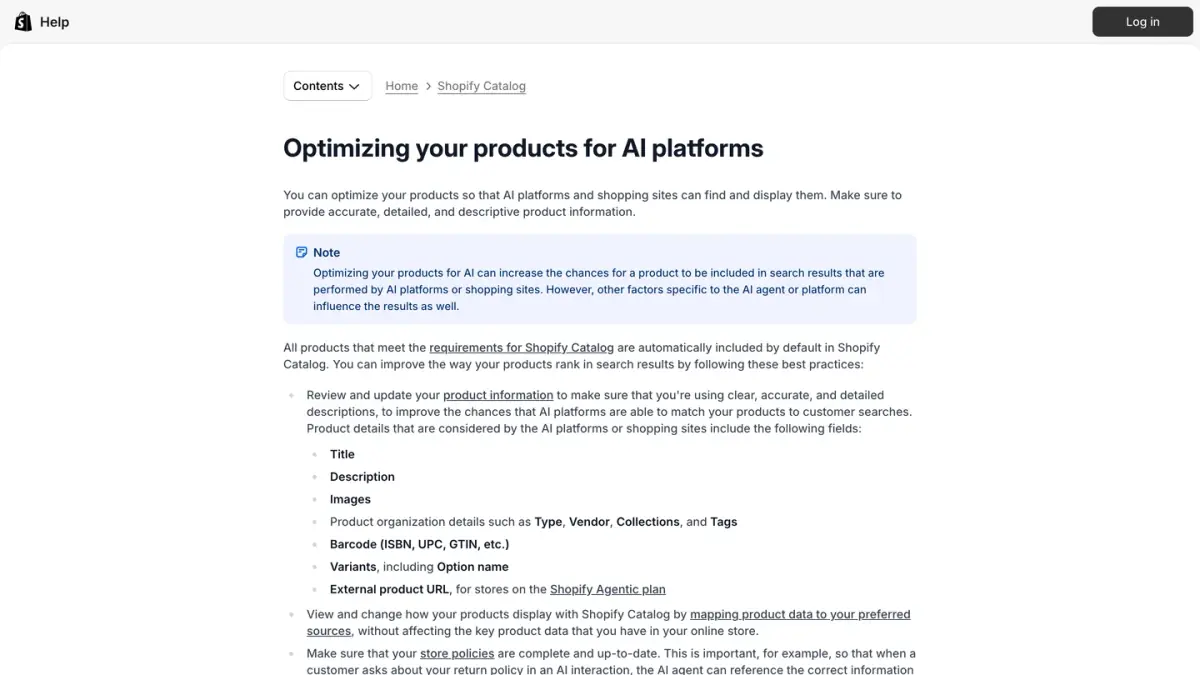
Product data. Shopify's page on optimizing products for AI platforms lists the fields considered: title, description, images, product organization details (type, vendor, collections, tags), barcode (ISBN, UPC, GTIN) and variants with their option names.
Store policies. Shopify gives the reason: when a customer asks an AI agent about your return policy, the agent can reference the information stored in Shopify.
Questions and answers. The Shopify Knowledge Base app lets you review automatically generated facts about your store, see common shopper questions and write your own answers.
Custom data. If your titles, descriptions or categories live in metafields or follow your own grouping logic, Shopify Catalog Mapping lets you choose which sources Catalog reads.
Descriptions that state facts. OpenAI's best practices for product feeds recommend concise, factual copy, and variants modeled with their own title, price, availability and option values such as color or size. That guidance is written for merchants sending a feed directly, but it describes what ChatGPT is built to read.
Agent discovery files. Every Shopify store automatically serves /agents.md, /llms.txt and /llms-full.txt, which give AI agents your store name, sitemap link, policies and discovery endpoints. You can customize them with theme templates. Shopify specifies that these files are separate from Catalog and don't replace it.
Shopify's own AI tools can help with the writing: see our guides to Shopify Magic and Shopify Sidekick.
What is live, and what is announced?
| Item | Status on October 7, 2026 | Source |
|---|---|---|
| Shopify products discoverable in ChatGPT through Catalog | Live, active by default for eligible stores | Shopify Help Center |
| Shopping in ChatGPT for users in the U.S. | Live | OpenAI merchant page |
| Checkout on the merchant's own store | Live | Shopify and OpenAI |
| Checkout inside ChatGPT for Shopify stores | Not available | Shopify Help Center |
| Shopping in ChatGPT in more regions | Announced, no date | OpenAI merchant page |
| Self-serve merchant platform for data integration | Announced by OpenAI for "later this year" | OpenAI merchant page |
| Direct product feeds to OpenAI | Available to approved partners, by application | OpenAI developer documentation |
OpenAI describes its direction in one sentence: the Agentic Commerce Protocol "supports product discovery" today and "will expand to support the full shopping journey" over time. Our explainer on agentic commerce covers the protocols and the other AI channels, including those where Shopify does offer a direct checkout.
And after the click?
ChatGPT sends you a shopper, and the rest of the relationship is yours: Shopify states that you retain full ownership of the customer relationship and the post-purchase experience. Order updates, questions and repeat purchases still run through your own channels. Kanal, a WhatsApp marketing and sales app for Shopify stores, includes an AI chatbot that answers your customers on WhatsApp.
Shopify and ChatGPT in short
- Nothing to install: Shopify Catalog feeds ChatGPT, and the channel is on by default for eligible stores.
- You need to sell to US customers, meet the Catalog requirements and complete your three store policies.
- Shoppers buy on your own checkout. There is no in-chat checkout for Shopify stores today.
- No fee from Shopify or OpenAI for these sales, beyond payment processing.
- Settings and reports are in Sales channels > Agentic.
- Visibility is not guaranteed: complete, factual product data is the part you control.
See Kanal on your own store
- Your campaigns and cart reminders on WhatsApp, starting from your own store
- Post-purchase offers, back-in-stock alerts, then the AI agent that advises your customers
- You leave with the plan that fits and its price
From €89/month
- brands
- 500+
- to set up
- 5 min
- open rate on WhatsApp
- +90%
Nicolas helps e-commerce brands grow revenue with WhatsApp marketing. With deep expertise in Shopify ecosystems and conversational commerce, he shares proven strategies for abandoned cart recovery, broadcast campaigns, and AI-powered customer engagement.