Agentic Commerce: What It Is and What It Changes for Stores
Agentic commerce explained: definitions from Google, Stripe and Shopify, the ACP and UCP protocols, what is live in the US, fees and how to prepare your data.
 Nicolas ProvostOct 7, 2026 · 15 min read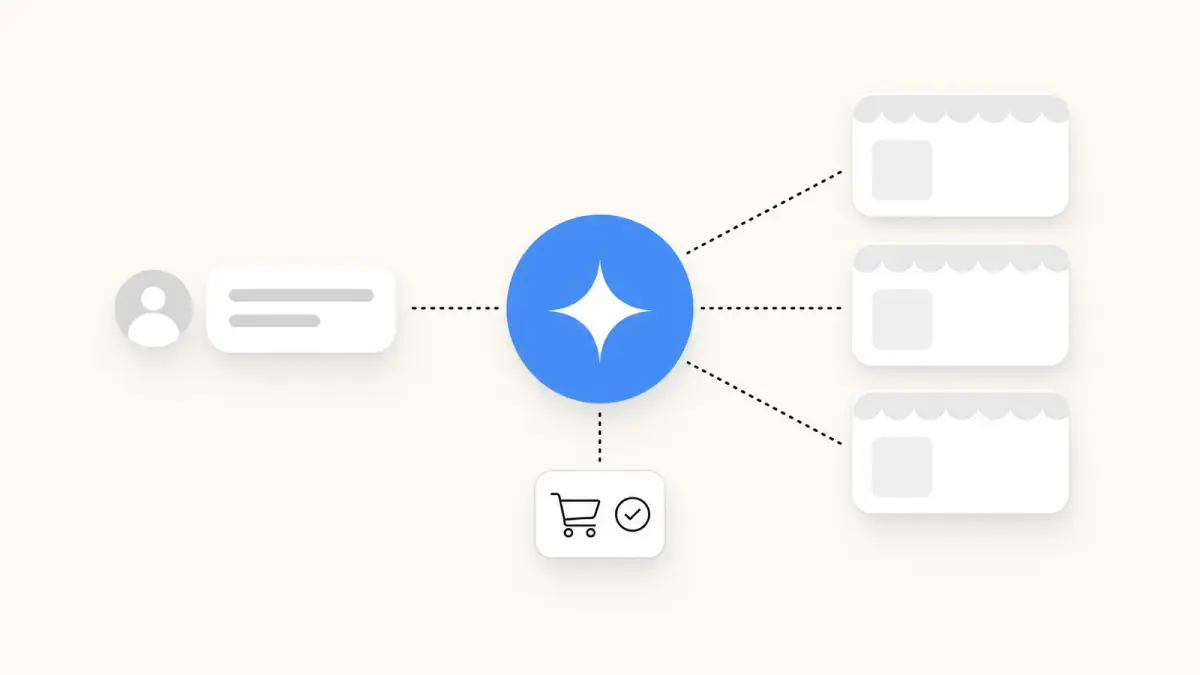
Summarize this article with an AI
 ChatGPT
 Claude
Table of contents (20)
Key takeaways
- Agentic commerce is shopping in which an AI agent finds products, compares them and, on some platforms, completes the purchase for the buyer.
- Two open shopping protocols exist, ACP from Stripe and OpenAI and UCP from Google with Shopify, and both keep the merchant as merchant of record.
- Every direct checkout documented on October 7, 2026 is limited to customers in the United States, plus Canada and Mexico for Meta.
- On Shopify, agentic storefronts are active by default for eligible stores, and the Help Center lists no selling fees beyond standard payment processing.
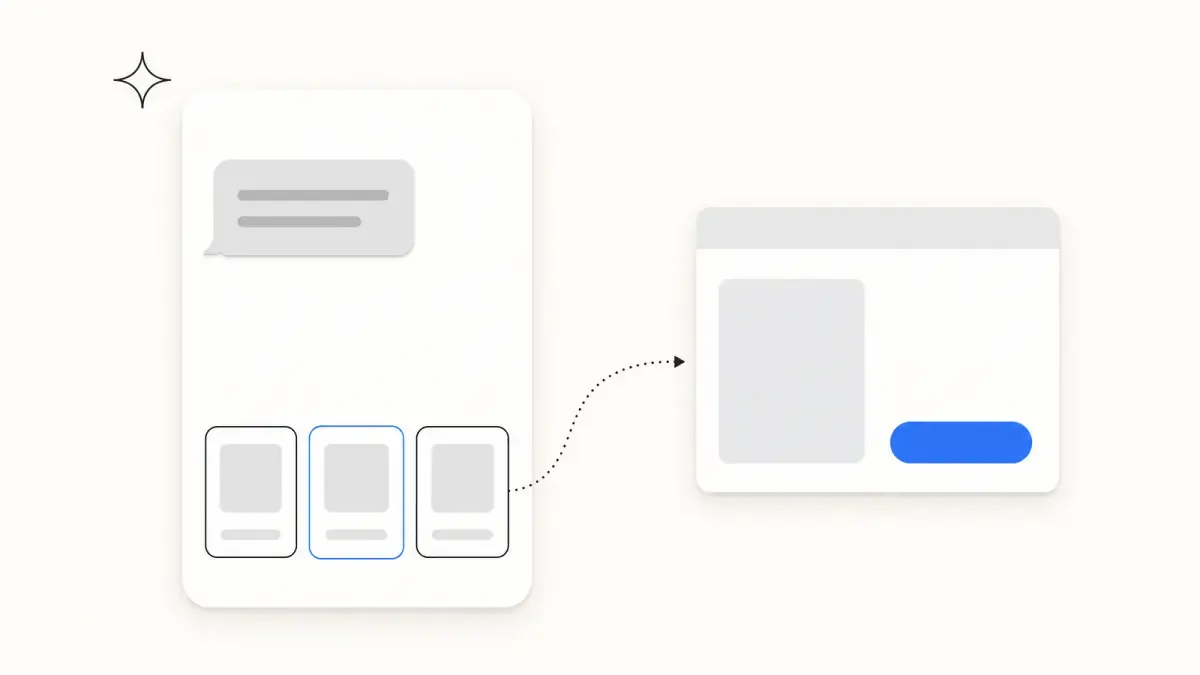
Agentic commerce is shopping in which an AI agent does part of the work for the buyer: it finds products, compares them and, on some platforms, completes the purchase. Google describes it as commerce "where AI completes tasks on people's behalf", and in practice it means that your products are discovered, and sometimes bought, inside assistants such as ChatGPT, Gemini or Copilot instead of on your storefront (Google, January 11, 2026).
This explainer gives the definitions the companies themselves use, the protocols they have published, what is live today and where, how a Shopify store takes part, what the merchant keeps control of, the fees as published and how to prepare product data. Every source was read on October 7, 2026. The field changes quickly: each item is labeled as live or announced, and where sources disagree, we point it out.
What does agentic commerce mean?
There is no single official definition. Here is how the main companies put it in their own pages.
| Company | Its own words |
|---|---|
| Agentic commerce is "where AI completes tasks on people's behalf" (announcement) | |
| Stripe | "Agentic commerce uses AI agents to support transactions between buyers and sellers, and to let agents transact on behalf of the people they serve" (documentation) |
| Shopify | Agentic storefronts let "customers discover and purchase your products in AI channels" (Help Center) |
| Microsoft | "Shopping journeys are moving from clicks to conversations" (agentic commerce page) |
| OpenAI | The Agentic Commerce Protocol is "the connective layer between merchants and ChatGPT users" (developer documentation) |
The common core has three parts:
- Discovery. A shopper describes a need in a conversation. The agent searches product data and returns a selection.
- Evaluation. The agent compares options, answers follow-up questions and narrows the choice.
- Purchase. Depending on the platform, the shopper is sent to the merchant's checkout, or pays without leaving the conversation.
Shopify gives a simple illustration: a user says "I'm looking for recommendations for navy running shorts", and the AI agent displays a selection of products it thinks fit the request.
How it differs from conversational commerce
Conversational commerce is selling through conversations between a business and its customers, in chat or messaging apps. The business is one of the two parties. In agentic commerce, the conversation is between the shopper and a third-party assistant, and your store appears in it as data. The two overlap but are not the same thing.
Which protocols have been published?
For an agent to read a catalog, build a cart and pay, the parties need shared rules. Three open protocols cover this for shopping.
| Protocol | Published by | What it covers | License and date |
|---|---|---|---|
| Agentic Commerce Protocol (ACP) | Stripe and OpenAI | Product feeds, carts, checkout sessions, delegated payment, orders | Apache 2.0 |
| Universal Commerce Protocol (UCP) | Google, co-developed with Shopify, Etsy, Wayfair, Target and Walmart | Catalog, cart, identity linking, checkout, order management | Launched January 11, 2026 |
| Agent Payments Protocol (AP2) | Secure agent-led payments, with mandates and verifiable credentials | Announced September 16, 2025 |
Sources: agenticcommerce.dev, ucp.dev, Google and ap2-protocol.org, as of October 7, 2026.
Agentic Commerce Protocol (ACP)
The ACP site presents it as "an open standard for programmatic commerce flows between buyers, AI agents, and businesses", developed by Stripe and OpenAI and open source under the Apache 2.0 license. Stripe's documentation lists its building blocks: agentic checkout, cart and feed, delegate payment, delegate authentication, and orders and webhooks.
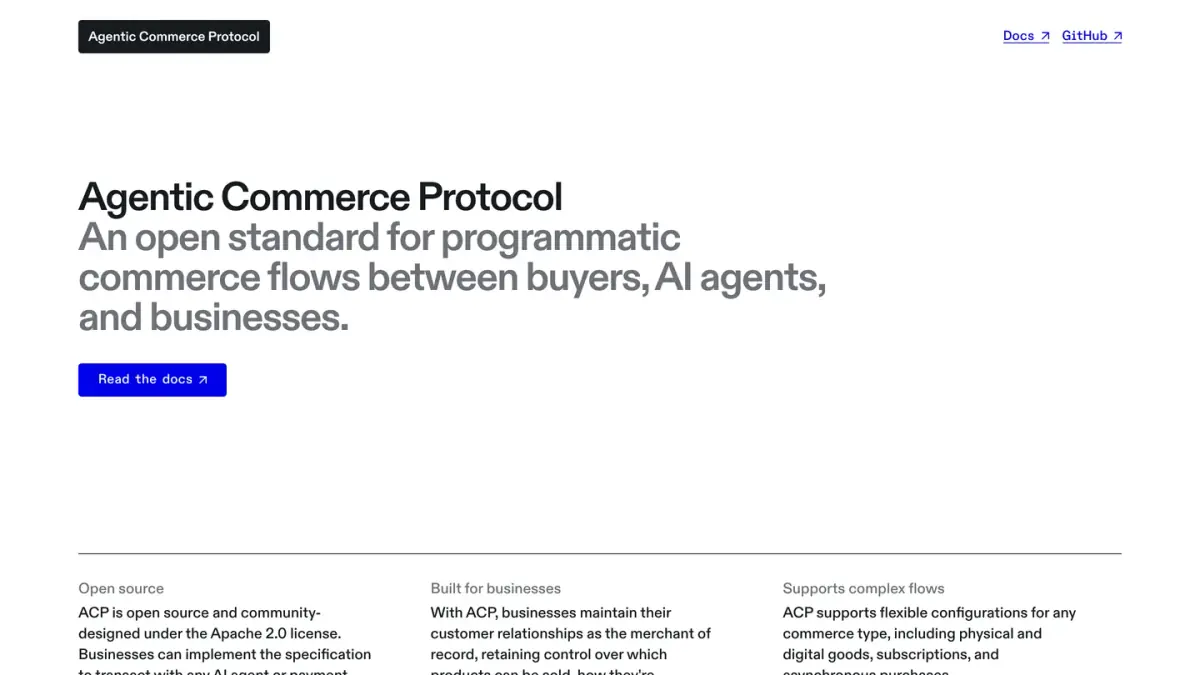
Two details from the ACP site are useful for merchants:
- Implementing the protocol does not list your products anywhere by itself. Each AI platform manages its own process for participation.
- OpenAI was the first AI platform to implement ACP, with ChatGPT.
A small discrepancy between sources: the ACP site says Stripe and OpenAI developed the protocol, while Stripe's documentation describes it as "created by Stripe, OpenAI, and Meta".
In ChatGPT, the protocol's current role is narrower than its specification. OpenAI's merchant page states that ACP today "supports product discovery and more accurate, personalized recommendations through shared product data", and that it will expand to the full shopping journey over time.
Universal Commerce Protocol (UCP)
Google launched UCP on January 11, 2026 as "a new open standard for agentic commerce that works across the entire shopping journey", which it describes as running "from discovery and buying to post-purchase support". It was co-developed with Shopify, Etsy, Wayfair, Target and Walmart, and endorsed at launch by more than 20 other companies, including Adyen, American Express, Mastercard, Stripe and Visa.
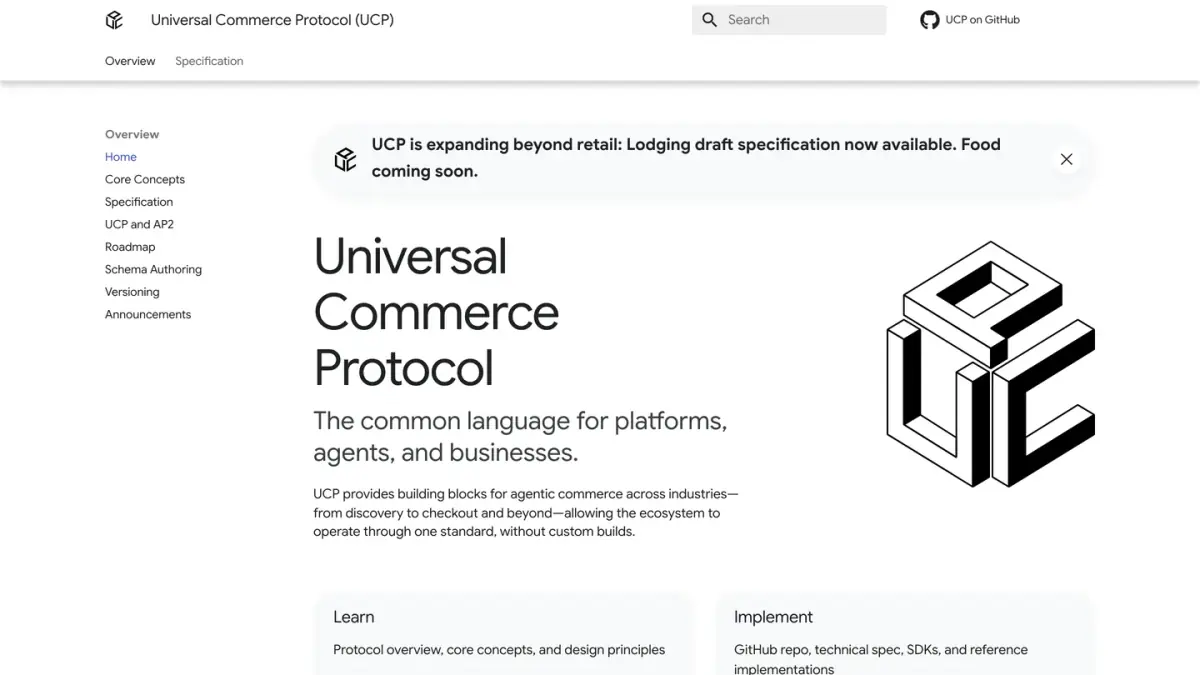
The UCP site describes five core capabilities: Catalog (search and lookup), Cart, Identity Linking, Checkout and Order management. On March 19, 2026, Google announced the Cart, Catalog and Identity Linking capabilities as new optional additions. The site's "Co-developed by industry leaders" section, read on October 7, 2026, is longer than the launch list and also shows Amazon, Microsoft, Meta, Salesforce and Stripe.
UCP is designed to work with other standards. Its site cites REST and JSON-RPC transports and built-in support for AP2, Agent2Agent (A2A) and the Model Context Protocol (MCP).
Agent Payments Protocol (AP2)
AP2 is Google's open protocol for payments initiated by agents. According to its site, it relies on mandates and verifiable credentials, and standardization of the specification continues within working groups in FIDO.
What the protocols have in common
Both shopping protocols say the same thing about the merchant's position:
- ACP: businesses "maintain their customer relationships as the merchant of record, retaining control over which products can be sold, how they're presented, and how orders are fulfilled".
- UCP: businesses "retain control and remain the Merchant of Record, with full ownership of customer relationships".
Payment providers work with both: Stripe's documentation lists "UCP or ACP" as the protocol used when an agent completes a checkout.
What exists today, and where?
The table below separates what the companies' pages describe as live from what they describe as rolling out or planned, as of October 7, 2026.
| Program | Status | Where | Source |
|---|---|---|---|
| Shopping in ChatGPT (discovery, checkout on the merchant's site) | Live | Users in the U.S. | OpenAI |
| Checkout inside ChatGPT (Instant Checkout) | OpenAI says it is "moving away from a standalone Instant Checkout experience" | Not applicable | OpenAI |
| ChatGPT in more regions, self-serve merchant platform | Announced | No date, "later this year" for the platform | OpenAI |
| Checkout in Google AI Mode and Gemini | Rolling out | Eligible U.S. retailers and U.S. customers | Google, Shopify |
| Copilot Checkout (Microsoft) | Rollout began in the U.S. on Copilot.com, announced January 8, 2026 | Customers based in the United States | Microsoft |
| Direct checkout on Meta surfaces | Documented by Shopify, with the mention "Muse when available" | Customers in the United States, Canada or Mexico | Shopify |
| Simplified UCP onboarding in Google Merchant Center | Announced March 19, 2026 as "rolling out over the coming months" | Not specified |
Two observations.
The model is not settled. OpenAI moved from in-chat checkout to merchant-owned checkout, while Google, Microsoft and Meta offer a checkout inside their own surfaces. A store has to be ready for both: being discovered and then visited, and being bought without a visit.
It is mostly a U.S. program today. Every direct checkout documented above is limited to customers in the United States, plus Canada and Mexico for Meta. Our guide to the Meta Business Agent covers Meta's separate AI agent for businesses.
How does a Shopify store take part?
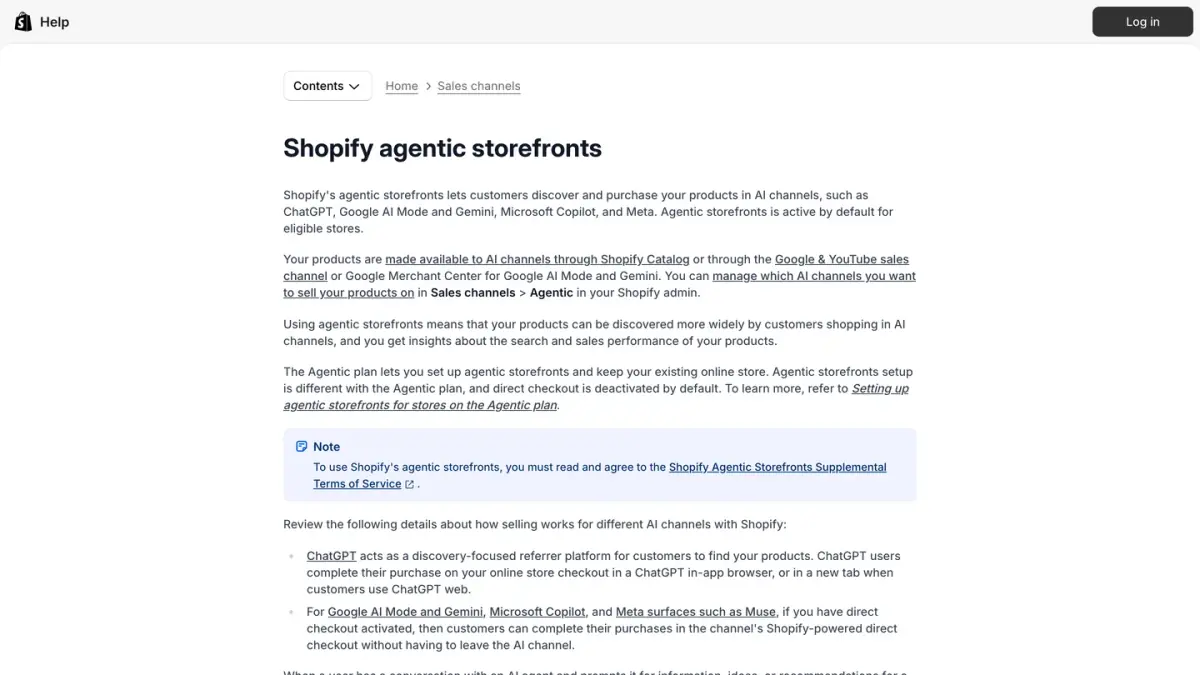
Shopify's answer is a feature called agentic storefronts, backed by Shopify Catalog.
The mechanism
- Shopify Catalog is "a structured source of product information gathered from eligible products that are sold by stores on Shopify". Eligible products are included automatically (Help Center).
- Agentic storefronts make that data available to AI channels and is "active by default for eligible stores". The Help Center names ChatGPT, Google AI Mode and Gemini, Microsoft Copilot and Meta.
- Direct checkout is a Shopify-powered checkout inside the AI channel, where the channel supports it.
| AI channel | How products get there | Where the customer pays |
|---|---|---|
| ChatGPT | Shopify Catalog | Your online store checkout, in an in-app browser or a new tab |
| Google AI Mode and Gemini | Google & YouTube sales channel or Google Merchant Center | Direct checkout if activated and available, otherwise your store |
| Microsoft Copilot | Shopify Catalog | Direct checkout if activated, otherwise your store |
| Meta | Shopify Catalog (and the Facebook and Instagram sales channel for shoppable ads) | Direct checkout if activated, otherwise your store |
Source: Shopify Help Center, as of October 7, 2026.
One inconsistency between Shopify's own pages: its Agentic plan page also names Perplexity among the destinations for product data, while the Help Center's list of agentic storefront channels, read the same day, does not include a Perplexity page. We describe the four channels the Help Center documents.
The requirements
They vary by channel, with a common base: products eligible for Shopify Catalog, acceptance of the Shopify Agentic Storefronts Supplemental Terms of Service, and the Terms of service, Privacy policy and Return and refund policy completed in Settings > Policies. For Google's direct checkout, the store must also be based in the United States and have a valid Google Merchant Center account. Our practical guide to selling on ChatGPT with Shopify details the ChatGPT case, and our guide to the Shopify return policy covers the third policy.
Merchants that are not on Shopify
Shopify's Agentic plan lets a merchant add products to Shopify Catalog and sell through agentic storefronts "without needing to have a Shopify online store or migrate from your existing commerce platform". The plan has no monthly subscription fee. Our Shopify pricing guide places it among the other plans.
For developers
Shopify's developer documentation describes UCP-compliant MCP servers for agents: a Global Catalog to search products across Shopify merchants, cart and checkout tools, and order webhooks. A Universal Cart API, which lets agents collect items from several merchants into one cart, is in early access with a waitlist.
What does the merchant keep control of?
On Shopify, the controls sit in Sales channels > Agentic (Help Center).
- Which channels read your catalog. With Allow Shopify to manage for me turned off, you set Shopify Catalog access per channel.
- Whether customers can pay in the channel. The Direct checkout setting can be turned off, in which case customers are redirected to your online store.
- Whether new channels are added automatically. The Auto enroll new storefronts setting.
- The customer relationship. Shopify states that for orders placed through AI channels, "you retain full ownership of the customer relationship and post-purchase experience", and that these orders display in your admin with channel or referrer attribution.
What you do not control is stated just as clearly:
- Ranking and wording. "Each AI channel decides which products to display for a customer's request." Shopify Catalog supplies data, and each channel controls the final ranking, wording and shopping experience.
- Crawling. Turning off Catalog access does not make products invisible: they can still be found through web crawling and indexing. To hide a product completely, Shopify's method is the Unlisted status, which also hides it from search engines.
- Timing. It can take up to 7 days before product data stops being shared after you turn access off.
What a direct checkout does not support
Shopify lists nearly identical limits for the direct checkouts of Google, Microsoft Copilot and Meta:
- Subscriptions, product bundles, customizable products and B2B-only products aren't supported.
- Google Analytics and custom pixels won't fire. The checkout fires server-to-server pixels for started and completed.
- Local delivery, pickup in store and pickup points aren't supported as delivery methods.
- You can't require customers to sign in before checkout.
- Some checkout blocks, such as custom fields or upsells, might not display on Google and Microsoft Copilot. On Meta, checkout blocks aren't supported.
Discount codes, automatic discounts and Shopify Functions are supported. A store whose sales depend on subscriptions, bundles or checkout upsells should weigh this before leaving direct checkout on.
Data
According to Shopify's data sharing page, AI channels access product data such as titles, descriptions, images, pricing and availability. When an order is placed in a channel with direct checkout, that channel has access to the order details, such as the customer's name, email address, phone number and physical address. AI channels don't have access to your full order history, orders from other sales channels or your general customer database.
What are the fees?
| Who | What is published |
|---|---|
| Shopify, ChatGPT channel | "There are no fees associated with selling in ChatGPT. You pay only your standard payment processing fees." |
| Shopify, direct checkout on Google, Microsoft Copilot and Meta | No fees associated with selling in the channel's direct checkout. You pay your standard payment processing fees |
| Shopify, Agentic plan | No monthly subscription fee. Payment or transaction fees when a customer completes a purchase in a Shopify-powered direct checkout |
| OpenAI | "There are no fees on purchases that start in ChatGPT." |
Sources: Shopify Help Center pages for each channel and OpenAI merchant page, as of October 7, 2026.
These are the statements published today. None of the pages we read commits to keeping them unchanged.
How do you prepare your product data?
Agents read data, not page layouts. The companies' own guidance converges on a short list.
Complete the basic fields. Shopify's page on optimizing products for AI platforms lists what AI platforms consider: title, description, images, type, vendor, collections, tags, barcode (ISBN, UPC, GTIN) and variants with their option names.
Write facts. OpenAI's feed best practices ask for concise, factual copy that helps users understand products.
Model variants properly. OpenAI recommends a stable product ID, a unique ID per purchasable variant, and variant-specific title, price and availability when they differ.
Keep policies current. Shopify notes that an AI agent can reference your stored return policy when a customer asks about it. UCP's catalog format carries a link to the seller's refund policy with each product.
Answer common questions. Google announced "dozens of new data attributes" in Merchant Center for conversational discovery, including answers to common product questions and compatible accessories. On Shopify, the Knowledge Base app plays a similar role for store facts and FAQs.
Keep feeds synced. Google's channel relies on Merchant Center. Shopify asks you to keep product syncing activated in the Google & YouTube sales channel so that data stays current.
Put legal disclosures first. Shopify asks for any relevant legal disclosures within the first 6,000 characters of product descriptions.
Shopify's AI tools can speed up the writing: see our guides to Shopify Magic and Shopify Sidekick.
What does not change?
The agent handles discovery and sometimes payment. Fulfillment, service, returns and the next order remain with the merchant, which is exactly what "merchant of record" means in the protocols. A customer who bought through an assistant still asks where the parcel is, and still decides later whether to buy again.
That is where a store's own channels keep their role. Kanal, a WhatsApp marketing and sales app for Shopify stores, includes an AI chatbot that answers a store's customers on WhatsApp.
Agentic commerce in short
- Definition: AI agents find, compare and sometimes buy products on a shopper's behalf.
- Protocols: ACP (Stripe and OpenAI), UCP (Google with Shopify and retailers), AP2 for payments.
- Live today: discovery in ChatGPT for U.S. users, with checkout on the merchant's site. Direct checkouts on Google, Copilot and Meta surfaces for customers in the U.S., at different stages of rollout.
- On Shopify: agentic storefronts, on by default for eligible stores, managed in Sales channels > Agentic.
- Seller: the merchant remains the merchant of record everywhere.
- Fees: no channel fee published by Shopify or OpenAI, beyond payment processing.
- Your part: complete, factual, synchronized product data and up-to-date policies.
See Kanal on your own store
- Your campaigns and cart reminders on WhatsApp, starting from your own store
- Post-purchase offers, back-in-stock alerts, then the AI agent that advises your customers
- You leave with the plan that fits and its price
From €89/month
- brands
- 500+
- to set up
- 5 min
- open rate on WhatsApp
- +90%
Nicolas helps e-commerce brands grow revenue with WhatsApp marketing. With deep expertise in Shopify ecosystems and conversational commerce, he shares proven strategies for abandoned cart recovery, broadcast campaigns, and AI-powered customer engagement.