What does SMS mean? Meaning, limits and how it works
SMS means Short Message Service: plain text of 160 characters at most, sent over your carrier's network. How it works on iPhone and Android, cost and security.
 Nicolas ProvostOct 7, 2026 · 8 min read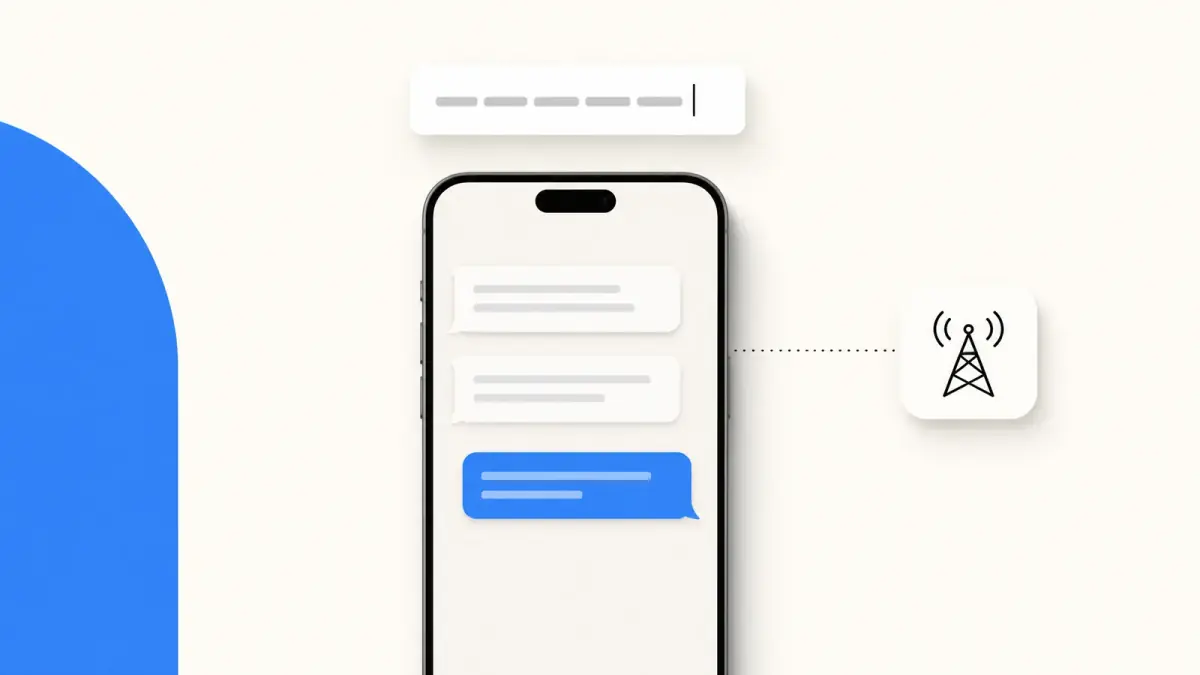
Summarize this article with an AI
 ChatGPT
 Claude
Table of contents (9)
Key takeaways
- SMS stands for Short Message Service, a plain text message carried by your carrier's cellular network instead of the internet.
- One SMS holds up to 160 characters, or 70 when a character outside the GSM alphabet, such as an emoji, forces UCS2 coding.
- Texts are not end-to-end encrypted, so never send passwords or card numbers by SMS.
SMS means Short Message Service. It is the standard text message: plain text of 160 characters at most, carried by your mobile carrier's network instead of the internet, so it does not depend on any app at the other end.
This guide covers where the name comes from, how an SMS travels, how long it can be, what it costs, and how it differs from MMS, RCS, iMessage and WhatsApp. The limits come from the 3GPP standard that defines SMS, and the iPhone and Android details from Apple's and Google's help pages. All of them were read on October 7, 2026.
What does SMS stand for?
SMS stands for Short Message Service. The name comes straight from the mobile standard: the service is specified by 3GPP, the body that writes mobile network standards, in a document titled "Technical realization of the Short Message Service (SMS)".
Strictly speaking, SMS is the service and each item you send is a "short message". In everyday English, "an SMS", "a text" and "a text message" all mean the same thing, and Apple's Messages app calls it a text message.
The first one was sent on December 3, 1992. Vodafone tells the story (page read on October 7, 2026): programmer Neil Papworth, who was building the service for Vodafone, sent "Merry Christmas" from a computer to his colleague Richard Jarvis.
What does SMS mean on an iPhone or an Android phone?
On your phone, "SMS" tells you which road a message took: your carrier's cellular network, not an internet messaging service.
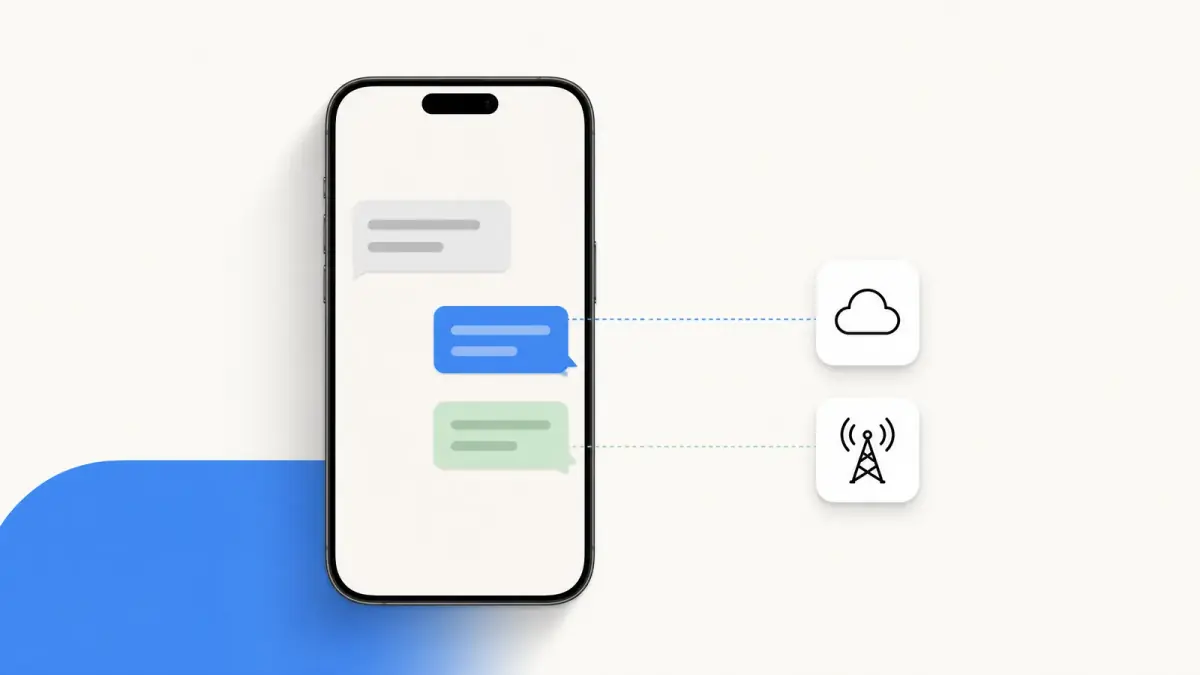
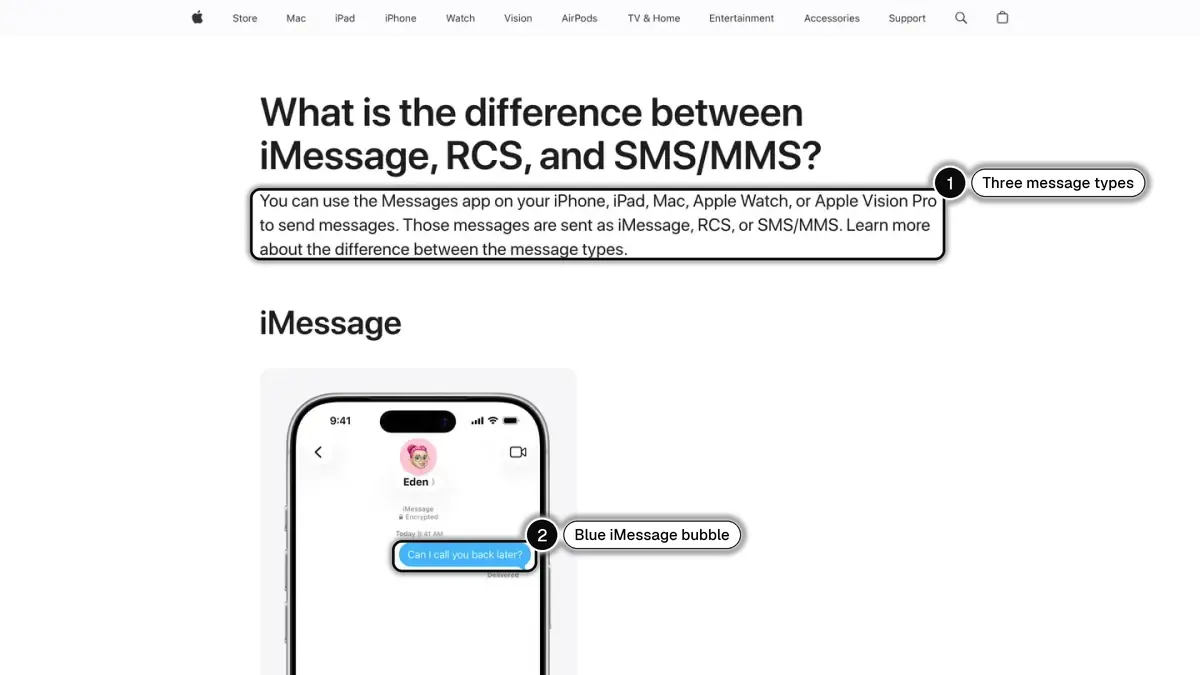
- On iPhone, the Messages app sends either iMessage (blue bubbles, between Apple devices) or carrier messages. Apple's help page says that SMS/MMS messages appear in green text bubbles and that you need "a text-messaging plan that supports these services". If your bubbles changed color, see why your texts are green.
- On Android, Google Messages shows the route before you send: the Send icon in the compose bar indicates whether the message will go by Wi-Fi or mobile data, by SMS or by MMS. In the thread, Google says that text messages are dark blue in the RCS state and light blue in the SMS/MMS state.
How does an SMS work?
An SMS does not go straight from one phone to the other. In the 3GPP specification, your phone submits the short message to a service center on the network side, and the service center relays it to the recipient's phone. The same document provides for a delivery report and for "a specific mechanism for later delivery" when the recipient cannot be reached, so a text sent to a phone that is switched off can still arrive once it is back on the network.
Two practical consequences:
- No internet needed. Apple states that "to send an SMS message, you need cellular network connection", whereas iMessage, RCS and MMS need cellular data or Wi-Fi. With Wi-Fi Calling turned on, an iPhone can also send SMS over Wi-Fi.
- It is tied to your number and your plan. SMS is a carrier service: it goes to a phone number, and whether it is included depends on your mobile plan.
How long can an SMS be?
A single SMS holds 140 octets (bytes) of content. How many characters that makes depends on the alphabet your phone uses to code the message.
| Coding used | One message | Each part of a longer message |
|---|---|---|
| GSM 7-bit default alphabet (Latin letters, digits, common punctuation, a few accented letters) | 160 characters | 153 characters |
| UCS2 (other alphabets and symbols) | 70 characters | 67 characters |
Sources: 3GPP TS 23.038 and TS 23.040, version 19.0.0 published by ETSI in October 2025, read on October 7, 2026.
What this means when you type:
- Plain text fits 160 characters. The standard notes that "in 140 octets, it is possible to pack (140x8)/7=160 characters" of the default alphabet.
- Some characters count double. A few symbols sit in an extension table (the euro sign is one of them), and the number of characters you can display "will reduce by one" each time one of them is used.
- Other characters change the coding. The default alphabet has a handful of accented letters and no emoji. To send a character that is not in it, a phone can code the message in UCS2, and the message then holds 70 characters.
- Long texts are split and put back together. The standard lets phones concatenate short messages "to form a longer message". Each part carries a small header, which is why the parts are shorter (153 or 67 characters). You see one message; the network carries several.
On Android, Google Messages has a setting for this: under Messages settings, then Advanced, the option Use simple characters changes special characters to simple ones.
How is SMS different from MMS, RCS, iMessage and WhatsApp?
SMS is the oldest of the services your phone can use to send a message. Here is how it compares with the others.
| Service | Carried by | What it sends | End-to-end encrypted | Reaches |
|---|---|---|---|---|
| SMS | Your carrier's cellular network | Text | No | Mobile phone numbers |
| MMS | Your carrier | Photos, videos, audio, group messages | No | Mobile phone numbers |
| RCS | Your carrier or Google, over Wi-Fi or mobile data | Text, high-resolution photos and videos, typing indicators, read receipts | In some conversations | Phones with RCS turned on |
| iMessage | Apple, over Wi-Fi or cellular data | Text, photos, videos, effects | Yes | Apple devices |
| The WhatsApp app, over the internet | Text, media, calls | Yes, in personal chats | People who have the app |
To go further on each one:
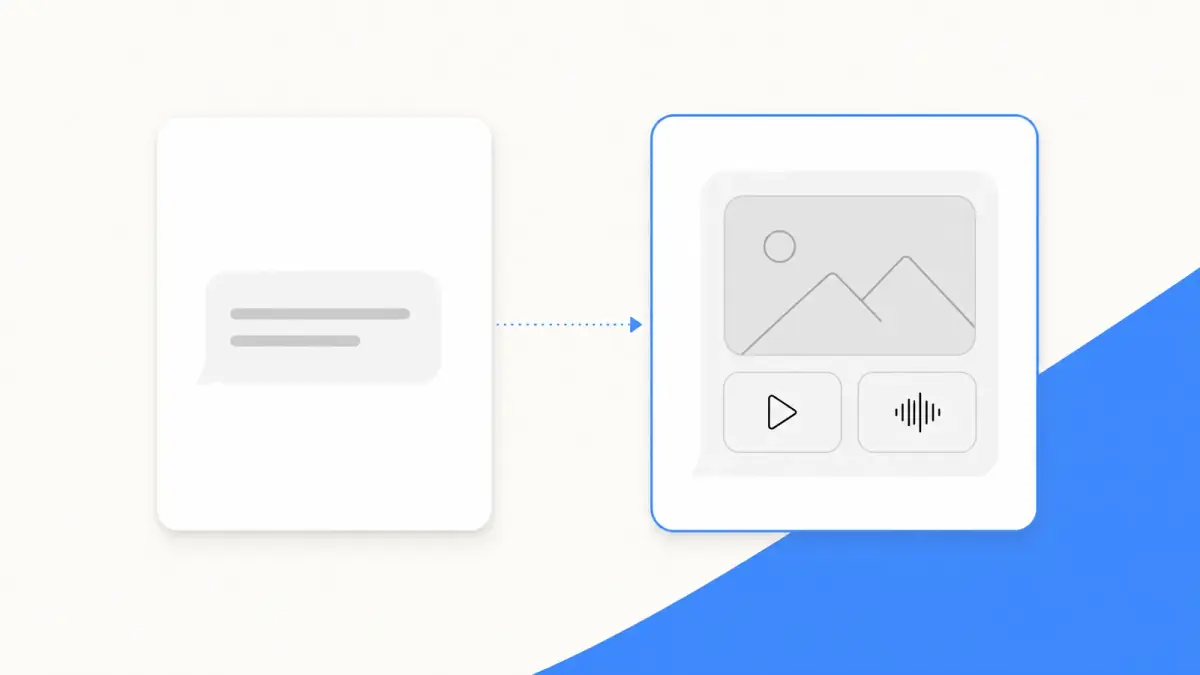
- MMS is the carrier service for pictures, videos and group messages: see SMS vs MMS.
- RCS is the newer standard used by Google Messages and, from iOS 18 on, by the iPhone's Messages app (Apple's requirements). Our RCS vs SMS guide goes through the differences.
- iMessage is Apple's own service, which is why it works between Apple devices: see what iMessage is.
- WhatsApp says on its About page that it "started as an alternative to SMS". It needs an internet connection and the app on both sides, and the same page describes it as free, with the note that data charges may apply. Who pays instead is explained in how WhatsApp makes money.
Does SMS cost money?
It depends on your mobile plan, not on your phone. Apple's wording is that carrier messages "require a text-messaging plan" and that "messaging rates may apply". By contrast, texts sent with iMessage "don't count against your SMS, MMS, or RCS allowances", although cellular data rates may apply.
For texts to another country or while traveling, your carrier's price list is the reference.
Is SMS secure?
SMS is not end-to-end encrypted. Apple puts it plainly: "SMS/MMS messages aren't end-to-end encrypted, which means they're not protected from a third-party reading them while they're sent between devices". Google says the same of its own app: "End-to-end encryption isn't available for SMS/MMS messages".
Two habits follow:
- Treat an SMS like a postcard. It is fine for "running late", not for card numbers or passwords.
- Many websites and apps still text you a sign-in code (Apple calls it a one-time SMS passcode). Never read such a code out to someone who calls or messages you.
Why did my message go as an SMS instead of iMessage or RCS?
Because the richer service was not available at that moment, and your phone fell back on the carrier network.
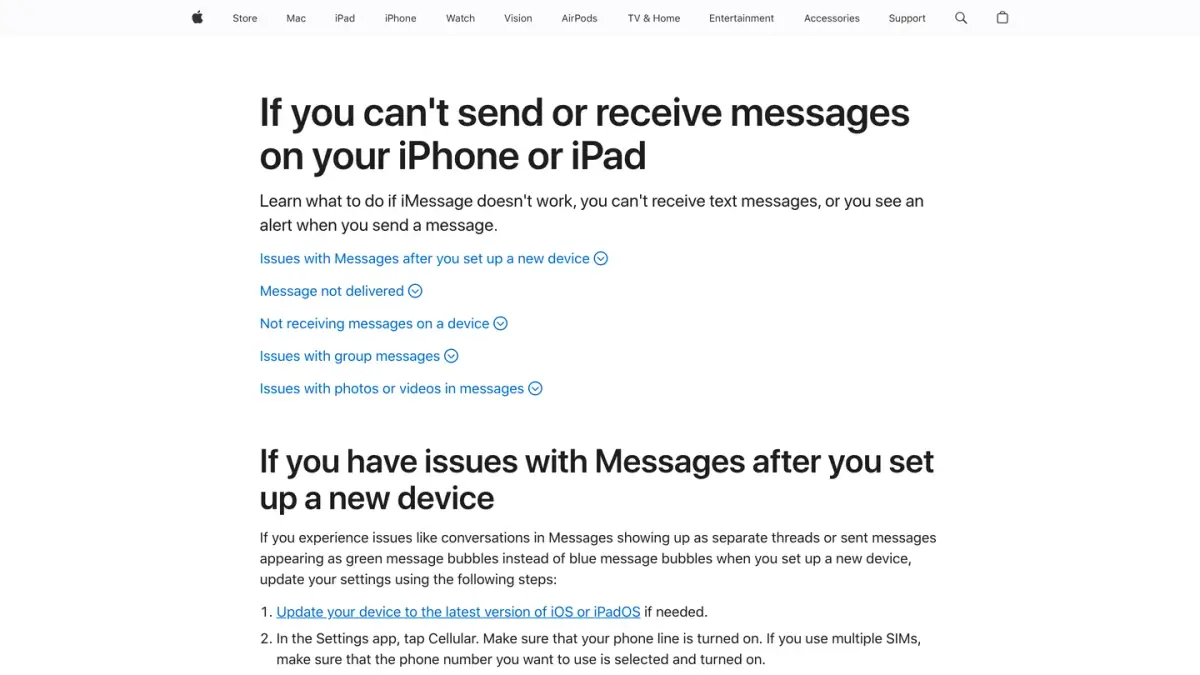
- iPhone. When iMessage is not available, Messages can send the message as a text if Send as Text Message is turned on in Settings, under Apps, then Messages (Apple's steps). The bubble turns green.
- Android. When RCS is not available, Google says messages "can still be sent as SMS or MMS". The option Automatically resend as text (SMS/MMS), in Messages settings under RCS chats, controls this.
If you run an online store
This guide is written for people who send and receive texts. If you also sell online, one clarification: Kanal, the company behind this blog, is a WhatsApp marketing and sales app for Shopify stores (campaigns, abandoned cart recovery, order notifications, an AI agent, a team inbox). Kanal sends SMS and WhatsApp campaigns from the same app. It does not send MMS or iMessage. To weigh the channels against each other for a store, read SMS vs MMS vs RCS vs WhatsApp and the page SMS marketing for Shopify.
If you run a business account on WhatsApp, two facts are worth knowing: Meta bills each delivered message, and the WhatsApp Business API is reached through a provider. See what a WhatsApp message costs a business and the WhatsApp Business API providers compared.
Nicolas helps e-commerce brands grow revenue with WhatsApp marketing. With deep expertise in Shopify ecosystems and conversational commerce, he shares proven strategies for abandoned cart recovery, broadcast campaigns, and AI-powered customer engagement.