iMessage vs WhatsApp: differences and which to use (2026)
iMessage works between Apple devices, WhatsApp on iPhone and Android alike. Compare encryption, features, group chats, cost and business use before you pick.
 Nicolas ProvostOct 7, 2026 · 9 min read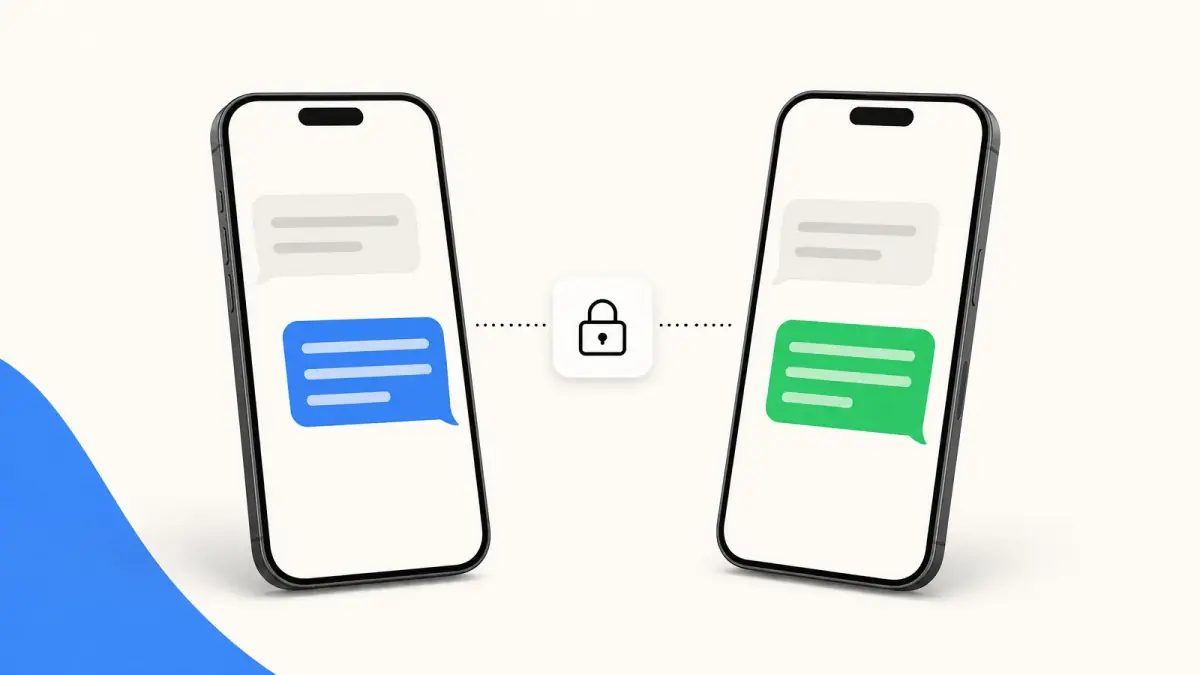
Summarize this article with an AI
 ChatGPT
 Claude
Table of contents (11)
Key takeaways
- iMessage works only between Apple devices, while WhatsApp is a separate app that works the same way on iPhone and Android.
- Both encrypt personal chats end to end, but an iPhone message to a non-Apple phone travels as RCS, SMS or MMS in a green bubble.
- WhatsApp groups hold up to 1024 members and messages can be deleted for everyone within two days, against a 2-minute Undo Send on iMessage.
iMessage is built into Apple devices and works only between them. WhatsApp is a separate app that works the same way on iPhone and Android. Both encrypt personal chats end to end, so the choice mostly comes down to who you need to reach.
This comparison goes through devices, security, features, groups, cost and business use. Every limit quoted comes from Apple's help pages or from WhatsApp's own Help Center and About page, read on October 7, 2026.
iMessage vs WhatsApp at a glance
| iMessage | ||
|---|---|---|
| Made by | Apple | WhatsApp, part of Meta |
| Runs on | iPhone, iPad, Mac, Apple Watch, Apple Vision Pro | Android phones and iPhones, plus linked devices |
| What you need | An Apple device, and an Apple Account for some features | The app and a phone number that can receive an SMS or a call |
| If the other person does not have it | The message goes as RCS, SMS or MMS, in a green bubble | They need to install WhatsApp |
| End-to-end encryption | Yes | Yes, for personal messages and calls |
| Edit a sent message | Up to five times within 15 minutes | For up to 15 minutes |
| Take a message back | Undo Send, for up to 2 minutes | Delete for Everyone, within two days |
| Largest group | Not stated in the Apple pages we read | Up to 1024 members |
| Other devices | Your Apple devices, signed in to the same Apple Account | Up to four linked devices |
| Price | No per-message fee, cellular data rates may apply | Described as free, data charges may apply |
| Business channel | Apple Messages for Business | WhatsApp Business |
Sources, read on October 7, 2026: Apple's iPhone User Guide (overview and unsend or edit); WhatsApp's About page and Help Center pages on groups, deleting and editing messages, linked devices and supported devices.
Which devices do iMessage and WhatsApp work on?
This is the difference that decides most cases.
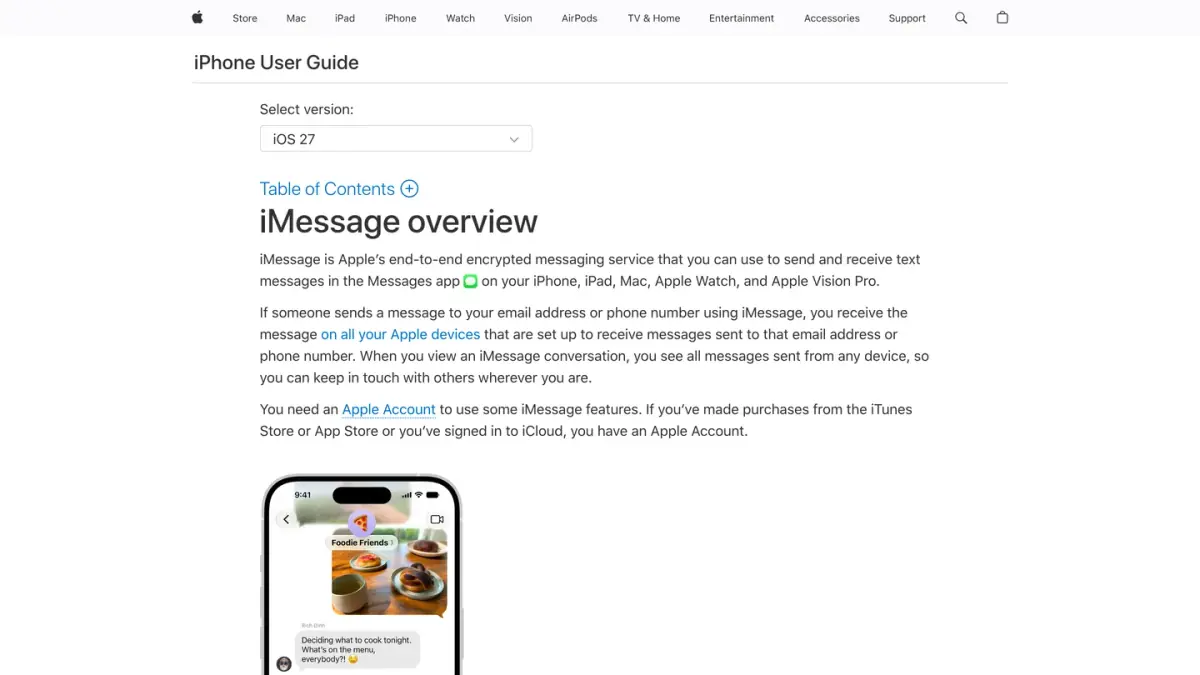
iMessage is, in Apple's words, a service "in the Messages app on your iPhone, iPad, Mac, Apple Watch, and Apple Vision Pro". There is nothing to install, and there is no version for Android. If you are new to it, start with what iMessage is.
WhatsApp is an app you download. Its Help Center lists the phones it supports: as of October 7, 2026, Android phones running OS 6.0 and newer and iPhones running iOS 15.1 and newer, with iOS 15.5 becoming the minimum on November 30, 2026. Its About page, read the same day, says more than 3 billion people in over 180 countries use it.
So the question to ask is simple: does everyone you write to have an Apple device? If yes, iMessage already covers you. If not, iMessage only covers part of your contacts.
What happens when the other person does not have it?
The two services fail differently, and that shapes daily use.
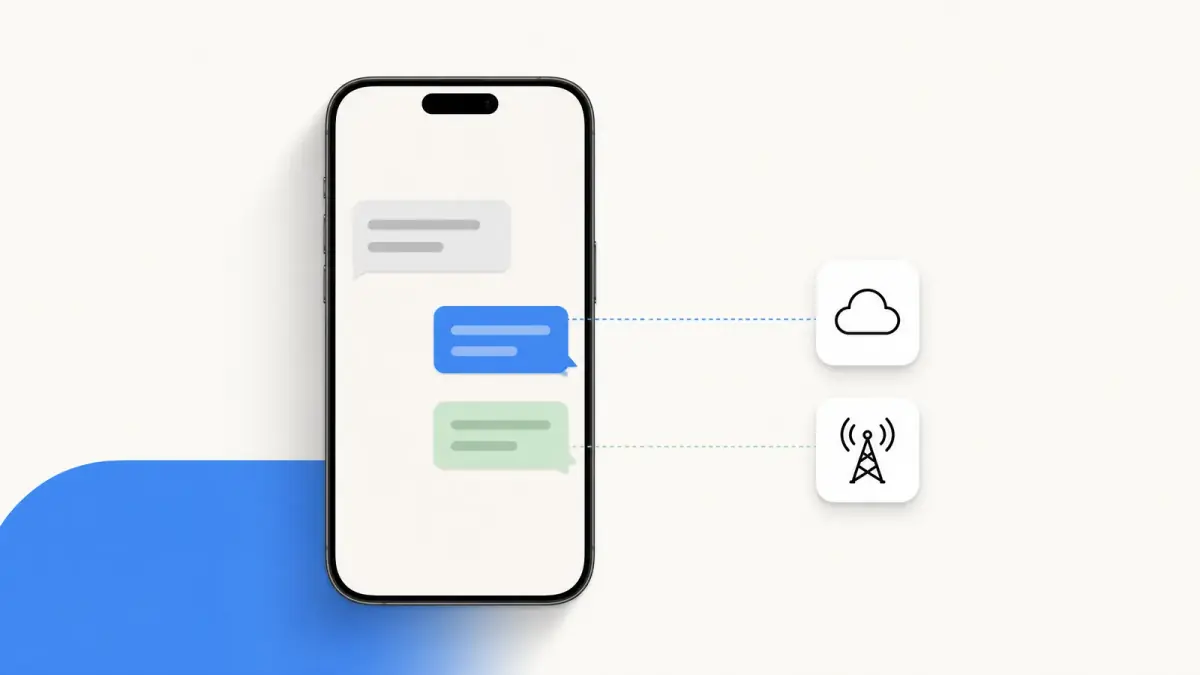
- iMessage falls back on your carrier. When iMessage cannot be used, your iPhone sends the message as RCS, SMS or MMS instead. It still arrives, in a green bubble, without the iMessage features. The details are in why your texts are green, and RCS, which narrows the gap between iPhone and Android, is compared with SMS in our RCS vs SMS guide.
- WhatsApp has no fallback. A WhatsApp message goes to another WhatsApp user. If your contact is not on the app, you need another way to reach them, or they need to install it. Here is how to check if a number is on WhatsApp.
Are iMessage and WhatsApp end-to-end encrypted?
Both are, for personal conversations.
- Apple: "messages sent using iMessage are end-to-end encrypted as they're sent", and the conversation shows "Encrypted" at the top.
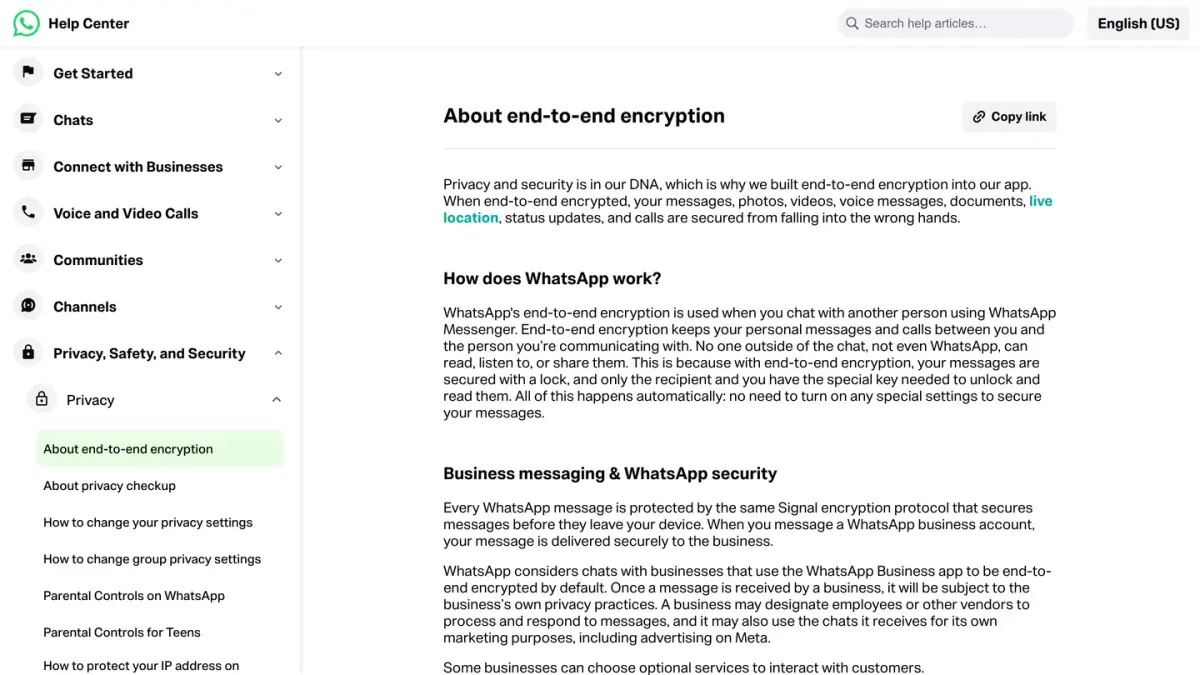
- WhatsApp: with end-to-end encryption, "no one outside of the chat, not even WhatsApp, can read, listen to, or share" your personal messages and calls, and it happens automatically.
The differences are at the edges:
- Green bubbles are not iMessage. A message from your iPhone to a non-Apple phone travels as RCS, SMS or MMS. Apple states that SMS and MMS are not end-to-end encrypted, and that RCS is encrypted only when the conversation shows the "Encrypted" indicator.
- Business chats on WhatsApp can differ. WhatsApp says chats with businesses that use the WhatsApp Business app are end-to-end encrypted by default, but that when a business uses certain optional services, those messages are not considered end-to-end encrypted, and the chat says so.
- Backups depend on your settings. On iPhone, Apple's iCloud security overview explains that with standard data protection and iCloud Backup enabled, the backup includes a copy of the Messages in iCloud encryption key, and that Advanced Data Protection keeps everything end-to-end encrypted. On WhatsApp, end-to-end encrypted backup is a setting you turn on under Settings, Chats, Chat Backup.
What about editing, deleting and read receipts?
Both let you fix a mistake, with different windows.
| iMessage | ||
|---|---|---|
| Edit | Up to five times within 15 minutes of sending | For up to 15 minutes after sending |
| Take back | Undo Send for up to 2 minutes | Delete for Everyone: you have two days to request it |
On iMessage, editing and unsending require iOS 16 or later on both ends and do not apply to green-bubble messages (Apple's guide). On WhatsApp, a deleted message is replaced by a "This message was deleted" notice (WhatsApp's Help Center).
Read receipts exist on both. In Messages, the sender sees "Read" or "Delivered" under the message when you have Send Read Receipts turned on. WhatsApp uses check marks: here is what WhatsApp ticks mean.
How do group chats compare?
WhatsApp groups are built for size and for mixed phones. The Help Center states that you can create a WhatsApp group with up to 1024 members, and a group can mix Android phones and iPhones. Our guide shows how to create a WhatsApp group.
iMessage groups work well when everyone is on an Apple device: you can name the group, add or remove people and leave. Apple's group page sets the conditions: you can only add someone if they use an Apple device and the group already includes three or more people. As soon as one participant is not using iMessage, the whole group turns green and runs on MMS, SMS or RCS.
Can you use them on a computer or a tablet?
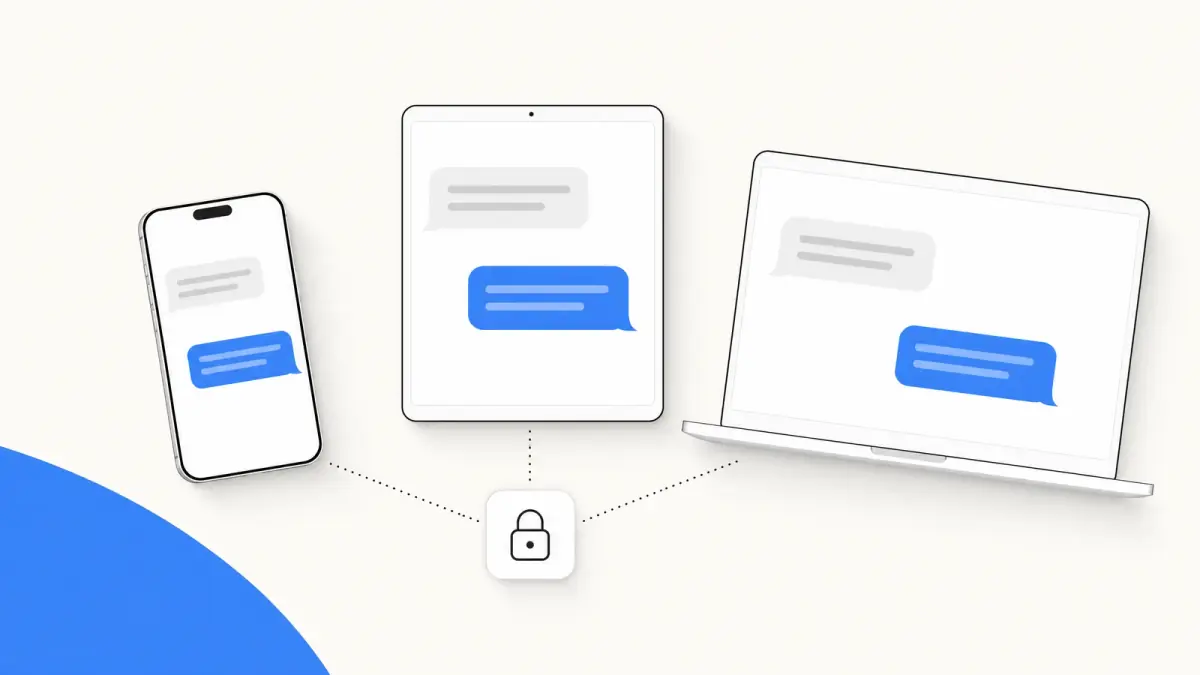
- iMessage follows your Apple Account. A message sent to your number or email arrives on all your Apple devices set up for it, and Messages in iCloud keeps the history in sync. It stays within Apple devices.
- WhatsApp follows your phone. Its Help Center says you can use the same account on several devices at once, "using your primary phone to link up to four devices", and that you need to log in on your primary phone every 14 days to keep them connected.
What do iMessage and WhatsApp cost?
Neither charges by the message.
- Apple: texts sent with iMessage "don't count against your SMS, MMS, or RCS allowances in your cellular messaging plan, but cellular data rates may apply".
- WhatsApp: its About page says "WhatsApp is free", with the footnote "Data charges may apply".
The cost that can surprise you is on the iMessage side: when a message falls back to SMS or MMS, it goes through your text-messaging plan.
iMessage or WhatsApp: which should you use?
You do not have to choose one. Most people who have both use each where it fits.
- Your contacts all have iPhones. iMessage is already there, with nothing to set up, and it reaches people by phone number or email.
- Your contacts are split between iPhone and Android. WhatsApp runs on both, so nobody in the group is left on green bubbles.
- You message people in other countries. Between Apple devices, iMessage works over the internet too. With anyone else, the fallback SMS goes through your text-messaging plan, while WhatsApp stays on the internet.
- You want one fewer app. If the people you write to are on Apple devices, Messages handles iMessage and regular texts in one place.
And for a business?
Neither personal service is meant for companies. Each has a business counterpart:
- Apple Messages for Business lets customers start a conversation with a registered company from the Messages app. The customer always writes first. See Apple Messages for Business.
- WhatsApp Business covers an app (the WhatsApp Business app) and a platform that companies connect to their own tools. Under WhatsApp's business messaging policy, a business may also write first, to people who gave their opt-in.
If you run a business account, the platform side of WhatsApp Business is the WhatsApp Business API, which a company reaches through a provider. See our WhatsApp Business API guide and the WhatsApp Business API providers compared.
If you run an online store
This comparison is written for personal use. If you also sell online, one clarification: Kanal, the company behind this blog, is a marketing and sales app for Shopify stores (campaigns, abandoned cart recovery, order notifications, an AI agent, a team inbox). Kanal sends WhatsApp, SMS and RCS messages; iMessage is coming soon to Kanal, and there the store will send the first message. It does not offer Apple Messages for Business.
Nicolas helps e-commerce brands grow revenue with WhatsApp marketing. With deep expertise in Shopify ecosystems and conversational commerce, he shares proven strategies for abandoned cart recovery, broadcast campaigns, and AI-powered customer engagement.