WhatsApp vs Email Cart Recovery: When to Use Each
WhatsApp vs email for abandoned cart recovery: strengths, costs, opt-in rules, when to use each channel and how to combine them in one Shopify flow.
 Nicolas ProvostMar 31, 2026 · 13 min read
Summarize this article with an AI
 ChatGPT
 Claude
Table of contents (26)
Key takeaways
- Use WhatsApp as the first touch for shoppers who opted in, and email as the fallback for everyone else and as a second touch.
- WhatsApp brings speed and two-way replies, but each reminder is charged as a marketing message, $0.0859 in France against $0.001 to $0.01 per email.
- The combined sequence alternates WhatsApp at 1, 24 and 72 hours with email at 4 and 48 hours, measured against a holdout group.
Introduction: The Abandoned Cart Problem
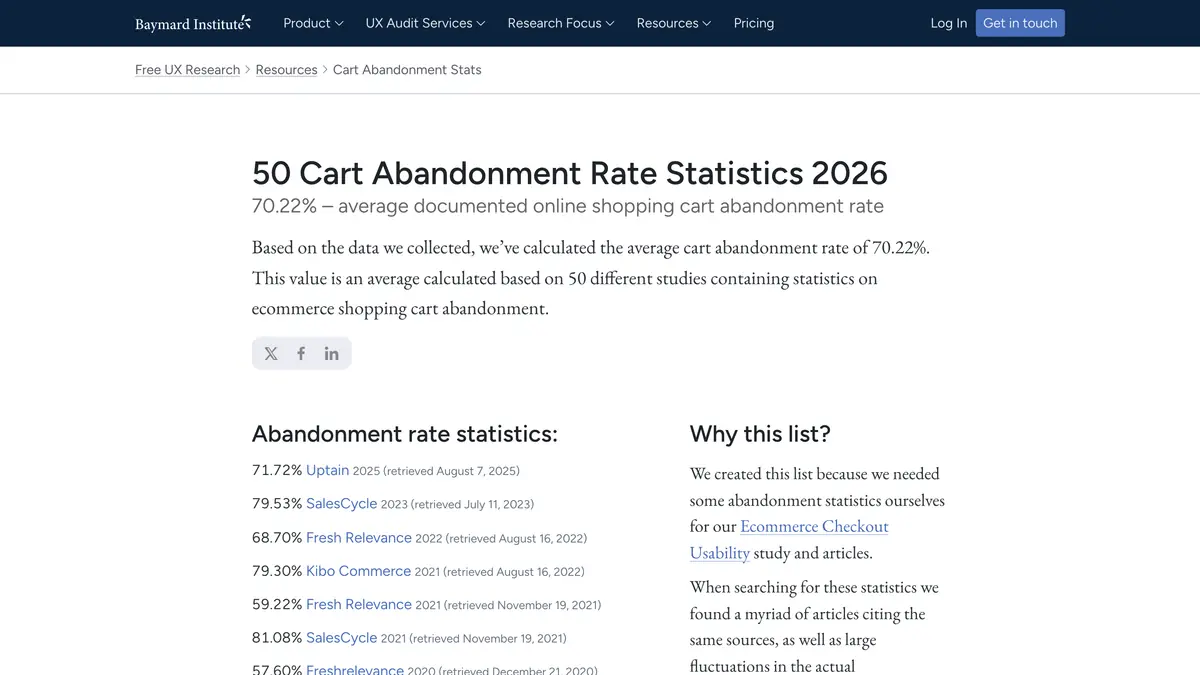
Online shoppers abandon about 70% of their carts on average, per the Baymard Institute's running benchmark, which averages 50 studies. Count the abandoned checkouts in your own Shopify admin and multiply them by your average order value to see how much revenue slips away every month.
The good news: a well-designed abandoned cart recovery flow can bring part of those sales back. The bad news: a store that relies on a single channel (usually email) misses every shopper that channel does not reach in time.
The channel you use to reach abandoners matters just as much as the message itself. A perfectly crafted offer is worthless if it lands in a spam folder or sits unread for hours while your customer buys from a competitor.
In this guide, I break down two cart recovery channels, WhatsApp and email: their strengths, their costs, how to measure them, and a clear recommendation for e-commerce brands in 2026. If you are already familiar with the basics of WhatsApp marketing for e-commerce, this comparison will help you decide how to allocate your recovery budget.
WhatsApp for Cart Recovery
WhatsApp puts your reminder in the app where customers already chat with friends and family. Here is why it works so well for cart recovery, and where it falls short.
Pros of WhatsApp Cart Recovery
Messages get seen. WhatsApp messages land as personal notifications alongside texts from friends and family. There is no Promotions tab and no spam folder (Meta does cap how many marketing messages each person receives from businesses, which is one more reason to message only opted-in customers). Your cart reminder shows up on the phone the customer already has in hand.
Instant, conversational engagement. When a customer receives your recovery message, they can reply immediately. "Does this come in blue?" "What's the shipping cost to Berlin?" That real-time, two-way conversation resolves purchase objections on the spot, and a WhatsApp chatbot for ecommerce can field those replies automatically, even at 2 a.m. Email cannot match this. A customer with a question after reading a recovery email has to find your support address, compose a message, and wait hours for a reply. By then, the purchase intent has evaporated.
Rich media and interactive buttons. WhatsApp supports product images, carousels, and direct checkout buttons. A single tap takes the customer straight back to their cart with items intact. This removes friction from the recovery journey in a way that plain-text emails simply cannot.
Speed captures peak intent. A cart reminder works best while purchase intent is fresh, and intent fades as the shopper moves on. A WhatsApp notification reaches the phone right away, so a message sent in the first hour can land while motivation is still high.
Cons of WhatsApp Cart Recovery
Opt-in is mandatory. You cannot message someone on WhatsApp unless they have explicitly opted in. This means your recoverable audience is limited to customers who have consented, unlike email, where you often already have the address from the checkout flow.
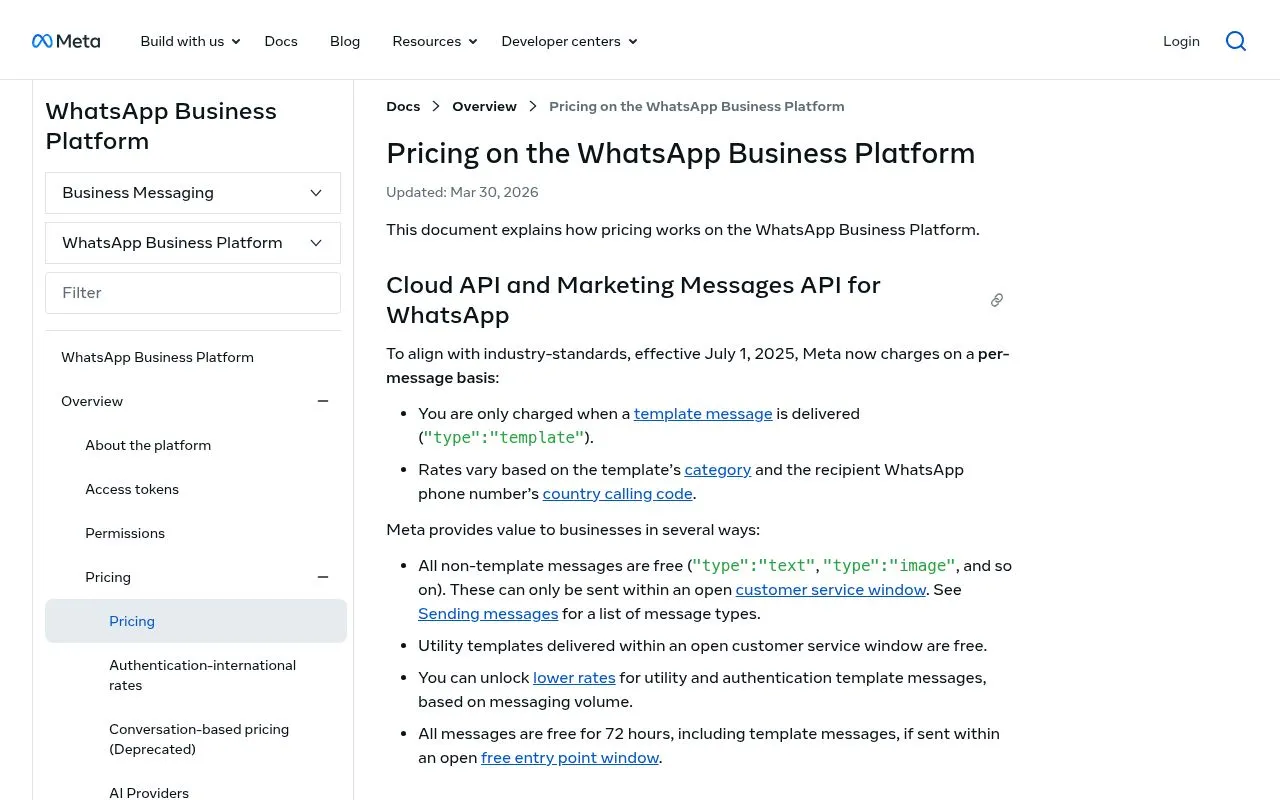
Cost per message is higher. Meta charges each delivered cart reminder as a marketing message: $0.0859 in France and $0.0635 in the UK (Meta's pricing), compared to fractions of a cent for email. Every reminder in the sequence is billed, so for high-volume stores sending thousands of recovery messages daily, this cost adds up.
Regional reach varies. WhatsApp is the everyday messaging app in some countries and a minor one in others. If your customer base is concentrated where it is less used, email may reach a larger share of your audience. Check how many of your customers opt in before you plan around it.
Kanal is a WhatsApp marketing and sales app for Shopify stores, installed from the Shopify App Store and running on the official WhatsApp Business Platform. For abandoned carts, Kanal sends automated WhatsApp reminders triggered by Shopify checkout events, using approved message templates filled in with the shopper's name, the product and a link back to the cart. Kanal is relevant for Shopify stores that want WhatsApp as a marketing and support channel. It sends WhatsApp and RCS messages, plus SMS on the Scale plan: email reminders stay in the merchant's other tools.
Email for Cart Recovery
Email has been the default recovery channel for over a decade. It remains a powerful tool, but it has limits that matter when every hour counts. If you are building the email side of your flow, start from these abandoned cart email examples rather than writing from scratch.
Pros of Email Cart Recovery
Universal reach. Every online shopper has an email address. You capture it during checkout, and it requires no additional opt-in step beyond your standard terms. This gives email the largest potential audience of any recovery channel.
Extremely low cost. Sending an email costs $0.001-0.01 per message depending on your ESP. For stores with large abandoned cart volumes, the near-zero marginal cost of email is a genuine advantage.
Design flexibility. Email supports full HTML layouts, custom fonts, embedded videos, and complex visual designs. For brands that rely on rich storytelling and visual identity, email offers more creative freedom than WhatsApp's template format.
Mature automation ecosystem. Tools like Klaviyo, Mailchimp, and Omnisend have spent years perfecting email automation. Drip sequences, A/B testing, dynamic product blocks, and conditional logic are all well-established in the email world. Our comparison of email marketing apps for Shopify covers the main ones.
Cons of Email Cart Recovery
Crowded inboxes. Inbox competition is fierce. Gmail's Promotions tab, aggressive spam filters, and sheer volume mean a recovery email has to fight for attention, and deliverability issues can bury it entirely.
Spam folder risk. Even well-crafted recovery emails can end up in spam, especially if your domain reputation dips or you trigger keyword filters. WhatsApp has zero spam folder risk.
Delayed engagement. An email can sit unopened for hours. By the time it is read, the customer may have moved on or already purchased from a competitor, and the first hour after abandonment, when intent is still fresh, has passed.
One-directional communication. Email is a broadcast channel. Customers cannot easily reply with questions or concerns, which means objections go unresolved and conversions suffer.
Head-to-Head Comparison
Here is how WhatsApp and email compare on the criteria that matter for cart recovery:
| Criterion | ||
|---|---|---|
| Cost per message | $0.0859 (France) or $0.0635 (UK) per marketing message (Meta's pricing) | $0.001-0.01 |
| Opt-in requirement | Explicit WhatsApp opt-in | Email address at checkout |
| Personalization | Name, product images, buttons, two-way replies | Name, dynamic blocks, full HTML design |
| Compliance | Meta Business Policy, GDPR opt-in | CAN-SPAM, GDPR, one-click unsubscribe |
| Spam filter risk | None | High |
| Two-way conversation | Yes, instant replies | No (separate support channel) |
| Best for | High-intent recovery, first touchpoint | Broad reach, secondary follow-up |
The takeaway: WhatsApp brings speed, rich media and two-way conversation. Email wins on cost per send and total addressable audience. Smart brands use both, and measure each one on their own store.
Real-World Results: A Published Case Study
There is no independent public benchmark comparing cart recovery rates by channel, and vendor figures are not audited. What we can share is a published result from one Kanal customer.
Jean Fourche, a premium bike and apparel brand, set up Kanal's automated WhatsApp recovery flows. As detailed in our case studies, the brand recovered 42% of its abandoned carts with WhatsApp, outperforming email by 8x, with a 96% open rate and a 14X ROI.
One brand is not a benchmark. Your results depend on your opt-in rate, your products and your offer, so measure both channels on your own store:
- Recovery rate per channel: carts recovered after a reminder, divided by carts that received it.
- Revenue per 1,000 abandoned carts: what each flow brings back for every 1,000 carts that enter it.
- Recovery by delay: how many recoveries come after the 1-hour, 24-hour and 72-hour touches.
- Holdout group: a slice of abandoners who get no reminder, so you measure the lift rather than the buyers who would have come back anyway.
The Best Strategy: Omnichannel Recovery
Neither channel reaches every abandoner on its own. The approach we recommend is an orchestrated omnichannel flow that uses WhatsApp as the primary channel and email as a strategic fallback.
Here is why this combination works:
- WhatsApp captures high-intent buyers fast. The 1-hour and 24-hour WhatsApp touchpoints reach opted-in shoppers while purchase motivation is still strong.
- Email catches the rest. Customers who did not opt in to WhatsApp, did not open the message, or prefer email get a second chance through the email sequence.
- No channel fatigue. By alternating between WhatsApp and email rather than blasting both simultaneously, you respect the customer's attention and reduce unsubscribe risk.
The Optimal Timing Sequence
| Timing | Channel | Purpose |
|---|---|---|
| 1 hour | Primary recovery, while intent is fresh | |
| 4 hours | Catch customers not on WhatsApp | |
| 24 hours | Second touch with social proof or scarcity | |
| 48 hours | Detailed product benefits and brand story | |
| 72 hours | Final offer with a time-limited incentive |
Run this flow against your current email-only sequence, with a holdout group, to measure what the orchestration adds on your store.
ROI: Run the Numbers for Your Store
Compare the strategies with the same simple formulas, using your own figures:
- Revenue recovered = abandoned carts that received the reminder × recovery rate × average order value
- Monthly cost = platform subscription + message fees (Meta fees for WhatsApp, your ESP plan for email)
- ROI = revenue recovered ÷ monthly cost
A channel that costs almost nothing per send, like email, shows a high ROI ratio mechanically. But absolute revenue recovered is what pays the bills, so compare both the ratio and the revenue each strategy brings back. For a deeper look at recovery tactics beyond channel choice, see our abandoned cart recovery strategies guide. To compare the tools themselves, see our list of Shopify abandoned cart apps.
Implementation Guide: Setting Up a Combined Flow With Kanal
Getting started with an omnichannel recovery flow is simpler than most brands expect. Here is a step-by-step walkthrough using Kanal's Shopify integration.
Step 1: Connect Your Store
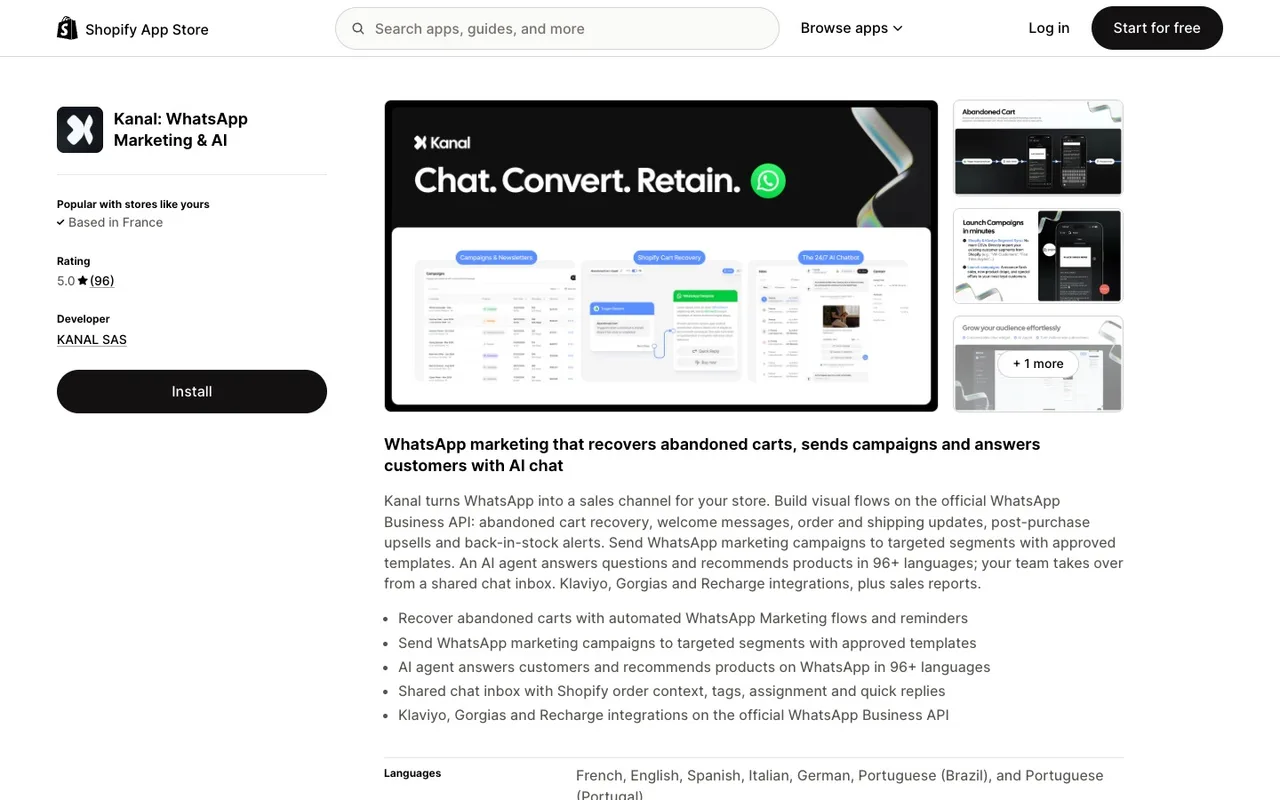
Install Kanal from the Shopify App Store and connect your store. The integration syncs your product catalog, customer data, and cart events automatically.
Step 2: Set Up WhatsApp
Connect your WhatsApp Business number through Kanal's onboarding wizard. This takes about 5 minutes. Kanal handles the Meta Business verification process and message template approvals for you.
Step 3: Build Your WhatsApp Opt-In
Add a WhatsApp opt-in checkbox to your checkout flow and pop-ups. Kanal provides pre-built opt-in widgets that comply with Meta's opt-in policies and GDPR. Track your opt-in rate from day one: it sets the ceiling for your WhatsApp recovery.
Step 4: Activate the Recovery Flow
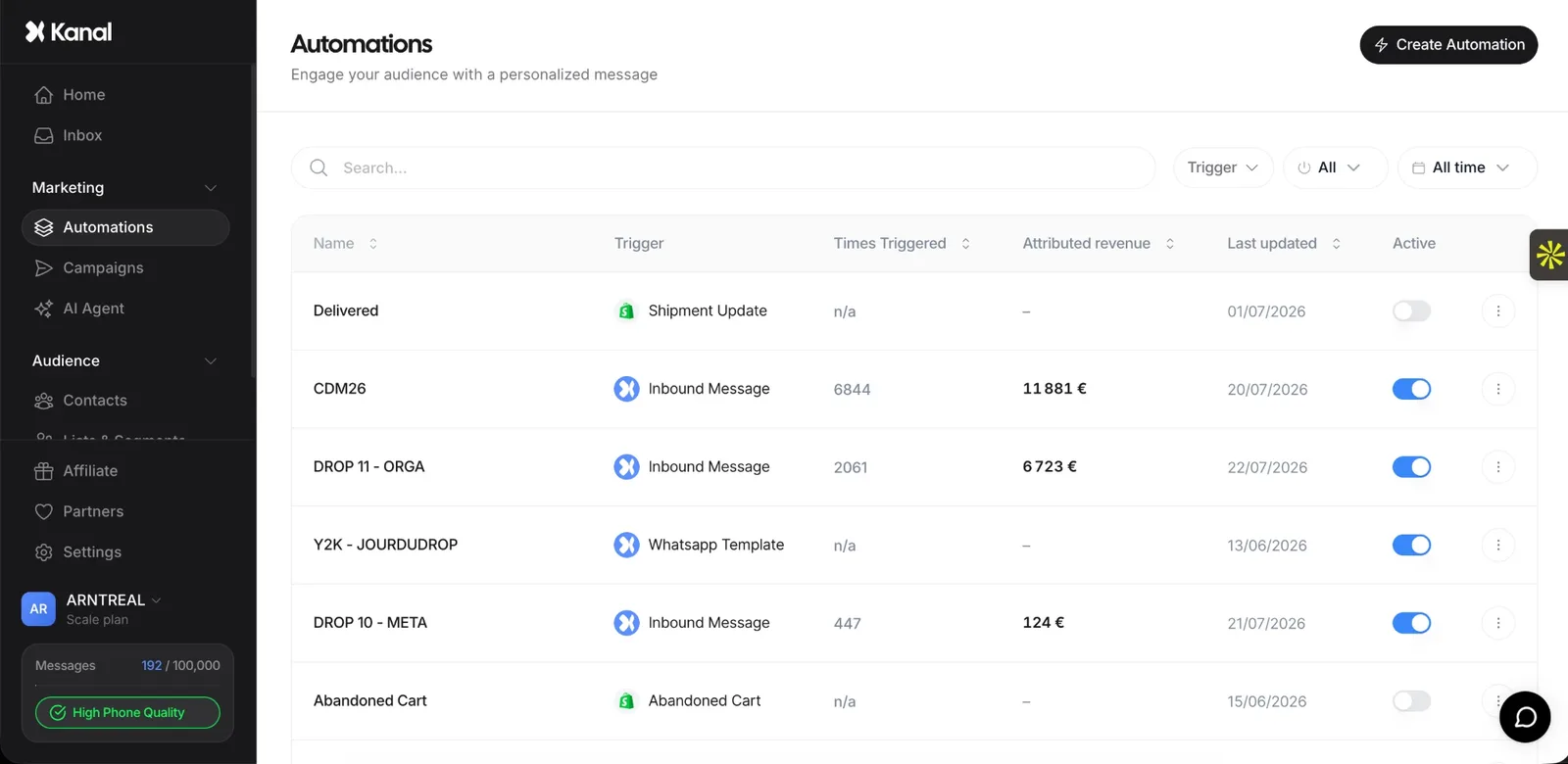
Kanal includes pre-built WhatsApp campaign templates for cart recovery. Activate the 3-message WhatsApp sequence (1h, 24h, 72h), and keep the email flow in your email tool for customers without WhatsApp opt-in.
Step 5: Customize Your Messages
Personalize the recovery templates with your brand voice, product images, and incentive strategy. WhatsApp messages should be short, conversational, and include a one-tap checkout button. Email messages can be longer and more visually rich.
Step 6: Monitor and Optimize
Track recovery rates, revenue, and per-channel performance in Kanal's dashboard. A/B test message timing, copy, and incentive offers. Change one variable at a time so you know what moved the numbers.
Ready to get started? Check our pricing page to find the right plan for your store.
Frequently Asked Questions
Is WhatsApp better than email for abandoned cart recovery?
It depends on your store, and there is no independent public benchmark comparing the two: vendor figures are not audited. WhatsApp brings speed, rich media and two-way conversation with shoppers who opted in. Email remains cheaper per message and reaches every customer who left an address. Combine both channels in an orchestrated flow and measure each one with a holdout group.
How much does WhatsApp abandoned cart recovery cost?
Meta charges each delivered cart reminder as a marketing message: $0.0859 in France and $0.0635 in the UK (Meta's pricing), and every reminder in the sequence is charged. Add your platform fee: with Kanal, plans start from $89/month including the WhatsApp integration, and WhatsApp fees are passed through at cost. To get your cost per recovered cart, divide your total monthly cost by the number of carts the flow recovers, then compare it with your average order value.
Should I use both WhatsApp and email for cart recovery?
Yes. Use WhatsApp as the primary touchpoint for shoppers who opted in, and email as a fallback for everyone else and as a second touch. Then compare the combined flow with each channel alone, using a holdout group, to see what each one adds on your store.
What is a good abandoned cart recovery rate in 2026?
There is no independent public benchmark for cart recovery rates by channel, and vendor figures are not audited. The number that matters is your own: carts recovered divided by carts that received a reminder, compared with a holdout group that gets no reminder. Track it per channel and per step, and improve it test by test.
Do customers find WhatsApp cart reminders annoying?
When done correctly, no. WhatsApp requires explicit opt-in, which means recipients have already agreed to hear from you. Keep messages helpful, timely, and limited to 2-3 touchpoints per abandoned cart, and watch your unsubscribe rate. The key is adding value (product images, one-tap checkout, and the option to ask questions) rather than sending generic nudges.
Conclusion
WhatsApp brings what email lacks for abandoned cart recovery: a reminder seen in the chat app, rich media with a one-tap return to checkout, and a real conversation. Email still earns its place as a low-cost, universal fallback channel.
The smartest strategy is not choosing one over the other. It is building an orchestrated omnichannel flow (WhatsApp first, email second) and measuring what each channel adds on your store.
The question is not "WhatsApp or email?" It is "How quickly can I add WhatsApp to my existing recovery flow?" For most Shopify brands, the answer with Kanal is about 15 minutes.
See Kanal on your own store
- Your campaigns and cart reminders on WhatsApp, starting from your own store
- Post-purchase offers, back-in-stock alerts, then the AI agent that advises your customers
- You leave with the plan that fits and its price
From €89/month
- brands
- 500+
- to set up
- 5 min
- open rate on WhatsApp
- +90%
Nicolas helps e-commerce brands grow revenue with WhatsApp marketing. With deep expertise in Shopify ecosystems and conversational commerce, he shares proven strategies for abandoned cart recovery, broadcast campaigns, and AI-powered customer engagement.