WhatsApp Flows: Meta's In-Chat Forms Feature Explained (2026)

Summarize this article with an AI
 ChatGPT
 Claude
WhatsApp Flows let businesses send structured, rich in-chat forms for sign-up, booking, and lead capture. Setup, approval, pricing, and Shopify use cases.
Table of contents (15)
Key takeaways
- WhatsApp Flows are multi-screen forms a customer fills in inside the chat, used for sign-ups, bookings, lead capture, return requests and surveys.
- Flows run only on the Cloud API and need a verified Meta Business Manager plus an HTTPS endpoint that answers in under 10 seconds.
- Meta adds no Flow surcharge, so you pay for the message that carries the Flow, for example $0.0250 for a US marketing template.
WhatsApp Flows is Meta's feature for sending structured, multi-screen forms inside a WhatsApp chat. Launched in late 2024 and expanded throughout 2025, Flows let businesses collect sign-ups, bookings, lead data, and support intake without sending customers to an external landing page. The format runs only on the WhatsApp Cloud API (see Meta's Cloud API documentation), and replaces brittle typed-answer flows with a native form UI. This guide covers what Flows can do, how to build one, approval rules, pricing under the 2026 model, and how Shopify merchants are using them.
WhatsApp Flows vs Templates vs Broadcast
The three formats often get conflated. They are not interchangeable. Each was built for a different stage of the conversation.
| Feature | WhatsApp Flows | Template Message | Broadcast |
|---|---|---|---|
| Direction | Two-way (collect data) | One-way notification | One-way fan-out |
| UI | Multi-screen native form | Single message + up to 3 buttons | Single message |
| Best for | Sign-up, booking, lead capture, intake | Order updates, OTPs, marketing | Bulk send to a list |
| Data captured | Structured fields, validations | Button taps only | None at the message layer |
| Triggers | Tap on a CTA button inside a template | Sent on schedule or event | Scheduled or one-shot |
| Available on | Cloud API only | Cloud API | Cloud API + free app (capped) |
| Meta billing | The delivered message that carries the Flow | Each delivered template | Each delivered template, per recipient |
If you only need to push an update, send a template. If you need to broadcast to a list, see our WhatsApp broadcast guide. If you need to collect structured data inside the chat, that is what Flows were built for.
What a WhatsApp Flow Can Do
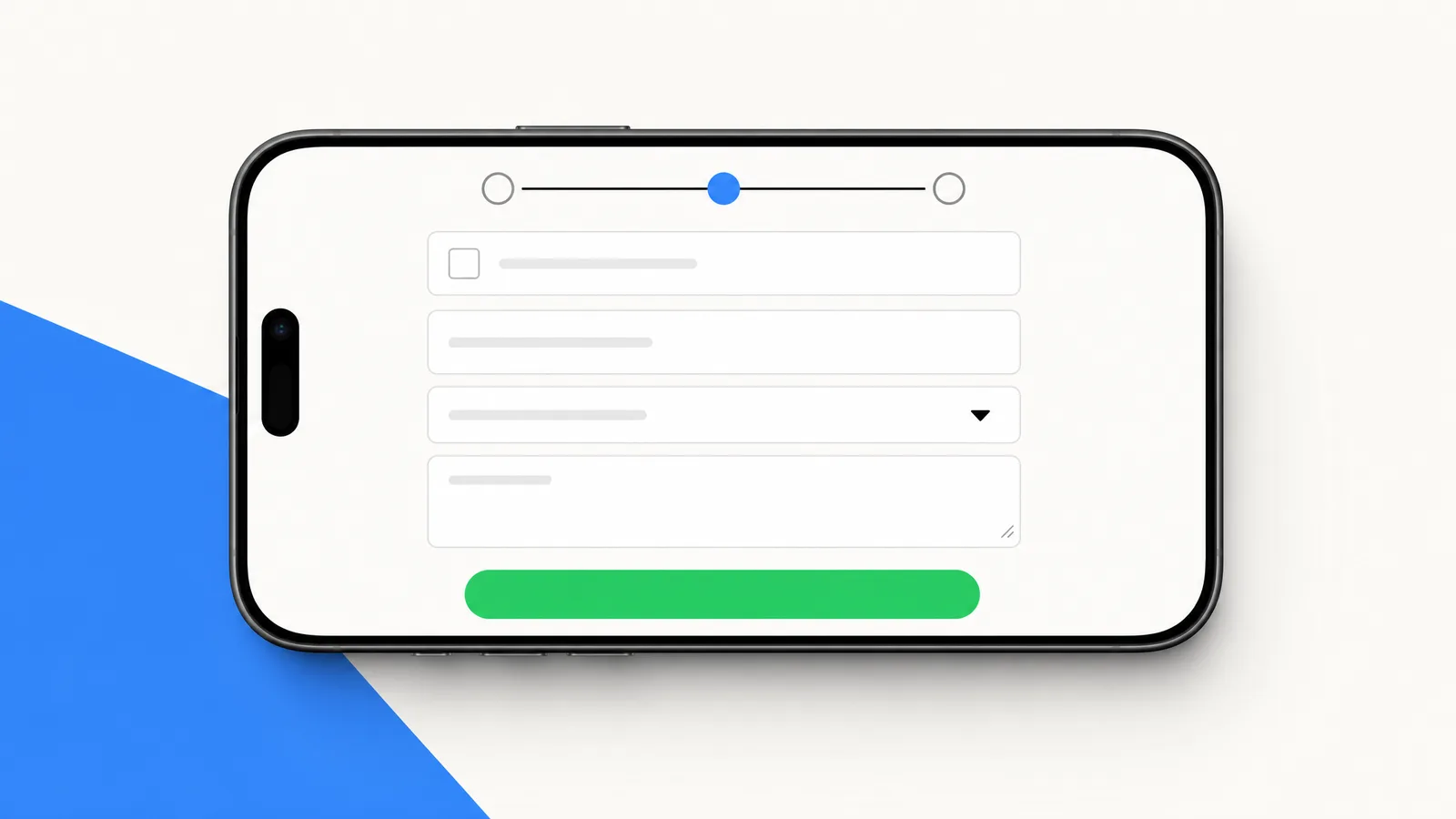
The core unit is a screen. A screen contains form components (text input, radio, dropdown, date picker, checkbox) plus a continue button. A Flow can have a single screen or multiple, with conditional logic deciding which screen comes next.
Common patterns in production:
Sign-up Flow. Capture name, email, segment, opt-in. One screen, four fields, one CTA. Used to convert click-to-chat ad traffic into newsletter subscribers without a landing page.
Booking Flow. Pick a service, pick a date, pick a slot, confirm. Used by salons, clinics, and service-led commerce.
Lead-capture Flow. Multi-step qualifier with branching. Common for B2B and high-ticket B2C.
Support intake Flow. Order number, issue category, severity, description, photo upload. Routes the message to the right queue with the right context. Used by Shopify brands offering WhatsApp customer support.
Post-purchase survey Flow. NPS plus 2 follow-ups. Sent as a utility message 7 days after delivery. Customers answer inside the chat instead of clicking through to an external survey.
Technical Requirements
Three constraints to know before you commit:
- Cloud API only. Flows do not work on the free Business app, on MM Lite, or on the On-Premises API, which Meta has ended.
- Meta Business Manager required. Your WhatsApp Business Account must be inside a verified Meta Business Manager.
- HTTPS endpoint for data exchange. Meta posts submitted Flow data to a public HTTPS endpoint you control (or your BSP provides). It must respond with a 200 in under 10 seconds.
For Shopify merchants, the easiest path is a BSP that handles the endpoint and certificate. The Kanal Shopify integration ships with a managed Flow endpoint mapped to Shopify customer and order objects.
How to Build a WhatsApp Flow
Meta exposes two ways to build a Flow.
The Flow Builder UI
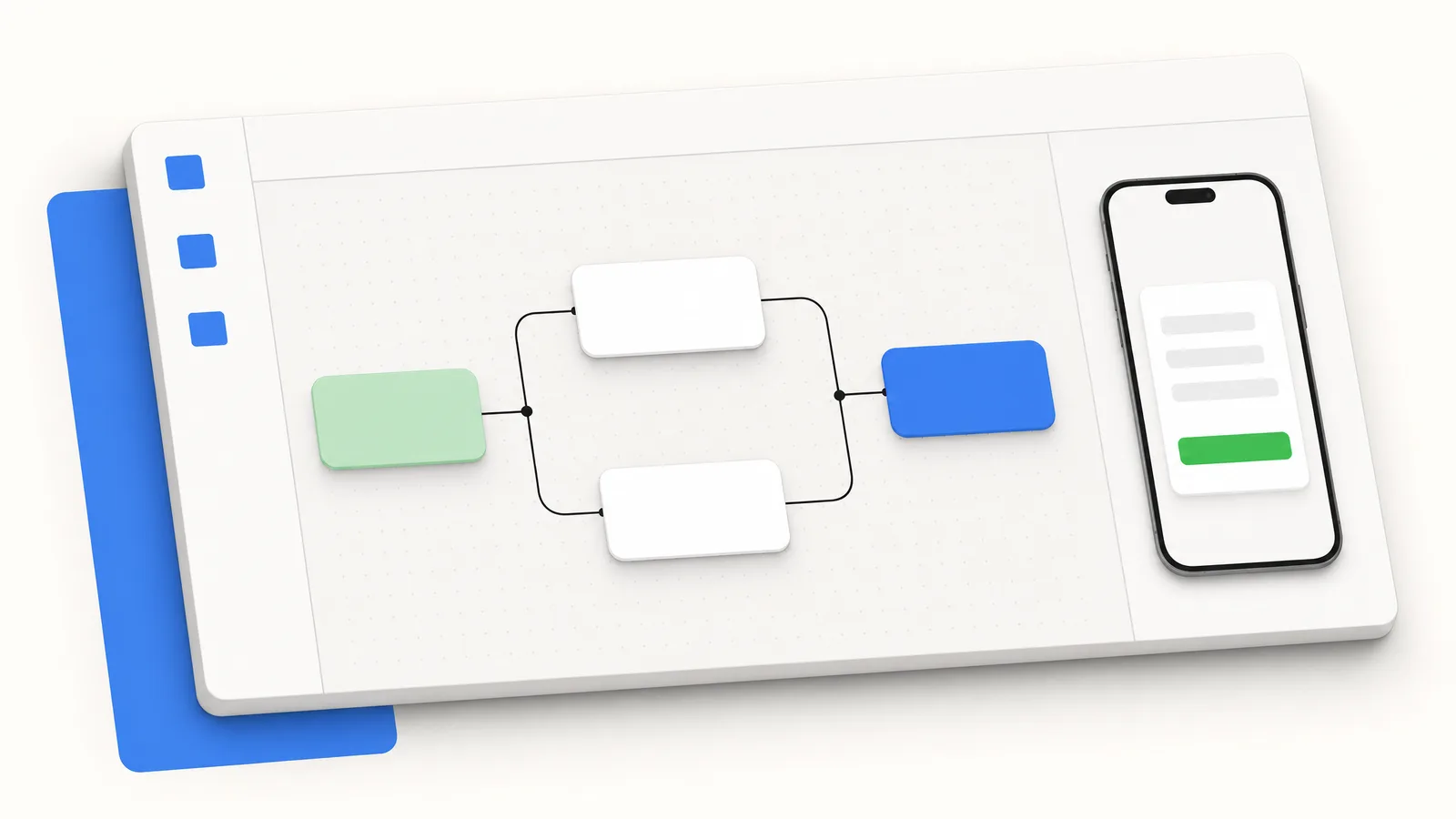
The Flow Builder lives inside your Meta Business Manager under WhatsApp Manager. Drag-and-drop screens onto the canvas, add components, set validations and conditional rules. The builder writes the underlying JSON for you. Best for marketing and operations teams without a developer in the room.
The JSON Spec
For developers, Meta publishes the Flow JSON spec. A Flow is a single JSON document with a version, a list of screens, components on each screen, and a routing_model between them. The JSON path is faster to version-control and the right choice when Flows are part of a larger codebase.
Most Production Builds Use a BSP
In practice, neither pure-Meta path is what most Shopify brands ship with. They use a BSP that wraps Meta's API with a Shopify-aware UI. The brand defines the Flow once, the BSP handles the endpoint, the data mapping into Shopify customer or order objects, and the trigger from Shopify events (cart abandoned, post-purchase, repeat customer).
Approval Process and Meta's Review Criteria
Every Flow goes through Meta review before it can be sent in production. The review is automated for structure and manual for content.
What Meta checks:
- Privacy policy link in any screen that collects personal data
- No sensitive data without justification (no asking for ID numbers, payment cards, health info unless the use case is registered with Meta)
- No external messaging app promotion (the Flow cannot funnel users to Telegram, SMS, or competing channels)
- Screen transitions resolve (no orphan screens, no infinite loops in conditional routing)
- Template that opens the Flow matches its category (Marketing template opens a marketing Flow, Utility template opens a utility Flow)
If a Flow is rejected, fix the cited reason and resubmit. Review time is typically 24 to 48 hours, slower in Q4.
Use Cases for Shopify E-commerce
Five Flow patterns that fit Shopify stores in 2026:
Welcome sign-up Flow. Triggered from a click-to-WhatsApp ad or QR code. Captures name, segment, and explicit opt-in. Converts cold ad traffic into a subscriber base. Compare its completion rate with your landing-page form.
Return request Flow. Order number, item, reason (dropdown), photo upload. Replaces an email or a help-desk form, and the agent gets every detail up front instead of chasing it over several messages.
Sizing-helper Flow. A 3-screen quiz that recommends a size based on height, weight, fit preference. Sent as a post-purchase utility template. Track size-related returns before and after launch.
Post-purchase survey Flow. NPS plus open feedback. Used to recover at-risk customers and to surface SKU-level quality issues early.
B2B lead Flow. For Shopify Plus and B2B brands. Qualifies inbound demand from ads or referral. Routes high-fit leads to a human sales rep, low-fit to a self-serve checkout. For the rest of a Plus stack, see our comparison of the best Shopify Plus apps.
What to Measure
There is no independent public benchmark for WhatsApp Flows, and vendor figures are not audited. Track these five metrics in your own account, Flow by Flow:
- Read rate of the template that opens the Flow
- Tap rate on the CTA button that opens the Flow, by incentive and audience warmth
- Completion rate once the Flow is opened, single-screen vs multi-screen
- Time spent inside the Flow, against the equivalent landing-page form
- Conversion rate from data submitted to action taken on Shopify (sign-up recorded, return processed)
Then run the same form as a landing page or an email link for a comparable segment: that comparison is the benchmark that matters for your store.
Limitations and Gotchas
Things to plan around in 2026:
- No native payment in most countries. The customer still has to leave the Flow to pay on your Shopify checkout. India and Brazil have partial WhatsApp Pay integration, but not yet a true in-Flow checkout in Europe or North America.
- No file upload above 5 MB per attachment. Photo uploads for support intake work for most use cases. Large video files do not.
- No real-time analytics in the Flow Builder. You see total opens, completions, and field-level drop-off, but not per-message attribution out of the box. You need a BSP or your own pipeline to tie a Flow completion to revenue.
- No A/B testing built into Meta's Flow Builder. You can ship two Flows and split traffic at the template level, but there is no native experiment manager. Most BSPs add this on top.
- Flow versioning is partial. When you edit and republish, the in-flight Flow sessions complete on the old version. New sessions start on the new one. Be careful when changing field names mid-campaign.
Pricing Under Meta's 2026 Model
Since July 1, 2025, Meta charges per delivered message, not per conversation. A Flow travels inside a message: a template, which you can send at any time, or a free-form reply, which you can only send inside the 24-hour customer service window. Meta charges that message at its category rate for the country of the recipient's number. The answers the customer submits are messages from the customer, which Meta does not charge.
| Category | US price per delivered message | France price per delivered message | Flow example |
|---|---|---|---|
| Marketing | $0.0250 | $0.0859 | Promotional Flow opened from a marketing template |
| Utility | $0.0034 | $0.0300 | Order, sign-up, return Flow opened from a utility template |
| Authentication | $0.0034 | $0.0300 | OTP-related Flow (rare) |
| Service | Utility rate after 1,000 free per number each month | Utility rate after 1,000 free per number each month | Flow sent as a reply inside an open 24-hour customer service window |
Prices are per delivered message, in USD, from Meta's rate card effective October 1, 2026 (US prices are Meta's North America rates): see Meta's pricing. Since October 1, 2026, a service message costs the utility rate after 1,000 free service messages per business phone number each month, and utility templates sent inside an open customer service window, not charged until then, are billable too. When a customer messages you from a Click to WhatsApp ad and you reply inside the 24-hour customer service window, your messages are not charged while the free entry point window is open, which may be for up to 7 days according to Meta's pricing documentation read on October 8, 2026 (Meta Business Agent messages excluded).
There is no separate Flow surcharge from Meta. Your BSP typically adds a small platform fee on top, often a fixed monthly fee plus Meta's per-message fees passed through. Kanal passes WhatsApp fees through at cost, with no per-message markup, and plans start from $89/month. See our WhatsApp Business pricing guide for the per-country breakdown.
How Kanal Builds Flows for Shopify Merchants
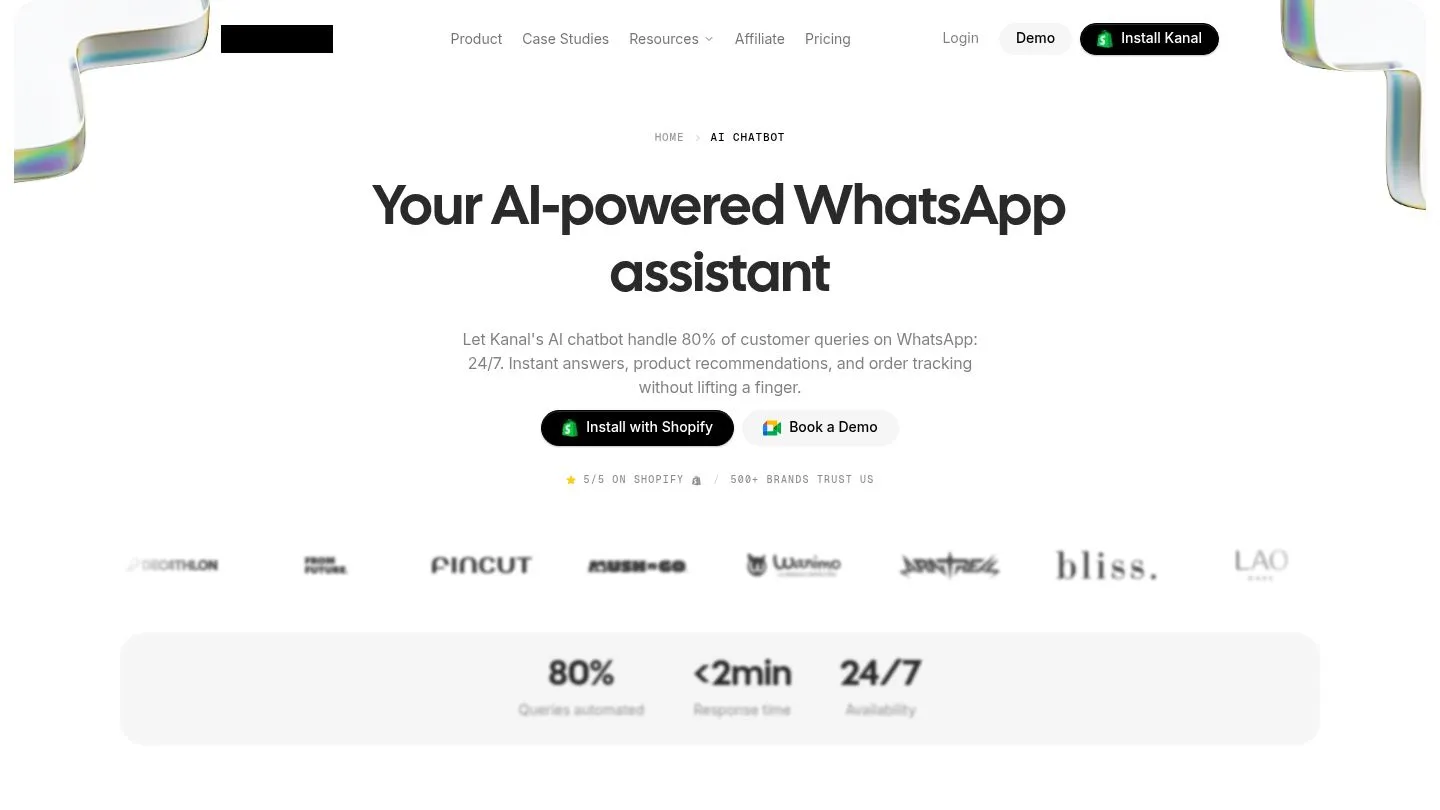
The Kanal Shopify app ships a visual Flow builder with two things the bare-Meta tooling does not have:
Shopify-event triggers. A Flow can be triggered by any Shopify event: order created, order delivered, customer first purchase, cart abandoned, refund issued. The trigger pulls the relevant customer and order data into the Flow as variables, so the merchant does not write any code.
Pre-validated templates. The opening template that launches the Flow is checked against Meta's content rules before submission, which catches the rejection reasons listed above before Meta reviews it.
The full set of Shopify automations including Flows is in our WhatsApp campaigns page. If you're comparing tools, our Kanal vs Wati comparison and Kanal vs Charles comparison cover Flow capabilities side by side. Want to see it live? Book a Kanal demo or check the pricing page.
When to Use a Flow Instead of Other Surfaces
A decision tree to keep on a sticky note:
- Need to push an update, no response expected: send a template message.
- Need to broadcast to a list: see the broadcast guide.
- Need to chat in free text, no structured fields: use an AI chatbot or a human agent.
- Need to collect 2 or more structured fields in one session: send a Flow.
- Need to take payment: redirect from the Flow to Shopify checkout via a CTA button (or use WhatsApp Pay if you operate in India or Brazil).
- Need recurring content delivery to fans (one-to-many, no replies expected): see our WhatsApp Channels guide.
Flows fill the gap between "send a message" and "open the website." They keep the customer inside WhatsApp while still collecting the structured data your Shopify backend needs.
Getting Started
Three steps: verify your WhatsApp Business API is on Cloud API and Meta Business Manager is verified. Pick a single, low-stakes Flow to launch first (sign-up or return request). Ship behind a small test segment, measure completion rate, then scale.
If your store is on Shopify, install Kanal and the Flow builder, Shopify event triggers, and managed endpoints are ready to go.
Frequently asked questions
What is WhatsApp Flows?
WhatsApp Flows is a Meta feature launched in 2024 that lets businesses send structured, multi-screen forms inside a WhatsApp chat. Customers can fill in fields, pick from dropdowns, select dates, and submit, all without leaving the conversation. Flows replace the awkward back-and-forth of typed answers with a native form UI, and run only on the WhatsApp Cloud API (not on the free Business app or MM Lite).
How is WhatsApp Flows different from a template message?
A template message is a one-way notification with up to 3 buttons. It can open a Flow as a button action, but the template itself cannot collect structured data. WhatsApp Flows are interactive forms that capture multiple fields in a single in-chat session, return the data to your server, and can show conditional logic between screens. Templates are for delivery, Flows are for collection.
How much does WhatsApp Flows cost?
Meta charges per delivered message, not per conversation. A Flow is sent inside a message: the template that opens it is charged at its category rate for the recipient's country, for example $0.0250 for a US marketing message and $0.0034 for a US utility message. A Flow sent as a reply inside the 24-hour customer service window is a service message: not charged until September 30, 2026, now charged at the utility rate after 1,000 free service messages per business phone number each month. There is no extra Flow-specific surcharge from Meta. Your BSP may add a small platform fee.
Can I take payments inside a WhatsApp Flow?
Not directly in most regions as of 2026. Meta has rolled out WhatsApp Pay in India and Brazil with limited Flow integration, but in the EU, US, UK, and most other markets you cannot complete a payment inside a Flow. The standard pattern is to collect data in the Flow (cart contents, shipping address, discount code) then redirect to Shopify checkout via a button or link at the end of the Flow.
How long does it take Meta to approve a WhatsApp Flow?
Most Flows are reviewed within 24 to 48 hours. Marketing-related Flows take longer than support or utility Flows. Common rejection reasons are requesting sensitive data without a clear purpose (health info, payment card details), broken screen transitions, missing privacy policy link, and templates that promote external messaging apps. If a Flow is rejected, fix the cited reason and resubmit.
What is the difference between WhatsApp Flows and a chatbot?
A WhatsApp chatbot is a free-text conversational interface where users type answers and an AI or rule engine parses them. A Flow is a structured form with fixed fields and validations. Chatbots handle open questions and small talk well. Flows handle data collection cleanly with no parsing errors. Most production setups combine both: a chatbot qualifies the intent, then opens a Flow when structured data is needed.
Can a WhatsApp Flow have multiple pages?
Yes. A single Flow can contain multiple screens with conditional logic between them (show screen B only if user picked option X on screen A). Multi-screen Flows are available on the standard Cloud API tier from 2025 onwards. Each screen can have form fields, radio buttons, dropdowns, date pickers, and a footer button to advance. Keep Flows under 5 screens: every extra screen is one more place where customers can drop off.
See Kanal on your own store
- Your campaigns and cart reminders on WhatsApp, starting from your own store
- Post-purchase offers, back-in-stock alerts, then the AI agent that advises your customers
- You leave with the plan that fits and its price

- brands
- 500+
- to set up
- 5 min
- open rate on WhatsApp
- +90%
5/5 on the Shopify App Store (125 reviews)

Nicolas helps e-commerce brands grow revenue with WhatsApp marketing. With deep expertise in Shopify ecosystems and conversational commerce, he shares proven strategies for abandoned cart recovery, broadcast campaigns, and AI-powered customer engagement.
Glossary terms in this article
Quick definitions for the WhatsApp Business terms used above.
WhatsApp Flows
WhatsApp Flows is a feature of the WhatsApp Business Platform for building structured, multi-screen interactions inside a chat, such as forms, sign-ups, bookings and guided product selection. The customer fills in screens instead of typing free text.
Read full definitionWhatsApp Cloud API
The WhatsApp Cloud API is the version of the WhatsApp Business API that Meta hosts on its own servers. It lets a business send and receive WhatsApp messages, calls and group conversations by code, and since October 23, 2025 it is the only way to use the API.
Read full definitionOpt-in
A WhatsApp opt-in is the permission a person gives a business to send them messages on WhatsApp. WhatsApp's Business Messaging Policy requires it before any message: the business must have the person's phone number and their agreement to hear from that business.
Read full definitionwa.me Link (Click-to-Chat)
A wa.me link is WhatsApp's official click-to-chat URL. Opening it starts a conversation with a specific number, without the visitor saving the contact first.
Read full definitionWABA (WhatsApp Business Account)
A WABA (WhatsApp Business Account) is the account that represents a business on the WhatsApp Business Platform. A business needs one to send and receive messages through the API and to create message templates; it holds the phone numbers, the templates and the billing setup.
Read full definitionBusiness Solution Provider (BSP)
A Business Solution Provider (BSP) is a company authorized by Meta to give other businesses access to the WhatsApp Business Platform, usually through its own software. Meta now calls these companies partners and splits them into Solution Partners, Tech Providers and Tech Partners.
Read full definitionMarketing Template
A marketing template is a WhatsApp message template used for promotion: offers, product launches, back-in-stock alerts or cart reminders. It can be sent at any time to customers who opted in, and Meta charges each delivered message at the marketing rate of the recipient's country.
Read full definitionUtility Template
A utility template is a WhatsApp message template that follows up on something the customer did or asked for: an order confirmation, a shipping update, a payment receipt. It must not contain promotional content, otherwise Meta re-categorizes it as marketing.
Read full definitionClick-to-WhatsApp Ads
Click-to-WhatsApp ads are Facebook and Instagram ads whose button opens a WhatsApp chat with the business instead of a website. The shopper sends the first message, which lets the business reply freely and, under Meta's pricing, for free during a limited window.
Read full definitionWhatsApp Pay
WhatsApp Pay is the name commonly given to payments on WhatsApp: paying a person or a business without leaving the chat. For businesses, Meta documents payment features on the WhatsApp Business Platform for two countries, India and Brazil.
Read full definitionCustomer Service Window (24-hour window)
The customer service window is a 24-hour timer that starts when a WhatsApp user messages or calls a business. While it is open, the business can reply with free-form messages; once it closes, it can only send approved message templates.
Read full definitionSuggested articles

Best WhatsApp CRM: 12 Tools Compared (2026)
The best WhatsApp CRM tools compared: CRM features, e-commerce integrations and starting prices for Kanal, Wati, Respond.io, Kommo, HubSpot and more.

11 best WhatsApp chatbots and AI agents compared (2026)
The 11 best WhatsApp chatbot and AI agent platforms in 2026, compared on type of AI, store integrations and the starting price each vendor displays.

WhatsApp Business Templates: 25 Meta-Ready Examples (2026)
WhatsApp Business templates on Meta: 25 examples by use case, the 3 categories, approval time (up to 24 hours), utility and authentication rules, costs.
WhatsApp Business Catalog: Shopify Setup Guide (2026)
Set up a WhatsApp Business catalog synced with Shopify: manual setup, API auto-sync, image specs, catalog message templates and WhatsApp Pay (2026).