30 WhatsApp Marketing Examples and Campaign Ideas (2026)

Summarize this article with an AI
 ChatGPT
 Claude
30 WhatsApp marketing examples for beauty, fashion, food, wellness and home brands: the mechanic, why it works and how to adapt it to your Shopify store.
Table of contents (13)
Key takeaways
- A strong WhatsApp campaign relies on earned permission, copy that reads like a friend texting, exactly one call to action and a real reply path.
- Start with abandoned cart recovery and post-purchase upsells, then add welcome series and back-in-stock alerts before segmented broadcasts.
- Begin at 2 to 4 messages per month, avoid sending after 9pm local time, and let your opt-out rate show where the ceiling is.
What makes a WhatsApp campaign brilliant
Before we dive into 30 specific examples, we need a working definition of brilliant. A great WhatsApp campaign is not the one with the cleverest copy or the prettiest image. It is the one that hits five non-negotiable traits.
1. Permission is earned, not assumed. The customer opted in for a clear reason (a discount, a launch alert, a status update) and the message respects that reason. Anything else feels like spam.
2. The message reads like a friend texting. Short sentences. Lowercase first words. One idea per line. The moment a WhatsApp message reads like an email, it fails.
3. There is exactly one call to action. Every extra button splits the reader's attention, and the message loses its point.
4. Timing matches behavior, not the brand's calendar. Sending at 11pm because you woke up with an idea is amateur hour. Sending a cart reminder shortly after the abandonment, while the shopper is still weighing the purchase, is professional.
5. The reply path is real. If the customer hits reply, a human or a properly trained AI answers within five minutes. Dead-end broadcasts kill the channel.
Kanal was built around those five traits, and the examples below either pass or fail by them. Each one is an anonymised campaign pattern: the message, the mechanic and the lesson to take away. Treat them as illustrations to adapt, not as results to expect. For deeper context on the channel itself, our WhatsApp marketing guide covers the fundamentals.
Examples 1 to 5: Beauty and skincare brands
Retailers with physical stores run a different motion entirely: see our drive-to-store WhatsApp campaigns playbook. In beauty, the combination of high consideration, replenishment cycles, and emotional purchases makes the channel a natural fit. The beauty marketing playbook goes deeper on the vertical.
Example 1. Beauty brand launch teaser. Copy: "we are bringing it back. tap to see what." Single image, single button to the product page. Why it works: the teaser format respects the audience by withholding details. It only works for a brand that has banked enough goodwill for "tap to see" to be enough.
Example 2. Makeup shade restock. Copy: "psst Anna, your shade is back. linked below before it sells out again." Personalization plus urgency plus a single link. Why it works: the news is the customer's own shade, not a generic restock.
Example 3. Skincare post-purchase ritual check-in. Two weeks after a face mask purchase, customers receive a one-question survey: "still loving the mask? reply 1 yes, 2 not yet, 3 send tips." Replies route to a routine builder or to a CX agent. Why it works: one question, three numbered answers, and every answer leads somewhere useful. Track reply rate and NPS over the following months.
Example 4. Indie skincare drop. A small skincare brand announces a limited release: "tomorrow 10am. 200 units of the new serum. tap to set a reminder." When the customer taps, a reminder goes out at 9:55am, just before the drop opens. Why it works: only the customers who asked for the reminder get the second message.
Example 5. Minimalist replenishment. Copy: "your bottle is probably empty by now. reorder in one tap." No image, no emoji, no urgency. Why it works: for a brand built on restraint, the plain message is the brand. Track clicks and repurchases from the link.
Examples 6 to 10: Fashion DTC brands
Fashion's WhatsApp playbook revolves around drops, restocks, and capsule launches. The faster the inventory turn, the harder WhatsApp works.
Example 6. Weekly fashion drop. A fashion brand drops a small capsule every Friday at 10am. The WhatsApp message goes out at 9:50: "10 minutes. the new collection. online at 10am." Why it works: a fixed weekly slot turns the drop into a ritual customers plan around. Track sell-through on hero pieces in the first hour.
Example 7. Vote-then-make pre-order. An apparel brand lets customers vote on its next product, then closes the loop on WhatsApp: "you voted for the wool sweater. 1,200 units arriving in 6 weeks. pre-order saves 20%." Why it works: the customer helped choose the product, so the pre-order feels like their own. Track pre-order conversion from the list.
Example 8. Sneaker drop FCFS. A sneaker brand sends "FCFS drop. 60 pairs. live in 90 seconds." The pre-built link routes to a queue page. Why it works: the link skips every step between the message and the queue, and the hard cap makes the urgency real. Watch the refund rate as well as the sell-out time.
Example 9. Birthday gift. An apparel brand sends an automated message on the customer's birthday: "happy birthday Marc. small gift from us. tap for the code." Code is single-use, expires in 7 days. Why it works: a gift with a clear expiry, on a day the customer cares about. Track redemption rate and AOV against your baseline.
Example 10. Capsule launch with stylist hand-off. A premium menswear brand pairs the broadcast with a follow-up: "want help building the look? reply 1 and a stylist will be in touch within an hour." Why it works: a customer who replies is asking for help, which is the right moment to build a full look with them. Track reply rate, conversion of repliers and their average order.
For the templates behind these, see our WhatsApp templates library.
Examples 11 to 15: Food and beverage
Food and beverage brands win on WhatsApp through community and replenishment. The cadence is higher than fashion but the AOV is lower, so the math depends on retention.
Example 11. Specialty coffee subscription. A roastery sends every Sunday: "tomorrow's roast: Ethiopia Yirgacheffe. lock your bag before 10pm." Why it works: a weekly roast day and a same-day cutoff give a reason to order now.
Example 12. Natural wine club drop. "we have 48 bottles of the Beaujolais you loved. quote yes to claim a 6-pack." The "quote yes" mechanic uses WhatsApp's reply feature to confirm. Why it works: claiming takes one reply, with no checkout page in the way.
Example 13. Meal kit weekly menu. "this week: 3 pastas, 2 fish, 1 vegan. tap to swap." The catalog opens directly in WhatsApp via the Shopify catalog integration. Why it works: a subscriber who can shape the box each week has a reason to open the message, and one less reason to cancel. Track swap rate and subscription churn.
Example 14. Craft chocolate seasonal drop. "Easter eggs. 240 boxes. tap to claim yours by Wednesday." Why it works: a limited seasonal batch, a clear deadline, and a WhatsApp list built during the rest of the year.
Example 15. Tea club tasting invitation. A tea brand invites top customers to a live tasting via WhatsApp Group. The group becomes a permanent community. Why it works: an invitation to a small group of top customers feels like access, not advertising. Compare the lifetime value of group members with similar customers outside the group before you scale it.
Examples 16 to 20: Health and wellness
Health and wellness leans into trust, education, and habit-building. WhatsApp is the natural channel because health is rarely a one-shot purchase.
Example 16. Supplement replenishment nudge. Day 27 of a 30-day supply: "your magnesium runs out in 3 days. tap to reorder, ships tomorrow." Why it works: the timing comes from the product itself, so the reminder lands just before the customer runs out. Offer a subscription to one-time buyers who reorder. Our list of the best subscription apps for Shopify covers the tools for that.
Example 17. Sleep app daily streak. "Anna, 14-day streak. one tap to start tonight's session." Why it works: the streak is the customer's own progress, and one tap starts the next session. Track replies and daily active users.
Example 18. Fitness coaching nudge. A coach app sends "skipped 3 workouts. quick check in?" The message routes to a human coach who follows up. Measure it the right way: churn of members who receive the nudge versus a holdout group.
Example 19. Mental health journaling prompt. "morning Marc. one question: what's the smallest win you can chase today?" Tap to write back in WhatsApp. Why it works: one small question a day is easy to answer, and answering builds the habit. With consent, the responses can also feed an in-app coach.
Example 20. Probiotic post-purchase education sequence. Day 1, 3, 7, 14, 21. Each message educates on a specific benefit and asks one question. Why it works: customers learn what to expect, and when, so a slow start does not read as a failed product. Track refund requests before and after the sequence.
Examples 21 to 25: Home and lifestyle
Home and lifestyle brands sell ambiance. WhatsApp adds the warmth that email cannot.
Example 21. Candle brand seasonal launch. "the winter collection is here. tap to smell each one in 30 seconds (video)." A 30-second sniff-test video for each scent. Why it works: a short video is the closest a screen gets to smelling a candle. Track watch-through and conversion from the campaign.
Example 22. Furniture brand styling consult. "browsing the sofa? reply with a photo of your room and we will suggest the right size." Why it works: a customer who sends a photo of their room is a serious buyer, and the advice removes the main doubt on a high-ticket item: will it fit? Judge the campaign on the conversion of repliers, not on the reply rate.
Example 23. Plant brand seasonal care. "your monstera needs more light by next week. tap for one quick tip." The tip is a 15-second video. Why it works: pure service, no sale, and it keeps the brand in the thread for the next purchase.
Example 24. Ceramic studio kiln drop. "kiln just opened. 38 pieces. one of a kind. tap before they go." Why it works: one-of-a-kind pieces are real scarcity, and the WhatsApp list gets first access.
Example 25. Vintage marketplace one-of-a-kind alert. "this 1972 Eames chair just landed. condition 8/10. tap to claim." Why it works: each message is a single item that will not come back. Keep it to a few alerts per week, sent only to a curated list.
Examples 26 to 30: Multi-vertical
The last five span verticals to show the format's versatility.
Example 26. Jewelry restock with personal stylist hand-off. "the gold huggies you loved are back, only 40 pairs. want help with sizing? reply 1." Why it works: a restock of a product the customer already liked, plus a human answer to the one question that blocks the purchase.
Example 27. Pet care birthday treat. "Bella is turning 3 today. small gift from us." A discount on her favorite food, auto-detected from purchase history. Why it works: the message is about the pet, not the brand.
Example 28. Baby brand milestone nudge. "your little one is 6 months. these are the products we recommend next." Mapped to the registered birthdate. Why it works: the recommendation follows the child's age, so it arrives when the need changes.
Example 29. Eyewear style finder. Quiz delivered in WhatsApp via chatbot flows. Three questions, frame suggestions, single tap to book a try-on. Why it works: the quiz does the work of a shop assistant and ends on one concrete next step. Track completion and try-on bookings.
Example 30. Premium kitchenware demo invite. "live 20-minute demo of the new pan this Friday 6pm. RSVP yes." Why it works: a live demo answers the questions that hold back a premium purchase. Track RSVPs and orders from attendees in the 48 hours after.
Patterns that consistently win
Across the thirty examples above, five patterns repeat.
1. One idea per message. The winners send three short messages instead of one long one.
2. Personalization beyond the first name. Past purchases, last visit, sizing, location. The first name alone reads cheap.
3. Single CTA, one tap deep. The destination opens the product, the cart, or the booking. Never the homepage.
4. Reply paths that respect the customer. "reply 1 to talk to a human" works because customers know what 1 means. "Click here to chat" feels like a trap.
5. Volume restraint. Start at 2 to 4 messages per month, not 10, and let your opt-out rate tell you where the ceiling is. Compare to a SMS strategy where volume can be higher.
Patterns that consistently fail
The mistakes are equally repeatable.
1. Image-heavy promotional broadcasts. A poster in WhatsApp reads like an email forward. Strip the image, sharpen the copy.
2. Discounts as the only mechanic. Brands that lead every message with a code train customers to wait. The best examples lead with curiosity or value.
3. Late-night sends. Anything after 9pm local time tanks engagement and spikes opt-outs.
4. Generic broadcasts to the full list. A message written for everyone speaks to no one: send each broadcast to the segment it was written for.
For more on avoiding the traps, see our conversational commerce guide and the ROI and KPIs piece.
How to test these examples on your Shopify store this week
Pick three examples from the verticals closest to yours. Rewrite each in your brand voice using the Kanal editor. Send the first as an abandoned cart message via the cart recovery flow. Send the second as a welcome message to new subscribers. Send the third as a one-time broadcast to your top 100 customers. Measure delivery, read, click, and revenue against your current email channel.
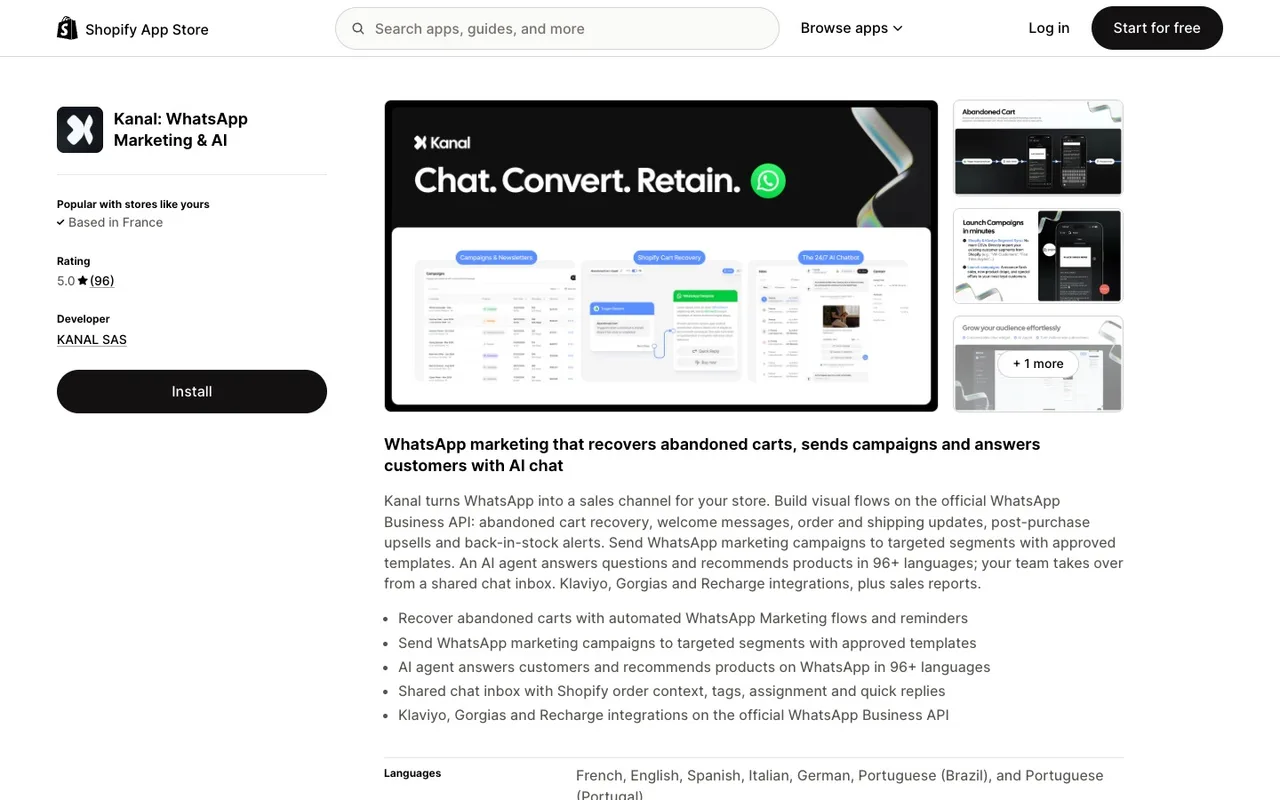
Three days of work. One week of data. You will know whether WhatsApp belongs in your stack. For setup details, the WhatsApp Business API guide covers the technical side and the pricing guide explains the per-message cost model.
Conclusion: brilliance is process, not magic
The thirty examples above share zero in-house secrets. Every brand that runs campaigns like these started where you are now, with a first message to a short list. What separates the brilliant from the mediocre is process: a swipe file, a weekly test, a willingness to delete what does not work.
Start with one campaign this week. Replicate one of the examples. Measure. Iterate. In ninety days you will have your own swipe file, calibrated to your brand and your audience, and the next thirty examples will write themselves.
Ready to run your first campaign? Book a Kanal demo and we will help you pick the right example for your store, write the first draft, and ship it within seven days. Or install Kanal directly from the Shopify App Store and explore the templates yourself.
Resources
- WhatsApp Business API guide
- Best WhatsApp apps for Shopify
- WhatsApp broadcast guide
- WhatsApp newsletter guide
- WhatsApp templates library
- Black Friday WhatsApp playbook
- Chatbot WhatsApp ecommerce guide
- ROI and KPIs for WhatsApp marketing
- WhatsApp link generator
- WhatsApp QR code generator
- Meta WhatsApp Business platform (official)
- Meta Business case studies (official)
- Shopify App Store WhatsApp category (official)
FAQ
Where can I find more WhatsApp marketing examples?
Beyond this article, the best sources are the case study libraries published by Meta, the official WhatsApp Business blog, and brand newsletters from DTC publications like 2PM, Lean Luxe, and Modern Retail. Many brands also share campaign breakdowns on LinkedIn. Subscribing to five to ten brands directly on WhatsApp is the single fastest way to build a swipe file of real examples.
What is the best WhatsApp marketing campaign type?
Start with abandoned cart recovery and post-purchase upsells, because they reach shoppers at a moment of clear purchase intent. Welcome series and back-in-stock alerts come next. Broadcast campaigns work well for product launches and seasonal drops, but always require segmentation to avoid opt-outs. To rank them on your store, compare the revenue of each campaign with its message cost.
Do these examples work for small stores?
Yes. The mechanics are size-agnostic. A store doing 50 orders per month can run the same abandoned cart flow, welcome series, and product launch broadcast as a store doing 50,000. The difference is volume, not strategy. Small stores actually benefit more because WhatsApp adds the personal touch that big brands struggle to fake. If your store is at that stage and you are still deciding where to sell, our Shopify vs Etsy guide compares the two.
Can I copy these examples directly?
Copy the structure, timing, and tone, then rewrite the words: copy that suits a large beauty brand will read as fake on a small indie brand. Use these examples as a swipe file: keep the underlying mechanic (curiosity hook, scarcity nudge, social proof anchor) and rewrite in your brand voice.
How do brands measure WhatsApp campaign success?
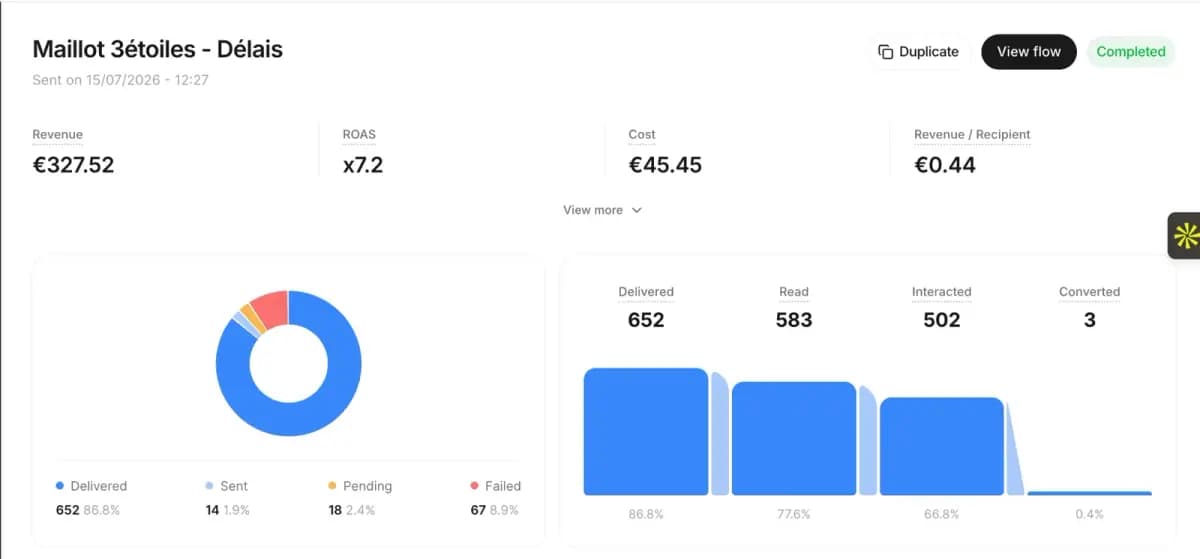
The four core metrics are delivery rate, read rate, click-through rate, and revenue per message sent. Mature brands also track opt-out rate per campaign and incremental revenue versus a holdout group. There is no independent public benchmark for revenue per message: your own past campaigns are the baseline to beat.
See Kanal on your own store
- Your campaigns and cart reminders on WhatsApp, starting from your own store
- Post-purchase offers, back-in-stock alerts, then the AI agent that advises your customers
- You leave with the plan that fits and its price

- brands
- 500+
- to set up
- 5 min
- open rate on WhatsApp
- +90%
5/5 on the Shopify App Store (125 reviews)

Nicolas helps e-commerce brands grow revenue with WhatsApp marketing. With deep expertise in Shopify ecosystems and conversational commerce, he shares proven strategies for abandoned cart recovery, broadcast campaigns, and AI-powered customer engagement.
Glossary terms in this article
Quick definitions for the WhatsApp Business terms used above.
Opt-out
A WhatsApp opt-out is a person's request to stop receiving messages from a business on WhatsApp. WhatsApp's Business Messaging Policy requires businesses to respect every such request, whether it is made on WhatsApp or elsewhere.
Read full definitionSegmentation
Segmentation is the practice of splitting a WhatsApp contact list into groups based on traits like purchase history, behavior, or engagement, so each group receives messages that are actually relevant.
Read full definitionSuggested articles

Ecommerce Marketing Automation: A Practical Guide for Shopify Stores (2026)
Ecommerce marketing automation explained: how flows work, the 10 flows every online store needs, email vs SMS vs WhatsApp, and how to set it up on Shopify.
50+ WhatsApp Message Templates for Ecommerce: Copy and Paste (2026)
53 WhatsApp message templates ready to copy and paste: abandoned cart, order updates, review requests, winback and promos. With Meta categories.
WhatsApp in Shopify Messaging: Pricing, Features and Limits
WhatsApp is live in Shopify Messaging: what the channel does, per-message prices by country ($0.106 UK, $0.172 France), limits and the US rule, October 2026.
Best WhatsApp Marketing Software: 10 Tools Compared (2026)
The 10 best WhatsApp marketing software tools compared: features, e-commerce integrations and starting prices for Kanal, Wati, Zoko, Charles and more.