Abandoned Cart Recovery: 12 Strategies That Work in 2026

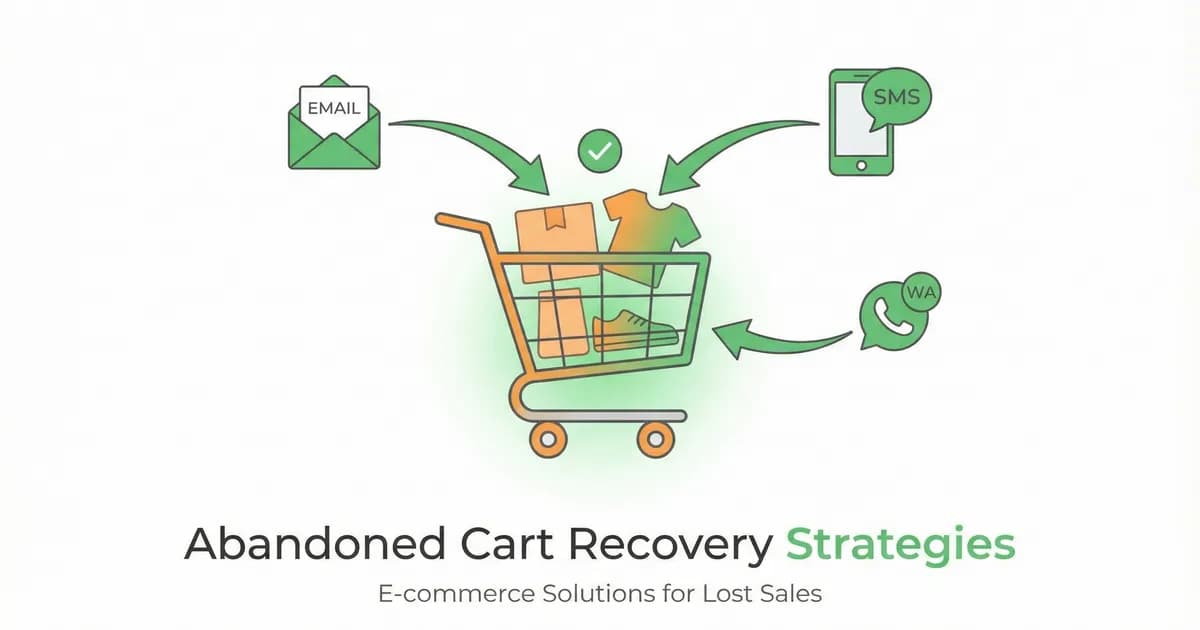
12 abandoned cart recovery strategies for 2026: send timing, channel mix, discount escalation, checkout fixes and the metrics to track on Shopify.
Table of contents (19)
Roughly 70% of online shopping carts are abandoned before checkout, per the Baymard Institute, which also estimates that $260 billion worth of lost orders in the US and EU are recoverable through a better checkout flow and design alone. Put your own numbers on it: if your store does $50,000 a month, abandons 70% of carts, and abandoned carts are the same size as completed ones, about $116,000 of carts walk out the door every month. The shoppers behind those carts are your highest-intent traffic: they found the product, liked it, and stopped one step short.
This guide is the strategy layer: 12 abandoned cart recovery strategies that work in 2026, what each one involves, and who should deploy it. It deliberately stays channel-agnostic, because no single tactic reaches every shopper who leaves a cart behind.
How this guide fits in the series. If you want the tool that automates all of this on Shopify, that is the abandoned cart recovery feature page. For copy you can paste today, grab the WhatsApp abandoned cart recovery templates or the abandoned cart email examples. And if you are weighing one channel against the other, the WhatsApp vs email abandoned cart recovery comparison walks through the trade-offs. This page ties those pieces together into one plan.
1. Send the First Message Within the Hour
Purchase intent decays fast: the longer you wait, the more likely the shopper has bought elsewhere or moved on. Whatever channel you use, moving the first touch from "next morning" to "within the hour" is one of the simplest changes to make, and an easy one to test against your current timing.
Set the trigger at 30 to 60 minutes: earlier feels like surveillance, later misses the window where the shopper is still comparing tabs. The first message should contain the cart contents, a one-tap link back to a pre-filled checkout, and no discount at all.
Who should use it: every store, on day one. If you only implement one strategy from this list, make it this one.
2. Lead With WhatsApp When Shoppers Opted In
WhatsApp makes a strong opening move in a recovery sequence: the reminder lands in the chat app shoppers use every day, not in a crowded inbox. The format carries the product image, the price, and a one-tap checkout button inside the chat, and the shopper can reply with a question instead of silently leaving.
With Kanal, the WhatsApp flow triggers automatically from Shopify cart events: reminder at 1 hour, social proof at 24 hours, incentive at 72 hours, with automatic suppression the moment the cart converts. Collect opt-ins at checkout with a dedicated checkbox; the GDPR opt-in guide covers the compliant setup. Ready-made message copy lives in the WhatsApp abandoned cart recovery templates.
Who should use it: stores whose customers are in Europe, Latin America, India, or Southeast Asia, and any brand with a WhatsApp opt-in base above a few hundred contacts.
3. Run a Three-Email Follow-Up Sequence
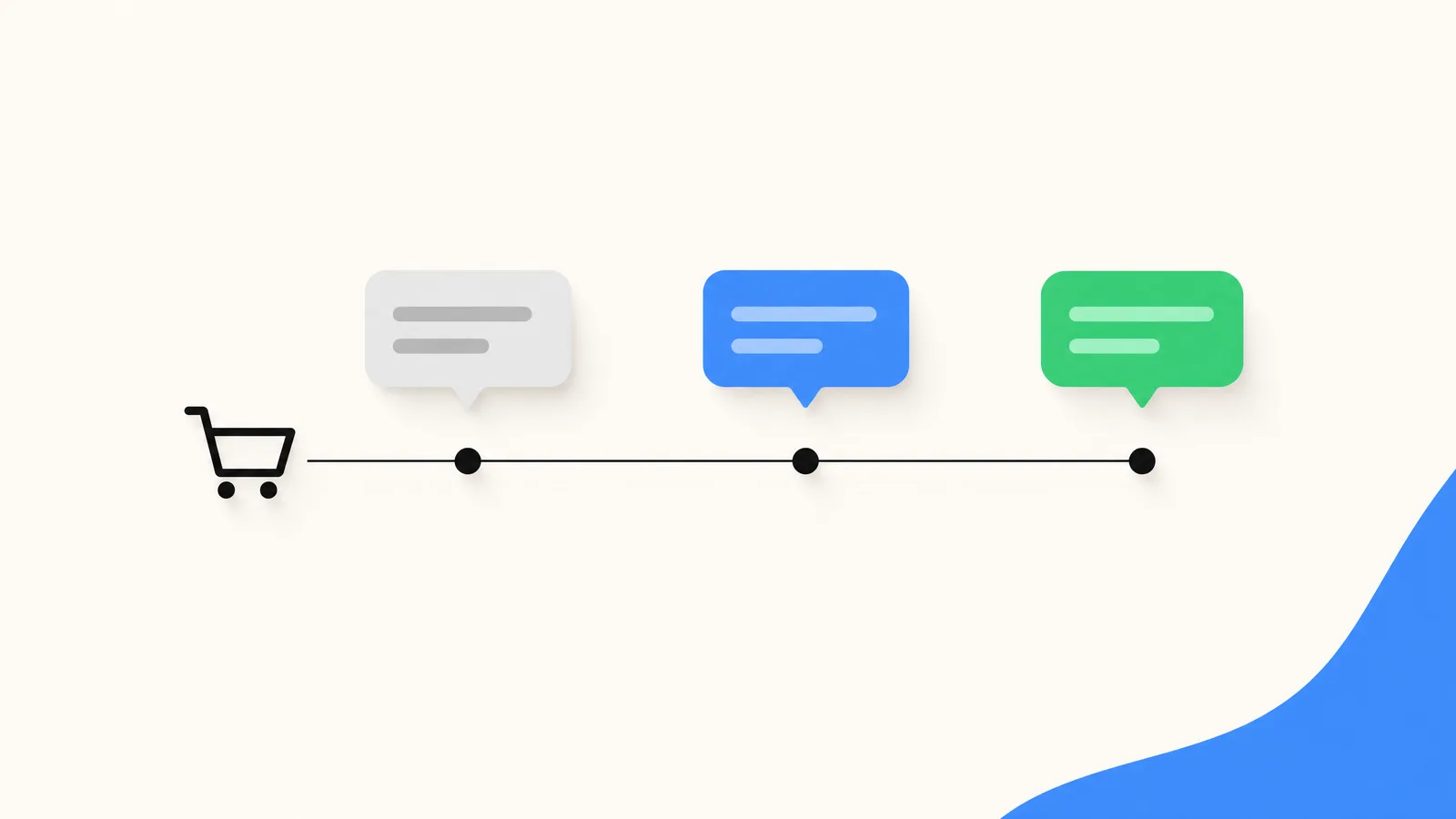
Email works as the low-cost layer of the sequence, since each extra send costs very little. A simple structure is three sends: a plain reminder at 1-4 hours, an objection-handling email with reviews or shipping details at 24 hours, and a time-limited incentive at 48-72 hours.
Keep the design mobile-first: one product image, two or three lines of copy, one button that lands on the pre-filled cart. Test subject lines that name the product and the customer against a generic "you forgot something". Full copy for each stage is in the abandoned cart email examples.
Who should use it: everyone. Email is the floor of a recovery program, not the ceiling; it should back up a messaging channel rather than carry the whole load.
4. Add SMS for Time-Critical Reminders
SMS lands in the phone's native inbox but offers no images, no buttons, and costs more per message than email, so use it surgically: one short message per abandoned cart, 160 characters, a first name, the product, and a direct cart link. It shines for urgency plays such as "your cart expires tonight" or low-stock alerts.
Place SMS mid-sequence, around 24 hours, after WhatsApp and email have fired. Respect consent rules strictly: TCPA in the US, GDPR in the EU, and an opt-out mention in every send.
Who should use it: stores with significant North American traffic, where WhatsApp adoption lags, or as the fallback channel when a WhatsApp message goes undelivered.
5. Escalate Discounts Instead of Leading With Them
Discounting in the first message trains shoppers to abandon carts on purpose. The escalation pattern protects margin: no incentive at 1 hour, a soft nudge like free shipping at 24 hours if needed, and a 5-10% time-limited code at 48-72 hours reserved for carts that are otherwise lost.
Segment the escalation by cart value. High-value carts justify a larger absolute incentive; low-value carts often recover with no discount at all. Track your discount dependency rate monthly: if the share of recoveries that needed a code keeps climbing, tighten the sequence.
Who should use it: every store currently blasting "10% off" as the first touch, and margin-sensitive brands that cannot afford blanket couponing.
6. Personalize With Cart Contents and Product Images
Generic "you left something behind" messages underperform personalized ones on every channel. The minimum viable personalization: first name, exact product name, product image, price, and a link that lands on the pre-filled cart rather than the homepage.
A product image lets the shopper recognize the item at a glance; A/B test it against a text-only version on your own flow. On WhatsApp the image shows up directly in the chat, above the message and the checkout button. Pull all of it dynamically from Shopify data so the sequence scales without manual work.
Who should use it: any store still sending template text without dynamic variables. This is table stakes in 2026.
7. Handle Objections Inside the Conversation
Some shoppers abandon because a question went unanswered: shipping cost, sizing, delivery time, returns. Two-way channels turn the recovery message into a conversation. Add a line like "any question, just reply here" and route replies to an AI chatbot that answers instantly, with human handoff for edge cases.
Track two numbers here: how many shoppers reply, and how many of those conversations end in an order. A question answered while the cart is still open can save the sale, and this is the piece email structurally cannot replicate, whatever the copy.
Who should use it: stores with considered purchases (sizing, compatibility, high AOV) where unanswered questions, not price, drive abandonment.
8. Catch Leavers With Exit-Intent Offers
Recovery starts before the cart is abandoned. An exit-intent popup fires when the cursor heads for the close button while the cart is loaded, and gives you one last chance to keep the shopper on the page. Effective angles: a free-shipping threshold reminder, a genuine low-stock note, or a simple "save your cart" email or WhatsApp capture.
The capture variant is the strategic one: even when the shopper leaves anyway, you gained the contact and consent you need to run the rest of the sequence. Cap the popup at one display per session so it never harasses returning visitors.
Who should use it: stores with high traffic but thin opt-in lists, where most abandoners are currently unreachable by any message.
9. Retarget High-Value Carts With Dynamic Ads
Meta and Google dynamic ads re-show the exact abandoned products across feeds and the display network. Unlike a message to an opted-in contact, every recovered cart costs you media spend, so reserve the budget for carts worth the spend and compare the cost per recovered cart with your other channels.
Build the audience as "added to cart minus purchased" with a 7-14 day window, cap frequency at 3-5 impressions a day, and always exclude converters. Bid higher on carts abandoned within the last 24 hours, when intent is freshest.
Who should use it: stores with AOV above roughly $80, or carts that messaging cannot reach because the shopper never opted in.
10. Remove Checkout Friction at the Source
The cheapest cart to recover is the one never abandoned. In Baymard's survey of US online shoppers, leaving aside those who were just browsing, 40% abandoned because extra costs (shipping, tax, fees) were too high, 18% because the site wanted them to create an account, and 17% because the checkout was too long or complicated. Fix the causes: show shipping costs early, enable guest checkout, cut every non-essential form field.
Add the payment methods your market expects (Shop Pay, PayPal, Apple Pay, and buy-now-pay-later where relevant) and surface trust signals near the pay button. Checkout optimization compounds every other strategy on this list because each message you send lands on a smoother path to purchase.
Who should use it: stores whose abandonment rate is above Baymard's documented average of about 70%, and anyone who has never audited their checkout on a real phone.
11. Orchestrate All Channels in One Flow
The strategies above multiply when they run as one sequence instead of competing tools. A simple orchestration to start from: WhatsApp at 1 hour, email at 4 hours, SMS at 24 hours, WhatsApp plus email with the incentive at 48-72 hours. One flow, one suppression rule: the moment the order is placed, everything stops.
Coordination is the point. Three apps firing independently produce three redundant messages in the same afternoon, which is how you earn opt-outs. Measure the orchestrated flow as a whole, not channel by channel; the channel trade-offs are covered in the WhatsApp vs email abandoned cart recovery comparison, and the tooling options are compared in our best Shopify abandoned cart apps roundup.
Who should use it: stores already running two or more channels separately, and anyone scaling past their first basic email sequence.
12. Measure, Then Reallocate
Run the program on three numbers. Recovery rate: recovered carts divided by abandoned carts, tracked month over month against your own baseline. Revenue recovered: the monthly dollar figure that justifies the stack. ROAS per channel: revenue attributed to a channel divided by its cost, which tells you where the next dollar should go.
Review monthly and reallocate: when one channel returns clearly more per dollar than another, the budget conversation is over. Watch discount dependency and time-to-recovery too; both reveal whether your sequence is winning shoppers back or just paying them to return. Model your own numbers with the ROAS break-even calculator, and see the WhatsApp marketing statistics for 2026 for the platform figures we could source.
Who should use it: every store from the second month onward. Without attribution, the other eleven strategies are guesses.
Where to Start, by Store Profile
| Store profile | Deploy first | Then add |
|---|---|---|
| New store, no recovery flow | Strategies 1, 3, 6 | WhatsApp (2) once opt-ins build |
| EU or LatAm audience, opt-ins available | Strategies 1, 2, 5 | Email backup (3), orchestration (11) |
| US-heavy audience | Strategies 1, 3, 4 | Exit-intent capture (8) |
| High AOV, considered purchases | Strategies 7, 9, 10 | Full orchestration (11, 12) |
| High traffic, thin lists | Strategies 8, 10 | Messaging channels once captured |
FAQ
What is the most effective abandoned cart recovery strategy?
Start with speed. Send the first recovery message within 1 hour of abandonment, while the shopper still has the purchase in mind, on the channel they are most likely to see. For stores with WhatsApp opt-ins that means a WhatsApp reminder at 1 hour, followed by email and SMS touches over the next 72 hours. Measure what this sequence recovers against your current flow with a holdout group before you add more tactics.
How many recovery messages should an abandoned cart sequence include?
Three touches over 72 hours is a solid default: a plain reminder at 1 hour, social proof or objection handling at 24 hours, and a time-limited incentive at 48-72 hours only for shoppers who still have not converted. Beyond three messages, each extra touch has little new to say while opt-outs and spam complaints climb, which damages deliverability on every future campaign.
Which channels should an abandoned cart recovery strategy combine?
Start with the channel your customers engage with most, then layer the rest. WhatsApp opens the sequence where shoppers opted in and can reply in the same thread, email adds a low-cost follow-up, SMS covers markets where WhatsApp adoption is low, and web push reaches visitors who never shared contact details. Run two or three channels in one suppression-aware flow and measure the total recovery rate against your single-channel baseline.
Should you offer a discount to recover an abandoned cart?
Only as a last resort, and never in the first message. Lead with a clean reminder, then social proof, and introduce a modest time-limited incentive (5-10% or free shipping) at 48-72 hours exclusively for shoppers who have not returned. Discounting earlier trains customers to abandon carts on purpose and erodes margin on orders that would have converted anyway.
Put the Whole Playbook on Autopilot
Hand-building twelve strategies across four channels is a project. Running them through one platform is a setting. Kanal automates the WhatsApp-first sequence from your Shopify cart events, handles personalization, suppression, and attribution, and layers email alongside, with setup measured in minutes rather than sprints. See it live in a 20-minute demo, then start with strategy 1 this week: every day without a first-hour message is revenue left on the table.

Nicolas helps e-commerce brands grow revenue with WhatsApp marketing. With deep expertise in Shopify ecosystems and conversational commerce, he shares proven strategies for abandoned cart recovery, broadcast campaigns, and AI-powered customer engagement.
Ready to boost your WhatsApp sales?
 Install with Shopify
Glossary terms in this article
Quick definitions for the WhatsApp Business terms used above.
Abandoned Cart Recovery
Abandoned cart recovery is the practice of messaging shoppers who added items to their cart but left without buying, to encourage them to complete the purchase.
Read full definitionOpt-in
An opt-in is the explicit permission a customer gives a business to contact them on WhatsApp. It is required before a business can send any message.
Read full definitionOpt-out
An opt-out is a customer's request to stop receiving WhatsApp messages from a business, typically expressed by replying with a keyword like STOP or tapping an unsubscribe button.
Read full definitionSuggested articles
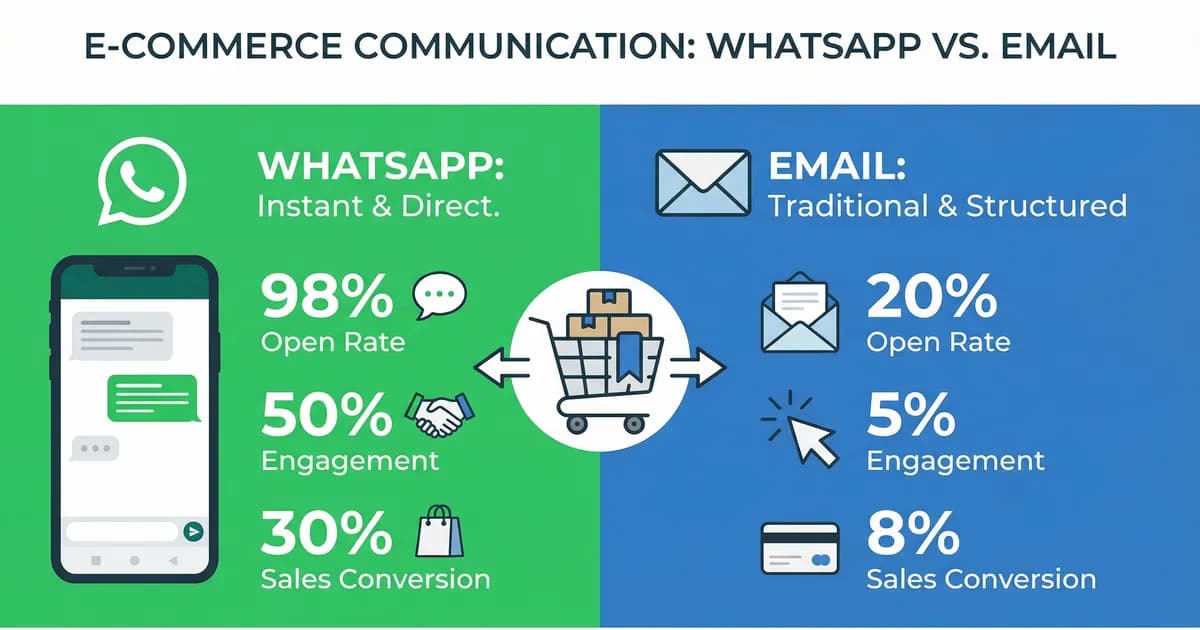
WhatsApp vs Email Cart Recovery: When to Use Each
WhatsApp vs email for abandoned cart recovery: strengths, costs, opt-in rules, when to use each channel and how to combine them in one Shopify flow.
50+ WhatsApp Message Templates for Ecommerce: Copy and Paste (2026)
53 WhatsApp message templates ready to copy and paste: abandoned cart, order updates, review requests, winback and promos. With Meta categories.
Shopify Messaging Adds WhatsApp: What It Means for Your Store
Shopify announced WhatsApp as a native marketing channel in Shopify Messaging at the Spring '26 Edition. What we know, what is still open, and how to prepare.
10 Best WhatsApp Marketing Tools and Software (2026)
The 10 best WhatsApp marketing tools and software compared: features, e-commerce integrations and starting prices for Kanal, Wati, Zoko, Charles and more.