How Does WhatsApp Make Money? Meta's Business Model (2026)

How does WhatsApp make money with no subscription and no ads in chats? Paid business messaging and click-to-WhatsApp ads. The full breakdown.
Table of contents (11)
Introduction: A Free App That Still Makes Money
More than 3 billion people use WhatsApp. They pay nothing, see no ads inside their personal chats, and never enter a credit card. For a service of that scale, the obvious question is simple: how does WhatsApp make money?
The short answer is that WhatsApp does not make money from you, the individual user. It makes money from businesses. Meta, which owns WhatsApp, has built a monetization model around the messaging that happens between companies and their customers, while deliberately keeping private conversations free and ad-free.
This article breaks down exactly how that works: the history of the acquisition, why the app stays free for individuals, the per-message pricing of the WhatsApp Business Platform, the rise of click-to-WhatsApp ads, and the newer bets like WhatsApp Pay and Channels. If you sell on Shopify, the final section explains what all of this means for your own WhatsApp costs.
A Short History: From 0.99 Dollars to a Facebook Deal
WhatsApp launched in 2009 as a deliberately simple, ad-free messaging app. Its early business model was a small subscription: after a free first year, users paid roughly 0.99 dollars per year. The founders were openly hostile to advertising and wanted a clean, paid product instead.
In February 2014, Facebook (now Meta) agreed to acquire WhatsApp for a total of approximately 16 billion dollars, including 4 billion in cash and about 12 billion in Facebook shares, plus 3 billion dollars in restricted stock units for WhatsApp's founders and employees. WhatsApp had very little revenue at the time, so the deal was a bet on its enormous and fast-growing user base, not on its profits.
In 2016, Meta dropped the 0.99 dollar subscription entirely and made WhatsApp free for everyone. That decision removed the app's only direct revenue stream and raised the obvious question this article answers. Meta's plan was not to charge users at all, but to build paid tools for the businesses that those users wanted to message.
WhatsApp Is Free for Individuals, and Stays That Way
For personal use, WhatsApp is genuinely free, and that is central to the strategy rather than an accident. Individual users pay no fees, see no ads in their one-to-one or group chats, and face no message limits.
Meta keeps the consumer side free for a clear reason: scale is the asset. The value of WhatsApp to businesses is precisely that their customers are reachable on it. If WhatsApp started charging users or filling chats with ads, people would leave, and the business case would collapse with them.
So the consumer app is best understood as the foundation, not the product being sold. The enormous, engaged user base is what makes the paid business layer worth paying for. Monetization is layered on top of that free base, never extracted from it.
The Core Revenue Engine: The WhatsApp Business Platform
The real answer to how WhatsApp makes money today is the WhatsApp Business Platform, commonly called the WhatsApp Business API. This is the paid infrastructure that lets medium and large companies send notifications, run marketing, and handle support at scale.
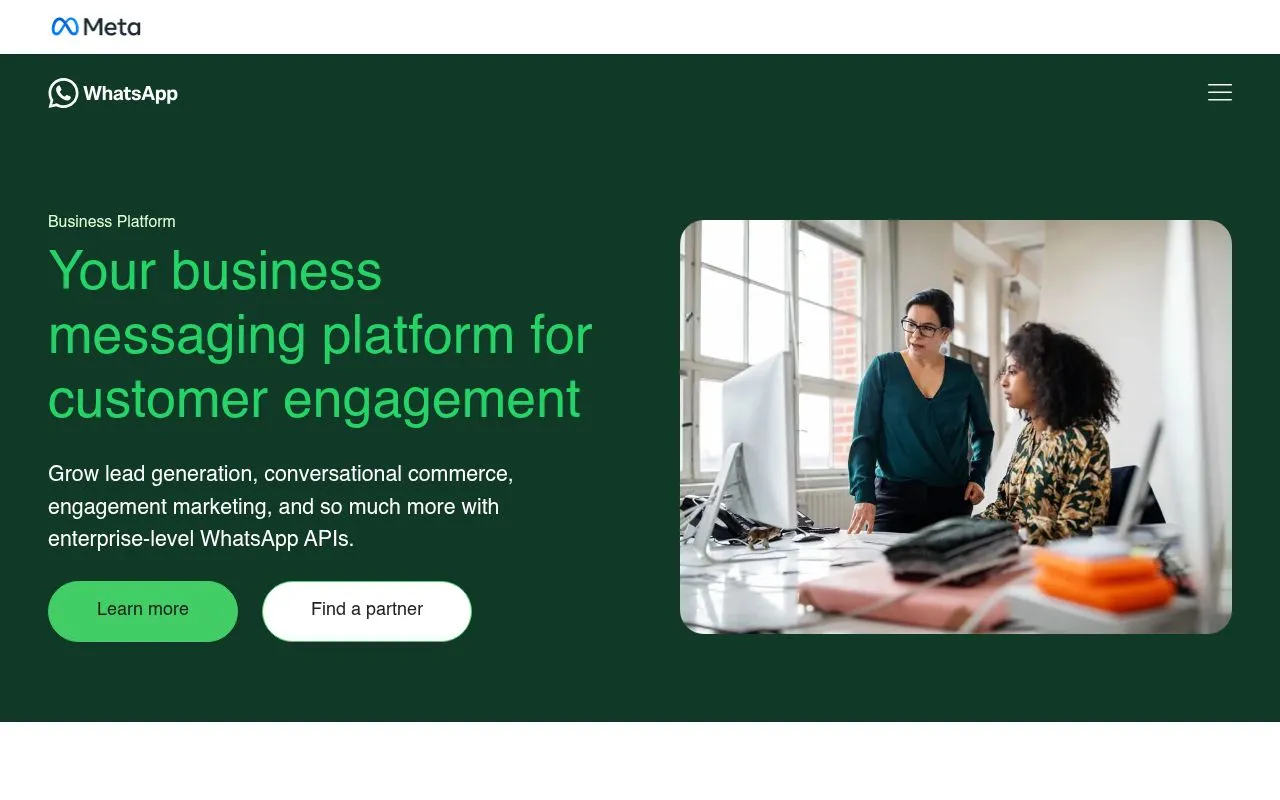
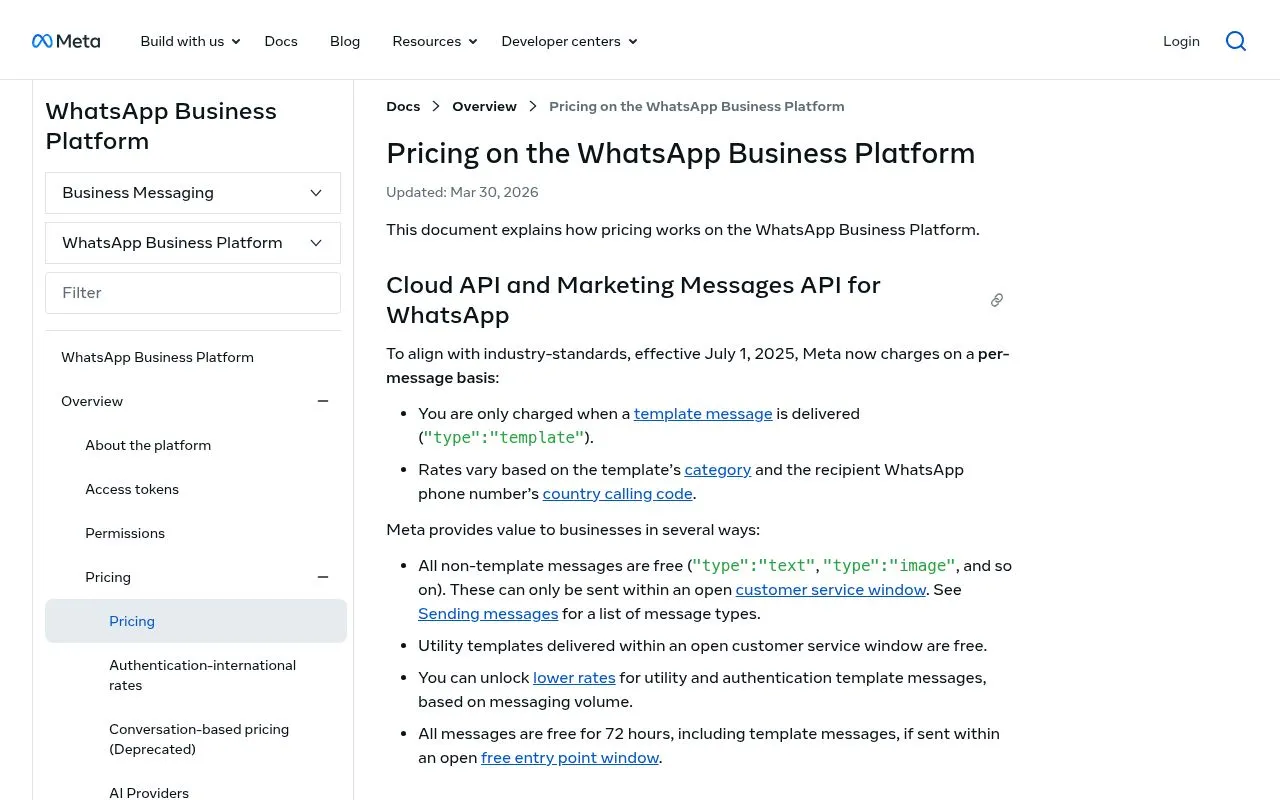
Crucially, Meta bills the API per delivered message. Until June 30, 2025, it billed per 24-hour conversation, charging once for all the messages exchanged in that window. Since July 1, 2025, it charges each template message when it is delivered, not when it is sent, and messages that customers send to a business are never charged. Pricing varies along two axes:
- Template category. Meta sorts templates into three categories: marketing, utility, and authentication. Marketing (promotions and campaigns) is the most expensive. Utility (order and shipping updates) is cheaper. Authentication (one-time passcodes) costs the same as utility in major markets such as the US, France, or Brazil. Service messages are not templates: they are free-form replies inside the 24-hour customer service window that opens when a customer writes in. Meta has not charged them since November 1, 2024, and they stay free until September 30, 2026. From October 1, 2026, they cost the utility rate after 1,000 free service messages per business phone number each month.
- Country. Rates differ sharply by the country calling code of the recipient's number. A marketing message costs $0.0118 in India and $0.1365 in Germany, per Meta's pricing (list rates per delivered message).
This per-message model is the main direct revenue stream for WhatsApp. Order confirmations, shipping alerts, passcodes, and promotional campaigns sent by businesses through the API generate fees for Meta. Added up, it becomes a serious business: on its Q4 2025 earnings call, Meta said paid messaging within WhatsApp had crossed a 2 billion dollar annual run-rate. For the full mechanics, see our WhatsApp Business API guide.
Click-to-WhatsApp Ads: The Indirect Revenue Stream
The second major way WhatsApp drives revenue is indirect, and Meta has discussed it on its earnings calls: click-to-WhatsApp ads.
These are ordinary ads that appear in the Facebook and Instagram feeds, but instead of sending the user to a website, the call to action opens a WhatsApp chat with the advertiser. A shopper taps the ad and is instantly in a conversation with a business, ready to ask a question or buy.
Meta has put figures on this format. In early 2023, it said click-to-message ads had reached a 10 billion dollar revenue run-rate, a total that covers ads opening a chat in Messenger, Instagram or WhatsApp, not WhatsApp alone. In July 2023, it added that daily click-to-WhatsApp ads revenue was growing at over 80% year-over-year. The money here is not booked as WhatsApp subscription income; it is advertising revenue on Facebook and Instagram. But it exists because WhatsApp does. The app gives advertisers a high-intent destination, which makes the ads more valuable and easier to sell.
In effect, WhatsApp boosts Meta's core advertising machine without placing a single ad inside a personal chat.
The Free WhatsApp Business App: An On-Ramp, Not a Cost
Alongside the paid API, Meta offers the free WhatsApp Business app. This is a separate app aimed at small businesses, with a business profile, a product catalog, quick replies, away messages, and basic labels.
The WhatsApp Business app is free to download and use, and Meta does not earn directly from it. So why offer it at all? Because it is an on-ramp. It introduces small merchants to WhatsApp as a sales tool, gets them comfortable handling customers in chat, and builds the habit.
As those businesses grow, they hit the app's ceiling: no real automation, limited broadcasting, no proper multi-agent support, and no native Shopify integration. To scale past that, they graduate to the paid WhatsApp Business Platform. The free app is the top of Meta's funnel, and the paid API is where the revenue is. Our WhatsApp Business app vs API comparison shows exactly where that transition happens.
Emerging Streams: Payments, Meta Verified, and Channels
Beyond the API and click-to-WhatsApp ads, Meta is building several newer revenue avenues.
- WhatsApp Pay. In markets such as India and Brazil, WhatsApp has rolled out in-chat payments that let people send money or pay merchants without leaving the app. Payments open the door to transaction-based revenue and make WhatsApp a stronger commerce platform, which in turn supports the business messaging products around it.
- Meta Verified for business. Meta has extended its paid verification subscription to businesses on WhatsApp. For a monthly fee, a company can get a verified badge plus added support and account features, a small but recurring source of income tied directly to WhatsApp.
- The Updates and Channels tab. WhatsApp Channels is a one-to-many broadcast feature kept separate from personal chats. Meta has signaled that it may introduce light monetization in this Updates tab, such as promoted channels, while continuing to insist that personal conversations stay ad-free.
Together, they show the direction: more ways to monetize commerce and business activity, with the private inbox left untouched.
A Note on Privacy: Meta Does Not Sell Your Chats
A common assumption is that WhatsApp must make money by reading messages and selling the data. That is not how it works.
WhatsApp messages are protected by end-to-end encryption, which means only the sender and recipient can read the content. Meta cannot see the text of personal chats, so it cannot sell that content to advertisers.
WhatsApp monetization is about the business messaging layer, not the content of private conversations. Meta earns when a company pays for messages delivered through the API, or when an advertiser pays for a click-to-WhatsApp ad. It does not earn by mining what you tell your family and friends. This distinction matters: WhatsApp's revenue model is a commerce and messaging-infrastructure model, not a personal-data model built on chat content.
What This Means for Shopify Merchants
If you run a Shopify store, WhatsApp's business model is not just trivia. It directly shapes what WhatsApp marketing costs you.
When you send marketing campaigns, abandoned cart reminders, order updates, or passcodes to customers over WhatsApp, you are using the WhatsApp Business Platform. That means you pay Meta's per-message fees, priced by category and country, exactly as described above. From October 1, 2026, your replies to customers inside the 24-hour customer service window also become billable beyond 1,000 free service messages per business phone number each month. There is no way around those fees, because they are how WhatsApp makes money.
What you can control is whether your messaging platform adds a markup on top. Tools built on the official WhatsApp Business API, such as Kanal, run on Meta's infrastructure. Kanal passes WhatsApp fees through at cost, with no per-message markup. You see Meta's cost for what it is, plus a clear platform fee for the automation, Shopify integration, and AI chatbot that turn WhatsApp into a measurable revenue channel. Our pricing page lays out exactly how that breaks down.
The takeaway: budget WhatsApp per delivered message, not per conversation, choose a provider that does not mark up Meta's rates, and weigh each message's fee against the revenue that message brings in.
Conclusion: WhatsApp Makes Money From Businesses, Not Users
So, how does WhatsApp make money? Not from its individual users, who pay nothing and see no ads in their chats. WhatsApp makes money from businesses.
The engine is the WhatsApp Business Platform, where Meta charges companies per delivered message, priced by category and country. Around it sits click-to-WhatsApp advertising, plus the free WhatsApp Business app as an on-ramp and newer bets like WhatsApp Pay, Meta Verified, and Channels. Through all of it, personal chats stay free, ad-free, and end-to-end encrypted.
It is a smart model: keep the consumer app free to protect the scale, then monetize the businesses that want to reach those users. For a Shopify merchant, that simply means WhatsApp marketing carries Meta's per-message fees, and the right partner passes them through at cost. Book a Kanal demo to see how WhatsApp can become a profitable channel for your store.
Resources
- Kanal demo - see WhatsApp automation for Shopify in action
- Kanal pricing - WhatsApp fees passed through at cost, with no per-message markup
- WhatsApp Business API guide - how the paid platform works
- WhatsApp Business app vs API comparison - free app versus paid platform
- Best Shopify apps - tools worth adding to your store
- WhatsApp Business Platform - Meta's official business product page
- Meta WhatsApp pricing - Meta's official per-message rate card
Frequently asked questions
Does WhatsApp make money if it is free?
Yes. WhatsApp is free for individuals and shows no ads in personal chats, but it earns money for Meta. The money comes from the WhatsApp Business Platform, where Meta charges companies for each delivered message, and from click-to-WhatsApp ads sold on Facebook and Instagram. WhatsApp monetizes the business messaging layer, not personal users.
How much did Facebook pay for WhatsApp?
Facebook, now Meta, agreed in February 2014 to acquire WhatsApp for a total of approximately 16 billion dollars, including 4 billion in cash and about 12 billion in Facebook shares, plus 3 billion dollars in restricted stock units for WhatsApp's founders and employees. At the time WhatsApp had no real revenue model, so the deal was a bet on its massive and fast-growing user base rather than its profits.
Does WhatsApp show ads?
WhatsApp shows no ads inside personal or group chats, and Meta has repeatedly committed to keeping private conversations ad-free. The ads connected to WhatsApp are click-to-WhatsApp ads, which run on Facebook and Instagram and open a chat with a business. Meta has also explored light advertising in the separate Updates and Channels tab.
How does the WhatsApp Business API make money?
The WhatsApp Business Platform, often called the API, bills businesses per delivered message. Since July 1, 2025, Meta charges each delivered template message instead of each 24-hour conversation. The rate depends on the template category (marketing, utility or authentication) and on the recipient's country. Service replies inside the 24-hour customer service window are not charged until September 30, 2026. From October 1, 2026, they cost the utility rate after 1,000 free service messages per business phone number each month. This per-message model is the main direct revenue engine for WhatsApp today.
Does Meta read or sell WhatsApp messages to make money?
No. WhatsApp messages are protected by end-to-end encryption, so Meta cannot read the content of personal chats and does not sell it. WhatsApp monetization is built on the paid business messaging layer and click-to-WhatsApp ads, not on harvesting the content of private conversations.
How does WhatsApp make money?
WhatsApp makes money by charging businesses, not users. The two engines are the WhatsApp Business Platform, where Meta bills companies for each delivered marketing, utility and authentication message (and, from October 1, 2026, for service replies beyond 1,000 free per business phone number each month), and click-to-WhatsApp ads sold on Facebook and Instagram. Meta said paid messaging within WhatsApp crossed a 2 billion dollar annual run-rate in Q4 2025, while the app stays free and ad-free for personal chats.

Nicolas helps e-commerce brands grow revenue with WhatsApp marketing. With deep expertise in Shopify ecosystems and conversational commerce, he shares proven strategies for abandoned cart recovery, broadcast campaigns, and AI-powered customer engagement.
Glossary terms in this article
Quick definitions for the WhatsApp Business terms used above.
WhatsApp Business Platform
The WhatsApp Business Platform is the umbrella name for the set of products and APIs that Meta offers businesses to message customers programmatically at scale.
Read full definitionClick-to-WhatsApp Ads
Click-to-WhatsApp ads are Facebook and Instagram ads that open a WhatsApp chat with the business when tapped, instead of sending the user to a website.
Read full definitionWhatsApp Pay
WhatsApp Pay is WhatsApp's in-chat payment feature, which lets users send money and pay businesses without leaving the conversation, available mainly in India and Brazil.
Read full definitionWhatsApp Business API
The WhatsApp Business API is the programmatic interface that lets medium and large businesses send and receive WhatsApp messages at scale, without using a phone or the chat app.
Read full definitionCustomer Service Window (24-hour window)
The customer service window is the 24-hour period, opened by a customer message, during which a business can reply with free-form messages instead of approved templates.
Read full definitionWhatsApp Business App
The WhatsApp Business App is a free mobile application designed for small businesses to chat with customers, with a catalog, quick replies, and automated greeting messages.
Read full definitionQuick Replies
Quick replies are saved message shortcuts in the WhatsApp Business App that insert a frequently used answer when the user types a slash command.
Read full definitionMeta Verified
Meta Verified is a paid subscription that gives businesses a verified badge on WhatsApp along with impersonation protection and enhanced support, succeeding the legacy green tick program.
Read full definitionOfficial Business Account (green tick)
An Official Business Account is a WhatsApp business account that has earned a verified badge, the green tick, shown next to its name to confirm Meta has verified the brand.
Read full definitionWhatsApp Channels
WhatsApp Channels are a one-to-many broadcast feature in the Updates tab, where admins post to an unlimited audience of followers who can react and vote but not reply.
Read full definitionBroadcast
A broadcast is a message sent to many WhatsApp contacts at once, typically a marketing campaign delivered to a segment of opted-in customers.
Read full definitionSuggested articles
WhatsApp Statistics 2026: Users, Messages and Adoption Data
WhatsApp statistics for 2026 from WhatsApp and Meta: users, daily actives, a messaging record and business adoption, each linked to its primary source.
WhatsApp Usernames: How to Reserve Yours (2026 Guide)
WhatsApp usernames are rolling out in 2026: how to reserve your @username, the format rules, what changes for privacy, and what businesses must do about it.
Meta Business Agent: What Shopify Merchants Need to Know (2026)
What Meta Business Agent is, what it does on WhatsApp and Messenger, how Meta bills it per token since August 2026, and how it fits a Shopify store.

Tidio Alternatives: 10 Live Chat and AI Agent Tools (2026)
Tidio alternatives compared: AI agents, live chat, WhatsApp and Shopify fit, with starting prices for Kanal, Gorgias, Zendesk, Intercom, Crisp and more.