
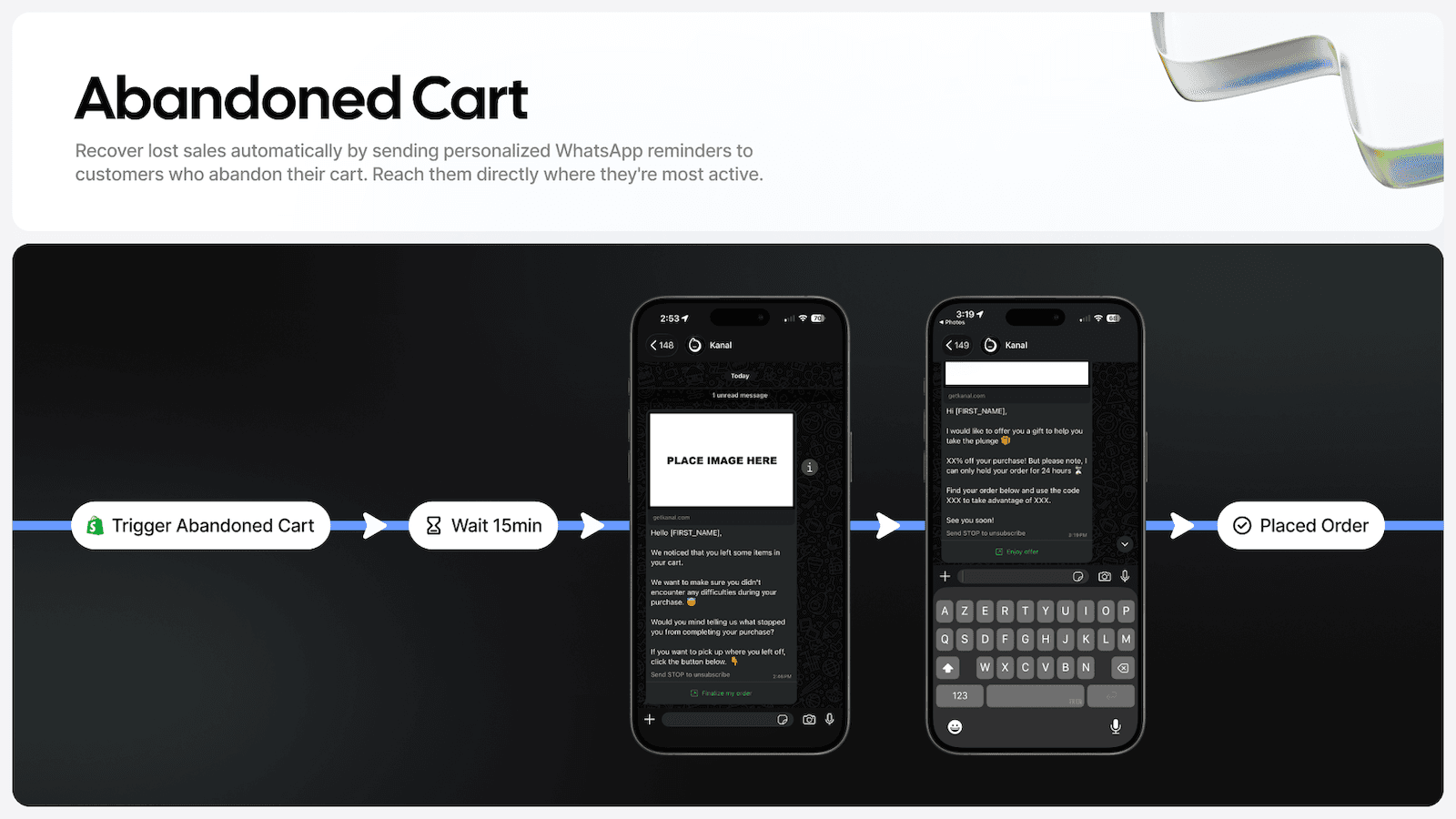
La meilleure application d'email marketing pour Shopify dépend de la taille de votre liste et du niveau d'automatisation que vous visez. Klaviyo arrive en tête de ce comparatif pour sa segmentation et ses flows construits sur les données Shopify, Omnisend est deuxième avec l'email, le SMS et le web push dans un seul outil, et Shopify Messaging (anciennement Shopify Email) est l'option native, avec les 10 000 premiers emails de chaque mois inclus. Mailchimp et Drip complètent les cinq premiers.
Nous avons comparé les 9 meilleures applications d'email marketing pour Shopify en 2026 sur la profondeur d'automatisation, la segmentation, la portée multicanale, la délivrabilité et le rapport qualité-prix. La liste va des outils gratuits pour les nouvelles boutiques aux plateformes de niveau entreprise pour les marques à fort volume : vous devriez trouver l'outil adapté, quelle que soit votre étape. Comme les messages les plus urgents sont justement ceux que l'email laisse sans lecture, nous expliquons aussi comment un canal de messagerie vient s'y ajouter. Notre page WhatsApp pour Shopify détaille ce volet.
Comment nous avons comparé les 9 applications
Nous avons connecté chaque application à une boutique Shopify de test avec une liste de 2 000 contacts, construit les trois mêmes flows (bienvenue, panier abandonné, post-achat), envoyé une campagne à un segment d'anciens acheteurs et vérifié l'arrivée en boîte de réception sur Gmail, Outlook et Apple Mail avec des adresses témoins. Nous avons noté six critères : la profondeur de l'éditeur de flows (embranchements, divisions conditionnelles, tests A/B), la segmentation sur les données Shopify, les options multicanales (SMS, push, intégrations WhatsApp), la délivrabilité et la prise en charge de l'authentification, la qualité de l'éditeur et des modèles, et le prix à 5 000 et 20 000 contacts. Les tarifs ont été relevés sur le Shopify App Store en septembre 2026, et les fiches de Klaviyo, Omnisend, Shopify Messaging, Mailchimp, Drip et Kanal ont été relues le 7 octobre 2026. Nous avons écarté les applications de moins de cinquante avis Shopify et les outils sans mise à jour significative au cours des douze derniers mois.
Comparatif rapide
| # | Application | Canaux | Offre gratuite | À partir de | Conçue pour |
|---|---|---|---|---|---|
| 1 | Klaviyo | Email, SMS et WhatsApp | Oui (250 contacts) | 20 $/mois | La segmentation et les flows sur les données de la boutique |
| 2 | Omnisend | Email, SMS et push | Oui (250 contacts) | 16 $/mois | Plusieurs canaux dans un seul outil |
| 3 | Shopify Messaging (anciennement Shopify Email) | Email, SMS et WhatsApp | Oui (10 000 emails/mois) | 1 $ les 1 000 emails | Envoyer depuis l'administration Shopify |
| 4 | Mailchimp | Email, option SMS | Oui | 13 $/mois | Un marketing qui dépasse Shopify |
| 5 | Drip | Email et pop-ups | Non (essai de 14 jours) | 39 $/mois | Des segments tirés des données clients Shopify |
| 6 | AVADA Email Marketing | Email et SMS | Oui | 16 $/mois | L'automatisation à petit budget |
| 7 | Privy | Email, SMS et pop-ups | Non | 24 $/mois (email 30 $/mois) | La croissance de liste d'abord |
| 8 | Seguno | Oui (250 abonnés) | 35 $/mois | La simplicité native Shopify | |
| 9 | Recart | Multicanal centré sur le SMS | Non | 299 $/mois | Flows gérés pour les grandes marques |
| En bonus | Kanal WhatsApp | WhatsApp, avec une intégration Klaviyo | Démo sur demande | 89 €/mois | Les envois urgents que l'email laisse sans lecture |
| En bonus | Reviewz.ai | Demandes d'avis par email, SMS et WhatsApp | Non | 59 $/mois | Des avis Trustpilot déclenchés depuis vos flows |
Pourquoi l'email marketing reste un moteur de chiffre d'affaires sur Shopify
L'email n'a rien de spectaculaire, mais il bat régulièrement les autres canaux en retour sur chaque euro investi. Pour la plupart des boutiques Shopify, les flows automatisés représentent à eux seuls une large part du chiffre d'affaires email, sans presque aucun effort une fois en place.
- C'est un canal qui vous appartient. Votre liste est à vous. Vous ne louez pas l'attention d'une régie publicitaire qui peut changer ses prix ou ses règles de ciblage du jour au lendemain.
- L'automatisation fait le gros du travail. Les flows de bienvenue, d'abandon de navigation, de panier abandonné et de post-achat tournent en continu et captent un chiffre d'affaires que vous perdriez sinon.
- Un coût d'envoi faible. L'email est l'un des moyens les moins chers de toucher un client, ce qui le rend idéal pour les newsletters, les contenus pédagogiques et les formats longs.
- Une personnalisation poussée. Les plateformes actuelles exploitent l'historique d'achat, le comportement de navigation et des données prédictives pour rendre chaque envoi pertinent.
- Une attribution claire. Les bonnes applications relient le chiffre d'affaires à chaque flow et à chaque campagne, pour voir exactement ce qui fonctionne.
Le revers : les boîtes de réception sont encombrées, et un email urgent peut y passer inaperçu. C'est pourquoi beaucoup de marchands associent désormais l'email à un canal plus engageant pour les messages urgents, un point sur lequel nous revenons plus bas.
Les critères pour choisir une application d'email marketing Shopify
Choisir une application d'emailing ne se résume pas au prix mensuel. Un outil bon marché à la délivrabilité faible ou à l'automatisation limitée peut vous coûter bien plus en chiffre d'affaires perdu, sans que vous le voyiez. Voici les critères qui comptent le plus.
- La profondeur d'automatisation. Cherchez un éditeur visuel de flows avec embranchements, divisions conditionnelles et délais intelligents. Les séquences en plusieurs étapes font systématiquement mieux que les rappels en un seul email.
- La segmentation. Votre application doit segmenter selon l'historique d'achat, la valeur des commandes, les tags, le comportement de navigation et la valeur vie client prédite. Une meilleure segmentation, ce sont des envois plus pertinents et moins de désinscriptions.
- La synchronisation des données Shopify. La synchronisation en temps réel des commandes, des clients et des checkouts abandonnés est indispensable. Sans elle, vos messages deviennent vite obsolètes.
- La délivrabilité. Une bonne réputation d'expéditeur et la prise en charge de l'authentification (SPF, DKIM, DMARC) tiennent vos emails à l'écart des spams. Interrogez chaque éditeur sur ses taux d'arrivée en boîte de réception.
- Le modèle de tarification. La plupart des applications facturent selon le nombre de contacts ou le volume d'emails. Modélisez la taille réelle de votre liste au fil de sa croissance, car une offre bon marché à 1 000 contacts peut devenir chère à 20 000.
- La portée multicanale. Beaucoup d'applications intègrent désormais le SMS, le push ou des canaux de messagerie. Réunir les canaux dans un seul outil simplifie le reporting et réduit souvent le coût total.
- Modèles et éditeur. Un éditeur par glisser-déposer avec des modèles responsives, à l'image de votre marque, fait gagner des heures sur chaque campagne.
Les 9 meilleures applications d'email marketing pour Shopify
#1 Klaviyo, la segmentation et les flows sur les données Shopify
Klaviyo est une plateforme d'email et de SMS marketing construite autour des données clients. Sa fiche Shopify décrit des données en temps réel venues de Shopify et de plus de 350 applications, des segments et des déclencheurs de flows assistés par l'IA, des tests A/B, des analyses prédictives et des messages personnalisés par email, SMS, WhatsApp, push mobile et pop-ups. L'éditeur de flows couvre les séquences de bienvenue, de panier abandonné et de reconquête. L'email est gratuit jusqu'à 250 contacts, puis démarre à 20 $/mois de 251 à 500 contacts et augmente avec la taille de la liste. Noté 4,7/5 sur 3 358 avis sur le Shopify App Store (relevé le 7 octobre 2026), Klaviyo arrive en tête pour les boutiques qui veulent piloter l'email à partir des données d'achat et de navigation, et l'intégration Klaviyo de Kanal déclenche des messages WhatsApp depuis les mêmes flows.
#2 Omnisend, l'email, le SMS et le web push dans un seul outil
Omnisend est conçu pour l'e-commerce et réunit l'email, le SMS et le web push dans une seule plateforme, avec des workflows prêts à l'emploi de bienvenue, de panier abandonné et d'après-achat, ainsi que des pop-ups et des formulaires d'inscription pour faire grandir la liste. Sa fiche décrit aussi des recommandations de produits par IA et des campagnes construites depuis ChatGPT ou Claude. L'offre gratuite couvre 250 contacts et 500 emails par mois, Standard démarre à 16 $/mois jusqu'à 500 contacts et Pro à 59 $/mois jusqu'à 2 500, et les deux augmentent avec la taille de la liste. Noté 4,7/5 sur 3 186 avis, Omnisend s'adresse aux boutiques qui veulent plusieurs canaux dans un seul outil sans monter chaque flow de zéro.
#3 Shopify Messaging (anciennement Shopify Email), l'option native dans l'administration
Shopify Messaging est le nouveau nom de Shopify Email, l'application marketing de Shopify, intégrée à l'interface d'administration que vous utilisez déjà. Sa fiche couvre désormais les campagnes email, SMS et WhatsApp créées, envoyées et suivies depuis Shopify, avec des modèles prêts à l'emploi, les segments de clients, des automatisations email et SMS, et Sidekick pour adapter les emails à votre marque. Les 10 000 premiers emails de chaque mois sont inclus, puis le prix démarre à 1 $ les 1 000 emails. Notée 4,8/5 sur 4 608 avis, elle s'adresse aux nouvelles boutiques et aux marchands qui envoient des campagnes ponctuelles sans quitter Shopify. Notre avis sur Shopify Email détaille l'outil.
#4 Mailchimp, un généraliste familier
Mailchimp est une plateforme d'emailing généraliste dont l'application Shopify synchronise les clients, les produits et les commandes. Sa fiche décrit des emails automatisés de bienvenue, de panier abandonné et de retour en stock, des segments construits sur les événements clients de Shopify, des codes de réduction à usage unique, des formulaires en pop-up et l'attribution du chiffre d'affaires dans Shopify, avec le SMS en option. Il existe une offre gratuite, Essentials démarre à 13 $/mois, Standard à 20 $/mois et Premium à 350 $/mois, toutes facturées selon le nombre de contacts. Noté 4,8/5 sur 1 507 avis, Mailchimp s'adresse aux marchands qui connaissent déjà l'interface ou dont le marketing dépasse Shopify.
#5 Drip, pensé pour la personnalisation e-commerce
Drip est une application d'automatisation email et de pop-ups pour les boutiques Shopify. Sa fiche décrit des segments prêts à l'emploi tirés des données clients Shopify, des modèles de flows pour le panier abandonné, le retour en stock, la baisse de prix et la bienvenue, un éditeur de workflows avec tests A/B, ainsi que des quiz, des formulaires et des pop-ups pour faire grandir la liste. Il se pilote aussi depuis Claude ou ChatGPT. L'abonnement démarre à 39 $/mois avec un essai de 14 jours et augmente avec le nombre de personnes actives de votre liste et le volume d'emails envoyés. Noté 4,5/5 sur 55 avis, Drip s'adresse aux boutiques qui veulent des emails déclenchés par le comportement et des pop-ups dans une seule application.
#6 AVADA Email Marketing, l'automatisation à petit budget
AVADA Email Marketing offre étonnamment beaucoup de fonctionnalités pour son prix. Il comprend des séries automatisées, des groupes de clients, un éditeur par glisser-déposer, des pop-ups pour la croissance de liste et une option SMS, avec une offre gratuite et des offres payantes à partir de 16 $/mois. Il n'égale pas la profondeur de segmentation de Klaviyo ou de Drip, mais pour les petites et moyennes boutiques qui veulent une automatisation fonctionnelle sans facture salée, AVADA offre un bon rapport qualité-prix. C'est un bon choix pour les marchands qui dépassent Shopify Messaging sans être prêts pour une plateforme premium, et les pop-ups intégrées évitent une application de croissance de liste séparée.
#7 Privy, croissance de liste et email dans un seul outil
Privy a commencé comme outil de pop-ups et de croissance de liste, sa grande force aujourd'hui encore, avant d'ajouter l'email et le SMS. Si capter des adresses email grâce à des pop-ups bien ciblées, des roues de la fortune et des barres d'annonce est une priorité, Privy associe tout cela à des automatisations email, sans application d'inscription séparée. Le volet email couvre l'essentiel, dont les flows de bienvenue et de panier abandonné, sans la segmentation avancée des plateformes dédiées. Il n'y a pas d'offre gratuite : les pop-ups démarrent à 24 $/mois jusqu'à 10 000 pages vues par mois, et l'email à 30 $/mois jusqu'à 1 500 contacts. Privy convient surtout aux boutiques qui veulent faire grandir leur liste autant que lui écrire.
#8 Seguno, le choix simple et natif Shopify
Seguno est conçu pour vivre dans l'administration Shopify, sans identifiant séparé ni tableau de bord externe. Cette intégration étroite en fait l'un des outils d'emailing les plus simples à utiliser : vous travaillez avec les segments de clients natifs de Shopify et un éditeur épuré sans quitter la plateforme, et les blocs produits viennent directement de votre catalogue. Il couvre bien les emails automatisés et les newsletters, mais il se limite à l'email, sans SMS. Il est gratuit jusqu'à 250 abonnés, et l'offre Standard à 35 $/mois couvre 2 500 abonnés et ajoute pop-ups, avis, bannières et alertes de retour en stock. Seguno convient aux marchands qui préfèrent la simplicité et une expérience native aux fonctions avancées, et c'est une évolution naturelle après Shopify Messaging.
#9 Recart, le multicanal géré pour les grandes marques
Recart mise sur une messagerie clés en main, avec une forte place pour le SMS à côté d'autres canaux directs. Les flows prêts à l'emploi et l'onboarding géré prennent en charge une grande partie de la mise en place, et une équipe de service rédige et optimise les campagnes, ce qui séduit les marques qui veulent des résultats sans tout construire en interne. À 299 $/mois sans offre gratuite, Recart se situe clairement dans le haut de gamme. Il convient surtout aux grandes boutiques Shopify à l'audience importante, qui apprécient une approche déléguée et peuvent justifier ce coût par le chiffre d'affaires que rapportent ces flows.
À ajouter aussi
En bonus : Kanal WhatsApp, le canal de messagerie à côté de votre application d'emailing
Kanal n'est pas une application d'email marketing : il ne figure donc pas dans le classement. Nous le mettons en avant parce que la plupart des stacks email laissent un vide : les messages qui doivent être lus dans les minutes qui suivent, comme une vente flash qui se termine ce soir, un rappel de panier abandonné ou une mise à jour d'expédition. Kanal les envoie sur WhatsApp, avec images produits et boutons en un clic, depuis un éditeur visuel de flows alimenté par vos données Shopify, et un chatbot IA répond aux clients. Son intégration Klaviyo déclenche des messages WhatsApp à partir des segments que vous utilisez déjà pour l'email. Les offres démarrent à 89 €/mois (chatbot IA et intégration Klaviyo à partir de l'offre Scale), avec une démo sur demande.
En bonus : Reviewz.ai, des avis Trustpilot déclenchés depuis vos flows
Reviewz.ai n'est pas une plateforme d'email marketing, et nous le mettons en avant parce qu'il comble un autre vide de la plupart des stacks email : les demandes d'avis. Il envoie les invitations à laisser un avis Trustpilot par email, SMS ou WhatsApp au moment précis que vous choisissez dans Shopify, comme la livraison, l'expédition ou un nouvel achat, avec des modèles multilingues, et les avis arrivent sur Trustpilot avec le badge vérifié qui apparaît dans les résultats et les extensions d'annonces Google. Les tarifs démarrent à 59 $/mois. Il fonctionne avec n'importe quelle application d'emailing de cette liste et sort la demande d'avis de vos flows, pour que le programme email se concentre sur le chiffre d'affaires.
Email, SMS ou WhatsApp : choisir votre mix de canaux
Aucun canal ne gagne sur tous les critères. L'email est bon marché et excellent pour la profondeur, le SMS touche presque tout le monde, et WhatsApp offre l'engagement le plus fort sur les marchés où il domine. Les boutiques Shopify les plus avisées combinent les canaux plutôt que de tout miser sur un seul.
| Critère | SMS | ||
|---|---|---|---|
| Coût par message | Très faible | Moyen (frais par message) | Faible à moyen |
| Idéal pour | Newsletters, contenus pédagogiques, profondeur | Alertes urgentes, portée universelle | Conversations, médias enrichis, relance |
| Conversations dans les deux sens | Limitées | Limitées | Natives |
| Médias enrichis | Oui | MMS uniquement | Oui (images, catalogues, boutons) |
| Portée | Universelle | Universelle | Forte en Europe, en Amérique latine, en Inde, au Moyen-Orient et en Afrique du Nord |
Pour la plupart des boutiques, l'approche pratique consiste à faire de l'email la colonne vertébrale à bas coût pour les newsletters et les contenus longs, à ajouter WhatsApp pour les moments à fort engagement comme la relance de panier et le suivi de commande, et à garder le SMS comme solution de secours universelle. Plusieurs applications de cette liste gèrent plus d'un canal, et Kanal connecte WhatsApp à votre stack email existante pour que les canaux se renforcent. Notre guide des meilleures applications SMS pour Shopify détaille le volet SMS.

Klaviyo est une application de référence pour l'email et le SMS marketing sur Shopify. Améliorez le ROI de votre marketing grâce à ses modèles pour envoyer des campagnes email et SMS personnalisées.


Omnisend est l'application d'email marketing Shopify pour l'email, le SMS et les pop-ups, utilisée par plus de 100K marques. Créez des campagnes par IA dans ChatGPT ou Claude via MCP et vendez plus.


Synchronisez les données clients, produits et commandes pour développer votre clientèle avec les emails et SMS automatisés de Mailchimp, le retargeting et les automatisations de reconquête client.


L'email marketing de Drip est conçu pour les boutiques Shopify qui veulent augmenter leur chiffre d'affaires avec des emails automatisés, des newsletters, des flows e-commerce et des pop-ups, dans une seule application ou par l'IA.


Relancez et convertissez vos clients en omnicanal : email marketing, SMS, notifications push, WhatsApp.
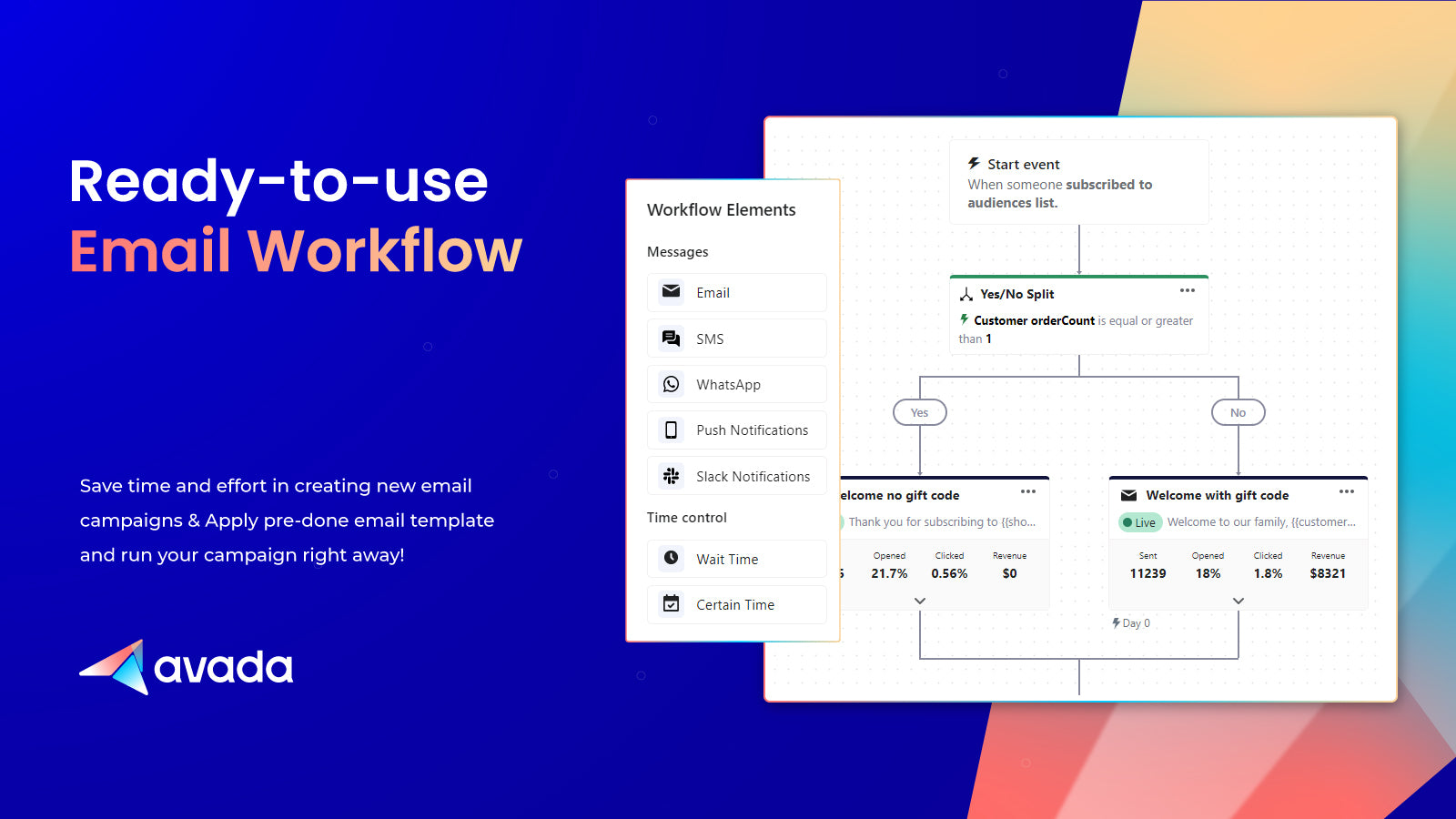
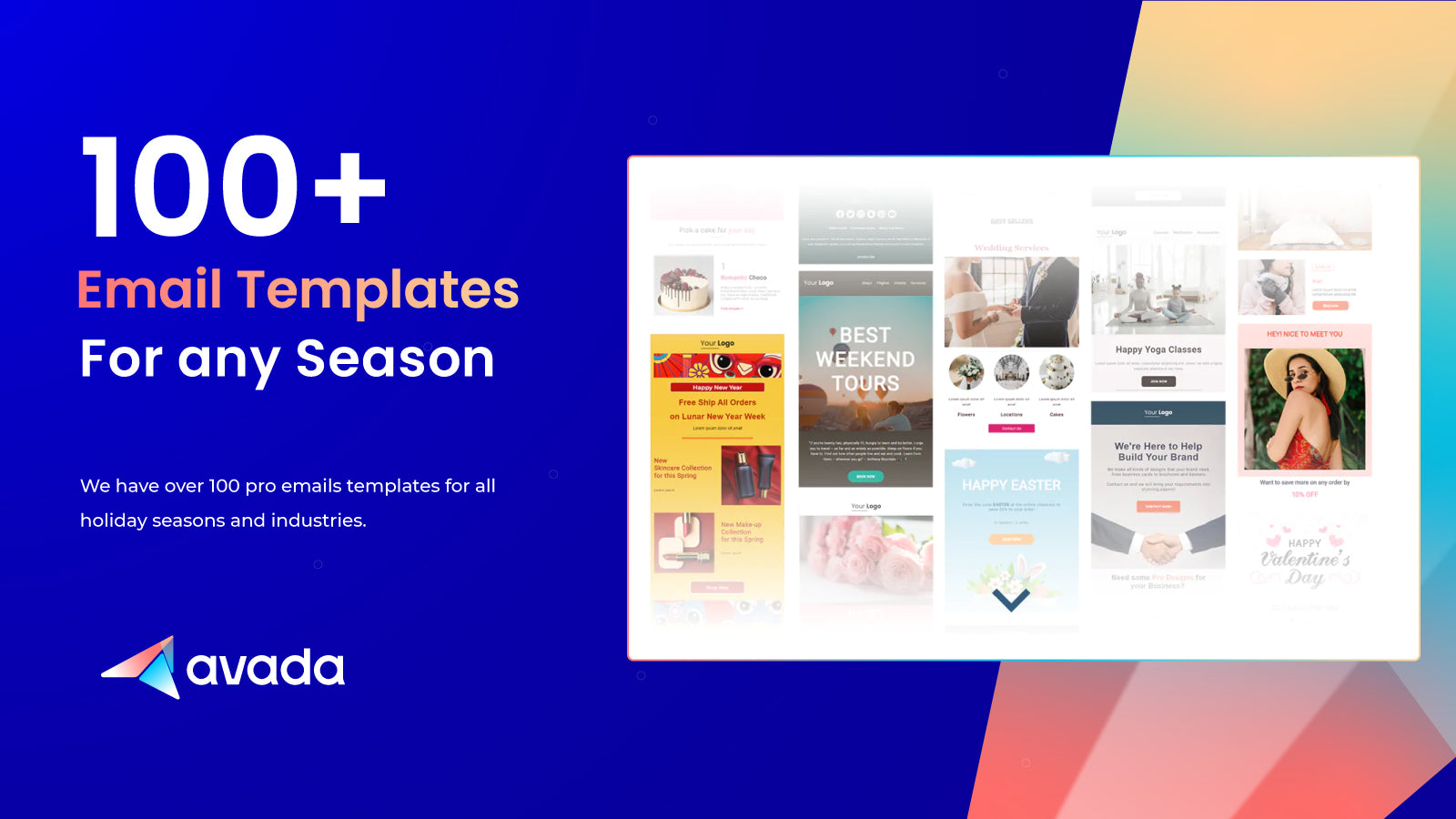

La plateforme marketing utilisée par des milliers de petites et moyennes boutiques Shopify. Développez vos listes de contacts et envoyez des emails et des SMS qui rapportent avec Privy.


Seguno vous permet de créer, d'automatiser et de suivre vos emails depuis une plateforme d'email marketing simple et abordable pour Shopify, directement dans votre interface d'administration.


L'application SMS de Recart pour Shopify inclut un service entièrement géré et des campagnes par IA : développez vos listes email et SMS, automatisez vos flows et récupérez les paniers abandonnés.


Outils en bonus

Relancez les paniers abandonnés, lancez des campagnes WhatsApp et automatisez vos ventes avec l'IA. Conçue pour les boutiques Shopify. Support par chat en direct et éditeur visuel de flows inclus.


Stop aux mauvais avis. Reviewz oriente intelligemment les clients satisfaits vers Google et Trustpilot et vous transmet directement les retours des clients mécontents. Automatisez votre réputation !


Questions fréquentes
Quelle est la meilleure application d'email marketing pour Shopify ?
Klaviyo arrive en tête de ce comparatif pour sa segmentation et son éditeur de flows sur les données Shopify, et Omnisend est deuxième pour les boutiques qui veulent l'email, le SMS et le web push dans un seul outil. Les nouvelles boutiques peuvent démarrer sans frais avec Shopify Messaging (anciennement Shopify Email) ou Seguno. Kanal n'envoie pas d'emails : il ajoute WhatsApp à côté de n'importe laquelle de ces applications, avec une intégration Klaviyo si c'est votre plateforme.
Combien coûte une application d'email marketing pour Shopify ?
Les coûts vont de la gratuité à plusieurs centaines de dollars par mois. Shopify Messaging et Seguno démarrent gratuitement, les plateformes de milieu de gamme comme Omnisend et AVADA démarrent à 16 $/mois, et les services gérés comme Recart démarrent à 299 $/mois. La plupart des applications facturent selon le nombre de contacts ou le volume d'emails : modélisez l'évolution de votre liste plutôt que de ne regarder que l'offre de départ.
Quelle application d'email marketing choisir pour une nouvelle boutique Shopify ?
Pour une toute nouvelle boutique, Shopify Messaging (anciennement Shopify Email) est un point de départ sans frais, intégré à l'administration. Quand vous grandissez et voulez de vrais flows d'automatisation, Omnisend et AVADA offrent un bon rapport qualité-prix à des tarifs accessibles. Klaviyo est l'évolution naturelle dès que la segmentation pilotée par la donnée devient une priorité.
Ai-je encore besoin de l'email si j'utilise WhatsApp ou le SMS ?
Oui. L'email est le canal le moins cher et le meilleur pour les newsletters, les contenus pédagogiques et les formats longs, et votre liste est un actif qui vous appartient. WhatsApp et le SMS brillent pour les messages urgents à fort engagement. La configuration la plus solide utilise l'email pour la profondeur et un canal de messagerie pour l'urgence, l'un avec l'autre et non l'un à la place de l'autre.
Ces applications relancent-elles les paniers abandonnés automatiquement ?
La plupart des applications de cette liste incluent une automatisation de panier abandonné qui se déclenche quand un acheteur part sans acheter. Les flows diffèrent en sophistication : Klaviyo et Drip offrent des embranchements avancés, quand des outils plus simples envoient un rappel basique. Pour récupérer davantage de paniers, beaucoup de marchands ajoutent des rappels de panier sur WhatsApp, présentés sur notre page relance de panier abandonné et dans notre guide des meilleures applications de relance de panier abandonné Shopify.
Puis-je utiliser deux applications d'email marketing en même temps ?
C'est possible, mais rarement utile. Deux applications, ce sont deux listes de consentement, deux réputations d'expéditeur et un vrai risque d'envoyer deux fois le même flow au même client. Choisissez une seule plateforme d'emailing et ajoutez plutôt d'autres canaux autour : Kanal pour WhatsApp, un outil de pop-ups pour la croissance de liste si votre application d'emailing n'en a pas, et Reviewz.ai pour les demandes d'avis.
Ces applications gèrent-elles Shopify Markets et plusieurs langues ?
La plupart des plateformes établies gèrent plusieurs langues dans les modèles et les flows, et Klaviyo, Omnisend et Drip peuvent segmenter selon le pays et la devise du client issus de Shopify Markets, pour que chaque marché reçoive des envois localisés. Vérifiez si l'application traduit automatiquement les automatisations de type transactionnel ou s'il faut un flow par langue, et si elle respecte les règles de consentement propres à chaque marché dans le cadre du RGPD.
Notre recommandation
Pour la plupart des boutiques Shopify en croissance, Klaviyo est notre premier choix pour sa segmentation et son automatisation sur les données Shopify, et Omnisend le suit de près avec l'email, le SMS et le web push dans un seul outil. Les nouvelles boutiques peuvent démarrer sans frais avec Shopify Messaging ou Seguno, et les marchands attentifs à leur budget trouveront un vrai rapport qualité-prix chez AVADA ou Mailchimp. Ajoutez ensuite un canal de messagerie pour les envois qui ne peuvent pas attendre qu'on ouvre sa boîte mail : Kanal fait tourner des campagnes WhatsApp et des rappels de panier à côté de votre calendrier email, pas à sa place, et son intégration Klaviyo garde les deux synchronisés. Pour aller plus loin, consultez notre page tarifs et notre guide des meilleures applications WhatsApp pour Shopify.
Guides associés
Meilleures applications de pop-up Shopify
Quelle application de pop-up choisir sur Shopify ? 11 applications comparées : pop-ups email, SMS et code promo, tests A/B, offres gratuites et prix.
Lire le guide12 apps comparéesMeilleures applications pour Shopify Plus
Les 12 meilleures applications pour Shopify Plus par besoin, de Flow, Launchpad et Checkout Blocks à Klaviyo, Recharge et Gorgias. Prix relevés le 7 octobre 2026.
Lire le guide12 apps comparéesMeilleures applications d'automatisation pour Shopify
Shopify Flow, Kanal, Klaviyo, Omnisend, Zapier et 7 autres : les 12 meilleures applications d'automatisation pour Shopify (marketing, commandes, produits).
Lire le guideKanalWhatsApp pour Shopify
Le guide complet Kanal du marketing WhatsApp pour les boutiques Shopify : fonctionnalités, mise en place et tarifs.
Lire le guide